Plant Overview
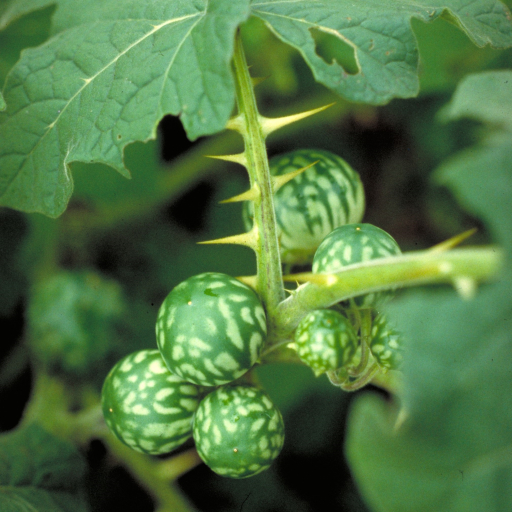
Known as the "Tropical Soda Apple," this prickly South American native is often treated as a botanical outlaw in many parts of the world. With its "golf ball" fruits and fierce thorns, it tells a story of incredible survival and rapid expansion. While it may look like an interesting wild tomato or a tiny watermelon, it is a formidable invader that can take over pastures and woodlands in a single season.
🔍 How to Identify
- 🌿 Prickly Foliage: The broad, deeply lobed green leaves are unmistakable, featuring prominent white veins and sharp, cream-colored spines growing directly from the midrib.
- 🌼 Starry Flowers: It produces small, white, five-petaled flowers with a distinct yellow "beak" of anthers at the center, characteristic of the nightshade family.
- 🎾 "Watermelon" Fruit: The berries are perfectly round, starting out mottled green (looking like miniature watermelons) and turning a dull, matte yellow when fully ripe.
🏡 In Your Garden
- 🚜 The Resilient Hitchhiker: This plant is rarely grown intentionally; it usually arrives in gardens or fields via bird droppings or contaminated mulch. It thrives in disturbed soil and can quickly outcompete native greenery.
- 🪵 Woody Persistence: Once established, it develops a deep, woody root system. If you attempt to remove it, you must ensure the entire root is gone, as it can regenerate from small fragments left in the earth.
⚠️ Safety & Toxicity
- 🚫 Toxic Status: Highly Toxic. All parts of the plant, especially the unripe green fruit, contain the alkaloid solasodine, which is poisonous to humans and livestock.
- 🐾 Risk to Pets & Kids: Ingesting the fruit can cause severe gastrointestinal distress, weakness, and respiratory issues in dogs, cats, and children.
- 🧤 Physical Hazard: The sharp spines on the stems and leaves are notorious for puncturing thick gardening gloves and causing skin irritation or localized swelling.
✨ Fun Fact
A single Tropical Soda Apple plant is a seed factory, capable of producing up to 50,000 seeds per year. Because these seeds can survive the digestive tracts of cattle and deer, the plant effectively uses local wildlife as its own personal long-distance delivery service!

Detailed Care Instructions
To grow Solanum Viarum (tropical soda apple) plants, follow these steps:
- Start with seeds or seedlings: Obtain Solanum Viarum seeds from a reputable source or purchase young seedlings from a nursery.
- Choose an appropriate location: Ensure that your planting area receives full sun, as Solanum Viarum requires at least six hours of direct sunlight each day. The soil should be well-draining, fertile, and loamy.
- Prepare the soil: Clear the area of any weeds, debris, or rocks. Loosen the soil with a garden fork or tiller to a depth of at least six inches. Add organic matter like compost or well-rotted manure to enhance soil fertility.
- Plant the seeds/seedlings: If starting from seeds, sow them into prepared soil at a depth of 1/4 inch and cover lightly with soil. Ensure they are spaced about 3 to 4 feet apart. If using seedlings, dig a hole slightly larger than the root ball and place the plant gently into it. Backfill the hole with soil and press it firmly around the plant to eliminate air pockets.
- Watering: Keep the soil evenly moist but not soaked. Water the plants deeply once or twice a week, allowing the top layer of soil to dry out between watering. Adjust watering frequency based on the weather and your specific growing conditions.
- Mulching: Apply a layer of organic mulch around the plants to help conserve soil moisture, suppress weed growth, and regulate soil temperature. Avoid piling mulch against the plant stem to prevent rotting.
- Fertilizer application: Solanum Viarum plants benefit from periodic fertilization. Apply a balanced, slow-release fertilizer according to the manufacturer's instructions. Alternatively, you can use organic fertilizers like compost tea or seaweed extract.
- Pruning: Regularly prune your Solanum Viarum plants to maintain shape and control size. Remove any dead, damaged, or diseased branches. Pruning also promotes airflow and can help prevent pest and disease issues.
- Pest and disease control: Monitor the plants regularly for any signs of pest infestation or disease. Treat with appropriate organic or chemical controls if necessary.
- Harvesting: Solanum Viarum produces small, green fruits that turn yellow when fully ripe. Harvest them when they are slightly soft to the touch.
Remember that Solanum Viarum can be invasive in some areas, so check with your local agriculture or horticulture agency to ensure it is suitable and legal to grow in your region.

Place in a bright room that is sun drenched almost all day. Or directly in a south-facing window.

To water the Solanum Viarum plant, first check the soil moisture level by inserting your finger about an inch into the soil. If it feels dry, then it needs water. Use a watering can with a narrow spout or a watering hose with a gentle flow to water the plant slowly and evenly, making sure not to create any waterlogged spots in the soil. Water the plant at the base, near the stem, rather than on the leaves. Be careful not to overwater the plant, as this can cause root rot and other issues. The watering frequency will depend on factors such as the plant's size, location, and the surrounding temperature and humidity levels. It is best to develop a consistent watering routine based on the plant's specific needs.
To fertilize this plant, use a balanced fertilizer with equal amounts of nitrogen, phosphorus, and potassium. Apply the fertilizer every two months during the active growing season. Make sure to water the plant before and after fertilizing to avoid damaging the roots. Use a light-to-medium strength solution and avoid over-fertilizing as it can lead to root burn and leaf drop. Stake the plant if necessary to support its growth.
When growing this particular plant, it is recommended to use well-draining soil that is rich in nutrients. The soil should have a pH level between 5.5 and 6.8, which is slightly acidic to neutral. The plant prefers soil that is slightly moist, but not waterlogged. To improve drainage, adding sand or perlite to the soil can be helpful. Organic amendments such as compost or well-aged manure can be added to enrich the soil. It is important to avoid using soil that is heavy with clay, as it can become compacted and prevent root growth.
To propagate this plant, you will need to first locate a healthy stem with mature leaves. Cut a piece of that stem, making sure that there are at least two or three nodes on it. Nodes are the points on the stem where leaves emerge. Remove the leaves from the bottom two-thirds of the stem, leaving just a few at the top.
Next, dip the cut end of the stem into rooting hormone powder, which will stimulate root growth. Insert the stem cutting into a pot filled with well-draining soil, making sure to bury at least one node under the soil. Water the soil and cover the pot with a plastic bag to create a humid environment.
Place the pot in indirect sunlight and keep the soil consistently moist, but not waterlogged. After a few weeks, check for root growth by gently tugging on the stem. If it resists, roots have formed and you can remove the plastic bag.
Once the new plant has established roots and is actively growing, it can be transplanted to a larger pot or to an outdoor location. Remember to water regularly and provide the plant with the appropriate amount of sunlight and fertilization.








