Plant Overview
Often called the Indian Nightshade or Brihati, Solanum violaceum is a wild, prickly beauty native to the tropical regions of Asia. While it belongs to the same family as potatoes and tomatoes, it carries a much wilder personality, characterized by its striking violet blooms and sharp defensive thorns. In traditional Ayurvedic practices, it is a highly respected medicinal herb, though in a modern garden, it is often admired for its rugged resilience and star-like flowers.
🔍 How to Identify
- 🌸 The Flowers: Look for small, star-shaped blossoms with vibrant violet or lavender petals and a prominent "beak" of bright yellow stamens in the center.
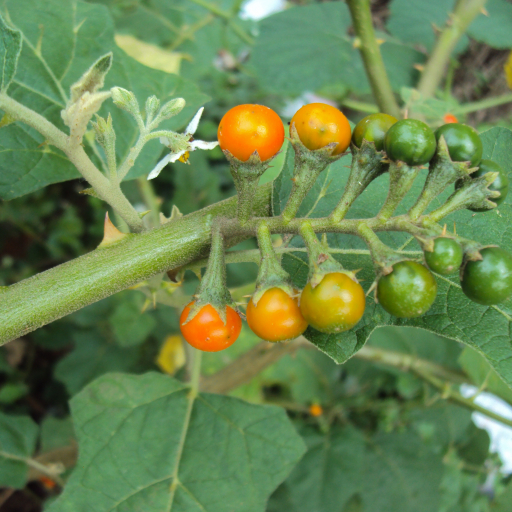
- ⚔️ The Armor: The plant is heavily armed; sharp, pale yellow prickles run along the stems and even appear on the midribs of the velvety, lobed leaves.
- 🟠 The Fruit: It produces small, spherical berries that start off green with white marbling and eventually ripen into a bright orange or yellow hue.
🏡 In Your Garden
- ☀️ Sun Seeker: This plant thrives in full sun and is exceptionally drought-tolerant once established, making it a "set it and forget it" choice for wilder, sun-drenched corners of a landscape.
- 🌱 Tough Roots: It is not picky about soil quality and can handle sandy or rocky terrain, but it requires excellent drainage to prevent root rot in humid climates.
⚠️ Safety & Toxicity
- 🚫 Caution Advised: Like many members of the Nightshade family, the berries and foliage contain solanine and other alkaloids that are toxic if ingested.
- 🐾 Thorns and Threats: Beyond the chemical toxicity, the sharp spines can cause physical injury to curious pets or children. It is best planted in low-traffic areas where its "don't touch me" nature won't be an issue.
✨ Fun Fact
In ancient Ayurvedic medicine, this plant is one of the ten sacred roots used to create "Dashamoola," a powerful traditional formula used for thousands of years to treat respiratory ailments.

Detailed Care Instructions
To effectively grow Solanum Violaceum, also known as Violet Nightshade or Poha Berry, you can follow these steps:
- Climate and Location: Solanum Violaceum prefers warm and humid climates. It grows best in regions with temperatures between 70 to 85°F (21 to 29°C). Find a location that receives full sun or partial shade.
- Soil Preparation: Use well-draining soil that is rich in organic matter. Solanum Violaceum thrives in soil with a pH level of 5.5 to 7.5. If your soil is clayey or compacted, amend it with compost or peat moss to improve drainage.
- Planting: Start by selecting healthy seedlings or propagating from seeds. Sow the seeds about ¼ inch deep in seed trays or pots filled with potting soil. Keep the soil consistently moist but not waterlogged. Once the seedlings have grown a few inches tall, you can transplant them to their final location, spacing them about 2 to 3 feet apart.
- Watering: Solanum Violaceum needs consistent moisture, but make sure not to overwater. Water deeply but infrequently, allowing the top few inches of soil to dry out between waterings. Avoid wetting the foliage excessively to prevent the development of fungal diseases.
- Fertilization: Apply a balanced organic fertilizer or compost in spring and then again during the growing season. Be careful not to over-fertilize, as excessive nitrogen can lead to more foliage growth rather than fruit production.
- Pruning: Light pruning can help maintain the shape of the plant and encourage bushier growth. Pinch off the growing tips and prune any broken or diseased branches. Prune after harvesting the berries to avoid damaging the next season's fruit.
- Support: If you have a vigorous, sprawling variety, consider providing support such as stakes or trellises. This can help with better air circulation, prevent the branches from breaking, and make harvesting easier.
- Pest and Disease Control: Monitor regularly for pests like aphids, spider mites, and caterpillars. Remove any affected leaves or use organic pest control methods if necessary. Diseases like powdery mildew or leaf spot can be prevented by providing good airflow, avoiding overhead watering, and keeping the foliage dry.
- Harvesting: The Solanum Violaceum plant produces small, edible purple berries that resemble small tomatoes. Harvest the berries when they are fully ripe, which is indicated by a deep purple color. Gently pluck them from the plant to avoid any damage.
By following these guidelines and providing suitable growing conditions, you can successfully cultivate Solanum Violaceum.

Place in a bright room that is sun drenched almost all day. Or directly in a south-facing window.

To water this plant, you should first check the soil for moisture. Stick your finger into the soil up to the second knuckle. If the soil feels dry, it's time to water. Use a watering can or hose with a gentle spray to water the soil around the plant, taking care not to wet the foliage. Water until the soil is moist but not waterlogged. Avoid overwatering, as this can lead to root rot. During periods of heavy rain, you may need to adjust your watering schedule to avoid waterlogging.
To fertilize this plant, you can use a balanced water-soluble fertilizer, following the recommended concentration on the package. Apply the fertilizer every two weeks during the growing season, which is usually from spring to fall. During the winter months, reduce the frequency to once a month. Be sure to water the plant thoroughly before and after fertilizing to avoid burning the roots. Also, avoid fertilizing when the soil is dry, as it can also cause root damage.
The ideal type of soil for Solanum Violaceum is a well-draining, sandy loam soil. The soil should have a pH level of 5.5 to 6.5 which is slightly acidic. The plant requires a soil that is rich in organic matter and nutrients, with good water retention. It prefers slightly moist but not wet soil. Solanum Violaceum can tolerate partial shade, so a location with dappled sunlight or partial shade is preferred. The plant is sensitive to frost, so it should be grown in a protected area during colder months. It is important to note that overwatering can lead to root rot, so it is important to ensure adequate drainage.
To propagate this plant, one can take a cutting from the main stem or a side shoot. The cutting should be about 4-6 inches in length and should have at least two sets of leaves on it. The leaves on the lower half of the cutting should be removed to prevent water loss and encourage root growth.
The cutting can be dipped in rooting hormone to encourage root growth, although this is not necessary. The cutting should then be planted in a pot filled with well-draining soil. It should be watered thoroughly and placed in a location with bright, indirect sunlight.
The cutting should be kept moist, but not overly wet, until roots begin to form. This can take several weeks. Once roots have formed, the plant can be transplanted to a larger pot or planted in the ground.
This plant can also be propagated through division. To do this, carefully remove the plant from its pot or the ground and gently separate the roots into several smaller clumps. Each clump can then be planted in its own pot or in the ground.








