Plant Overview
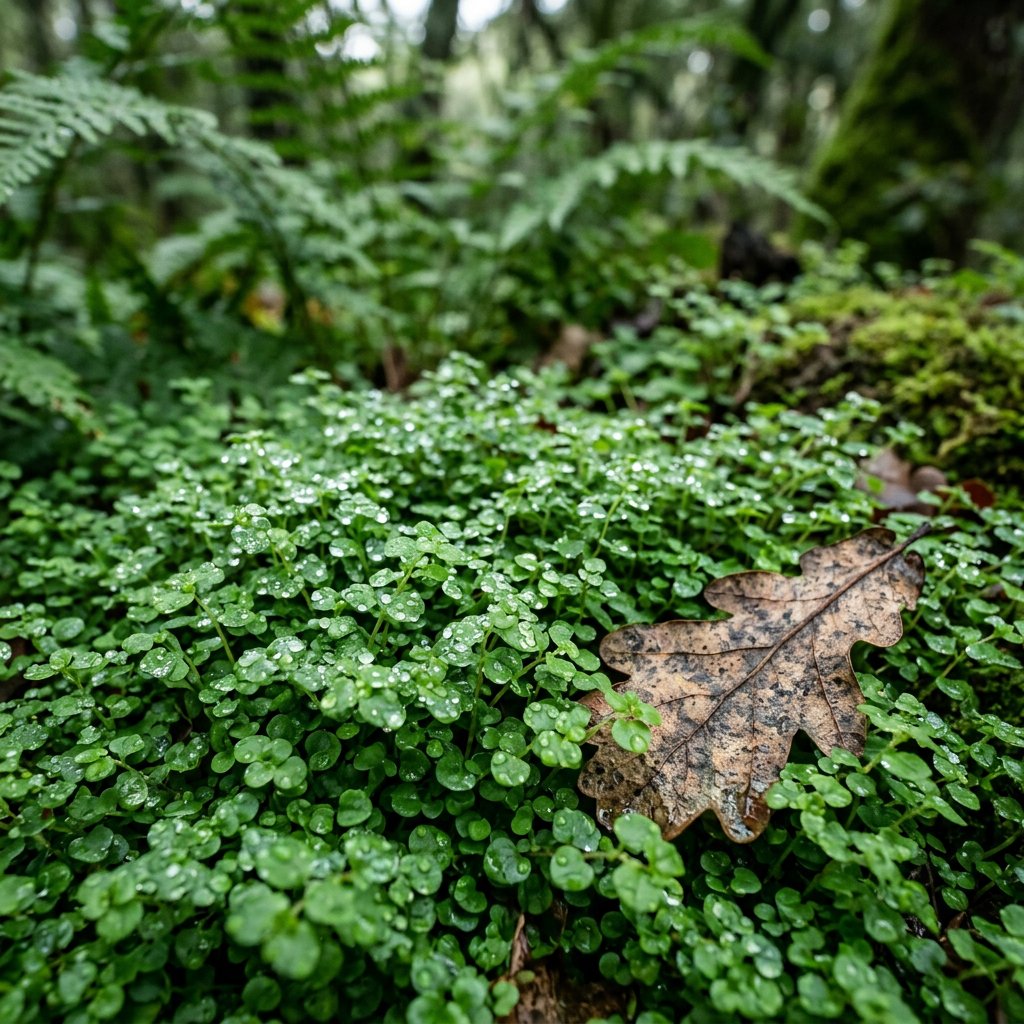
Known affectionately as Baby’s Tears or the cheekily named Mind-your-own-business, this plant is a lush, creeping miracle originally from the Mediterranean islands. It forms a dense, moss-like carpet of tiny emerald leaves that spill over the sides of pots like a soft, green waterfall. It is a favorite for fairy gardens and terrarium lovers who want to add a delicate, "storybook" texture to their collection.
🔍 How to Identify
- 🍃 Foliage: Dainty, circular leaves that are rarely larger than a few millimeters, creating a dense, rounded mound of greenery.
- 🧵 Stems: Fragile, translucent, and thread-like stems that creep along the soil surface, rooting wherever they touch the ground.
- 🌸 Blooms: Extremely tiny, star-shaped creamy-white flowers that lack petals and often go unnoticed by the naked eye.
🏡 In Your Garden
- 💧 The Humidity Factor: Because its leaves are so thin, this plant breathes moisture rapidly. It is the ultimate "drama queen" when thirsty, wilting flat the moment the soil dries, but it will miraculously bounce back within an hour of being watered.
- 🪴 Terrarium Star: It thrives in the "Mind-your-own-business" style by filling every available gap. In a closed glass container, it creates its own mini-climate, making it much easier to maintain than in the dry air of a typical living room.
⚠️ Safety & Toxicity
- ✅ Pet Friendly: Great news for pet parents! This plant is non-toxic to cats, dogs, and horses.
- 👶 Gentle Touch: It is completely safe for children, though its delicate structure means it shouldn't be handled roughly, as the stems snap under the slightest pressure.
✨ Fun Fact
Despite its fragile, "indoor-only" reputation in many parts of the world, Soleirolia helxine is surprisingly tough; in its native habitat, it can survive under a blanket of snow by going dormant and regrowing entirely from its root system in the spring!

Detailed Care Instructions
To grow Soleirolia Helxine, also known as baby's tears or mind-your-own-business, you can follow the steps below:
- Choose the right location: Soleirolia Helxine prefers indirect or filtered sunlight. It can be grown both indoors and outdoors.
- Prepare the soil: Use a well-draining potting mix or soil with added organic matter. It should be moist but not overly wet or waterlogged.
- Planting: If planting in a pot, ensure it has drainage holes. Place the plant in the pot and cover the roots with soil, leaving some space for growth. If growing outdoors, choose a suitable location with partial shade or a moist, shady area.
- Watering: Soleirolia Helxine requires consistent moist soil. Water it regularly, allowing the top inch of soil to dry out slightly between watering sessions. Avoid overwatering, as it can lead to root rot.
- Humidity: This plant thrives in humid conditions. If you live in a dry climate, you can increase humidity by misting the leaves with water or using a humidifier.
- Fertilizing: Soleirolia Helxine doesn't require regular fertilizing but can benefit from a diluted liquid houseplant fertilizer every 2-4 weeks during the growing season (spring and summer).
- Pruning: Trimming the plant occasionally helps to maintain its shape and encourage bushier growth.
- Pests and diseases: Monitor your plant for any signs of pests like aphids or spider mites. If detected, treat them with an appropriate insecticide or use natural remedies like neem oil. Avoid overwatering to prevent fungal diseases.
- Propagation: Soleirolia Helxine can be propagated easily by dividing the plant or taking stem cuttings. Simply separate the plant or cut a stem with leaves, remove the lower leaves, and place it in a container with water or moist soil. Keep it in a warm, bright location until the roots develop.
- Repotting: Over time, your Soleirolia Helxine plant may outgrow its container. Repot it into a slightly larger pot using fresh potting soil to support its growth.
By following these steps, you can successfully grow and care for Soleirolia Helxine plants.
To water this plant, it's best to keep the soil consistently moist but not soaking wet. The plant prefers a well-draining soil, so be sure to allow excess water to drain away from the bottom of its container. You can observe the plant to see if it needs more or less water - if the leaves are wilting or turning brown, it may need more water, while yellow leaves may indicate overwatering. It is also important to avoid getting water on the leaves themselves, as excess moisture on the foliage can lead to disease or pests.
To fertilize this plant, you should use a well-balanced water-soluble fertilizer with a ratio of 20-20-20. Dissolve the fertilizer in water according to the instructions on the package and apply it to the soil around the base of the plant. It is important not to over-fertilize, as this can burn the roots and harm the plant. Fertilize no more than once a month during the growing season.
The Soleirolia Helxine plant thrives well in well-draining soil that is rich in nutrients, with a pH level ranging between 5.5 and 7.0. The ideal soil texture should be a loose and aerated mix, with good water retention capabilities, but make sure not to over-water the plant as it can cause root rot. Adding peat moss, perlite, or vermiculite to the soil enriches it with organic matter and enhances drainage. It is also recommended to keep the soil moist and avoid letting it dry out completely. When planting in a container, it is advisable to choose a pot with drainage holes to prevent waterlogging.
To propagate this plant, you will need to gather clippings from the stem and leaves. Ensure that the clippings are long and have at least three to four leaves on them. Remove excess leaves from the stem, leaving the top two leaves intact. Prepare a pot with well-draining and moist soil mixture. Insert the clippings vertically into the soil, and gently press the soil around it. Keep the soil constantly moist and place the pot in a brightly lit but shaded area. In a few weeks, new growth should appear, indicating successful propagation.







