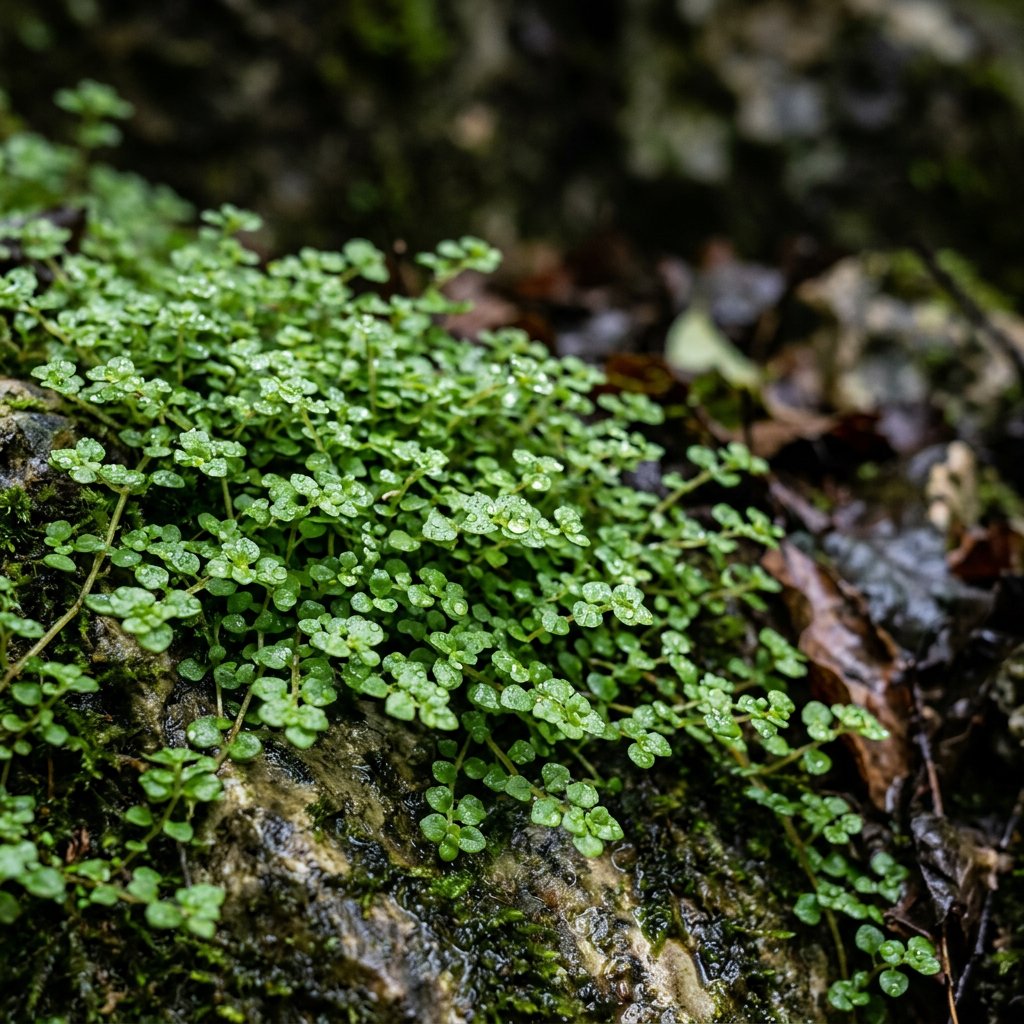
Plant Overview
Known affectionately as Baby’s Tears, Angel’s Tears, or the cheekily named Mind-your-own-business, this Mediterranean native is a master of the "living carpet" look. Though it resembles a soft, delicate moss, it is actually a member of the nettle family. It has gained a reputation for being both incredibly easy to grow and a bit of a "drama queen" when it misses a single watering.
🔍 How to Identify
- 🍃 Tiny Foliage: The most striking feature is the scale; hundreds of minuscule, round, bright green leaves (less than 5mm wide) pack together to form a dense mat.
- 🌱 Creeping Stems: It possesses fragile, translucent pinkish-white stems that crawl along the soil surface, rooting wherever they touch the ground.
- 🌼 Inconspicuous Flowers: In late spring, it produces tiny, creamy-white flowers, though they are so small they are often overlooked by the naked eye.
🏡 In Your Garden
- 💧 The Thirst is Real: This plant thrives on constant moisture. Because its root system is incredibly shallow, it cannot tap into deep water reserves, meaning it will visibly "collapse" or wilt the moment the top layer of soil dries out.
- ☁️ Humidity Lover: It is a superstar in terrariums or humid bathrooms. In dry indoor air, the leaves may turn crispy and brown at the edges, so regular misting or a pebble tray is its best friend.
- 🪴 Space Invader: While it looks charming in a pot, be careful planting it in the ground. In mild, damp climates, its ability to regrow from even a tiny fragment of stem makes it an aggressive spreader that can quickly overtake slower-growing neighbors.
⚠️ Safety & Toxicity
- 🐾 Pet Friendly: Unlike many common houseplants, Soleirolia soleirolii is non-toxic to cats, dogs, and horses. It is a safe choice for households with curious nibblers.
- 👶 Child Safe: It is considered non-toxic to humans. Its soft texture even makes it a popular "tactile plant" for children's sensory gardens.
✨ Fun Fact
Despite its fragile appearance and "Baby's Tears" nickname, this plant is incredibly resilient to foot traffic. In its native Mediterranean habitat, it often grows in the cracks of damp stone walls and cobblestones, bouncing back even after being stepped on!

Detailed Care Instructions
Baby's tears are easy to care for once you get their water, humidity, and light exposure correct. They need regular, consistent watering and fertilizer—so they are not entirely low maintenance.
How fast do baby's tears grow?
Baby's tears are a fast-growing creeper in perfect growing conditions.
What's the difference between baby's tears and Irish moss?
Baby tears plants are sometimes confused with Irish moss (Sagina subulata). From a distance, it's hard to tell the two apart. Both plants have the same bright green foliage, low-growing characteristics and produce tiny white flowers. Irish moss has very fine, thread-like foliage, while baby's tears have teardrop-shaped leaves. Irish moss is hardy down to USDA zone 4, working better as a landscape perennial than a houseplant.
| Color | Creamy Ivory |
| Soil Ph | 5.0 To 6.0; Slightly Acidic |
| Humidity | Normal |
| Lighting | Part Sun |
| Soil Type | Rich, Moist Loam |
| Bloom Time | Late Spring To Early Summer; May To June |
| Difficulty | Medium |
| Plant Type | Herbaceous Perennial, Often Used As A Houseplant |
| Mature Size | 4 Inches Tall, With A Spread Of 36 Inches Or More |
| Native Area | Corsica, Western Mediterranean |
| Temperature | 18°C - 25°C |
| Sun Exposure | Partial Sun; Bright Filtered Light |
| Hardiness Zones | 9 To 11, Usda |
To grow Soleirolia soleirolii, also known as baby's tears or angel's tears, you can follow these steps:
- Lighting: Choose a location with bright, indirect light. Soleirolia soleirolii thrives in medium to high light conditions, but direct sunlight can scorch its delicate leaves. A north-facing window or a spot under fluorescent lights can be ideal.
- Temperature: The plant prefers moderate temperatures of around 65-75°F (18-24°C). Avoid exposing it to extreme cold or hot temperatures.
- Watering: Keep the soil consistently moist but not waterlogged. Water when the top inch of soil feels dry to the touch. Overwatering can lead to root rot, while underwatering can cause browning and drying of the leaves.
- Humidity: Soleirolia soleirolii thrives in humid conditions. You can increase humidity by placing a tray filled with water near the plant or by using a humidifier. Regular misting can also help maintain higher humidity levels.
- Soil: Choose a well-draining potting mix. A mix of peat moss, perlite, and sand can be suitable. Adding organic matter to the soil can improve moisture retention.
- Fertilizer: Apply a balanced, water-soluble houseplant fertilizer diluted to half-strength once a month during the growing season (spring and summer). Do not fertilize during the dormant period (fall and winter).
- Pruning: Soleirolia soleirolii tends to grow low and sprawling. To control its growth and maintain a neat appearance, trim back any leggy or excessively long stems. Use clean, sharp scissors to cut the stems just above a leaf node.
- Propagation: The plant is easy to propagate. Gently separate healthy, well-rooted sections from the main plant and plant them individually in separate pots. Water them well and maintain proper care to ensure healthy growth.
Remember to monitor the plant regularly for signs of pests such as mealybugs or aphids. If detected, treat the infestation promptly using organic or chemical pest control methods.

Place in a window with dappled sun or a spot in the middle of a room. Or directly in a window facing west or east.

The plant requires regular watering to keep the soil moist but not waterlogged. Water it at least once a week or more frequently if the soil feels dry to the touch. When watering, avoid getting water on the leaves as it can cause damage or disease. Water the plant at the base or use a watering can with a fine spout to target the soil directly. Ensure the pot has good drainage to prevent overwatering. Check the soil regularly for moisture levels and adjust the watering schedule accordingly. It is essential to maintain even moisture levels to keep the plant healthy.
To fertilize this plant, you should first choose a balanced liquid fertilizer with equal parts nitrogen, phosphorous, and potassium. Dilute the fertilizer with water to half strength and apply every 2-3 weeks during the active growing season, which typically falls in the spring and summer. Be careful not to over-fertilize, as this can cause leaf scorching and damage to the plant's delicate root system. Always follow the manufacturer's instructions and adjust the frequency and strength of fertilization based on the plant's response.
For optimal growth and development of this particular plant, it is recommended to use a well-draining soil mix that has a slightly acidic to neutral pH level. This type of soil should be composed of a combination of peat moss, perlite, and sand to promote healthy root growth and prevent waterlogging. It is also important to ensure that the soil is kept moist but not overly saturated to avoid root rot and other plant diseases. Additionally, regular fertilization with a balanced, water-soluble fertilizer can help boost growth and overall plant health.
This plant can be propagated by division or rizomes which is a popular method. First, take a mature plant and gently remove it from its pot. Then, using a clean, sharp knife or scissors, carefully cut through the root system, separating it into several smaller sections. Each section should have a good amount of leaves, roots, and stems. Next, plant each section in a well-draining soil mix, making sure to water it well and keep it in a warm, bright location. Keep the soil moist but not overly wet, and within a few weeks, new growth should appear. Be patient as it may take some time for your new plants to establish themselves.
Common pests of the baby's-tears include Fungus gnats. Make a habit of checking your baby's-tears frequently for pests so that any infestations can be caught and managed early.








