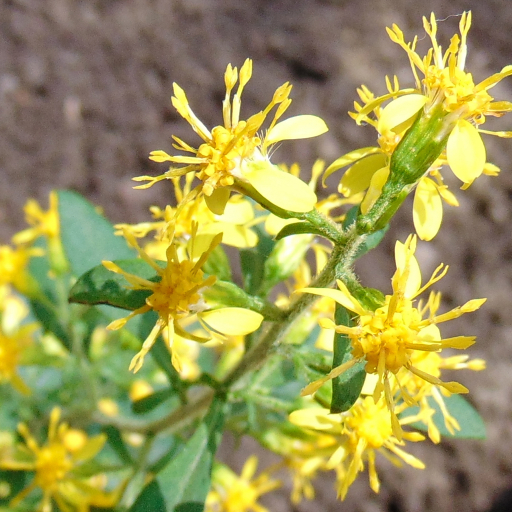
Plant Overview
Often called the Large-leaved Goldenrod, this hardy wildflower is a signature of cool, northern forests and high-altitude mountain slopes. Unlike its field-dwelling cousins that soak up the summer heat, this species prefers the dappled light of woodland glades. It acts as a late-summer beacon for high-country pollinators, providing a vital nectar source just as the season begins to turn.
🔍 How to Identify
- 🍃 The Foliage: True to its name, the lower leaves are exceptionally large, often heart-shaped or broadly oval with sharply toothed edges.
- 🌼 The Blooms: Bright yellow flower heads are arranged in "clusters" along the upper stem or in a dense, club-like spike at the top, rather than the flat-topped sprays seen in other species.
- 📏 Growth Habit: It typically stands 1 to 3 feet tall, with a smooth, sturdy stem that manages to look elegant even in the rugged terrain of a rocky forest floor.
🏡 In Your Garden
- 🌲 The Woodland Vibe: Because it originates from cool, moist, and often acidic woodland environments, it is the perfect choice for a "shade garden" or a naturalized woodland border where other sun-loving goldenrods would fail.
- 💧 Moisture Matters: It hates drying out completely. If you plant it at home, ensure the soil remains consistently moist and is enriched with organic matter to mimic the decomposing leaf litter of its native habitat.
⚠️ Safety & Toxicity
- ✅ Status: Generally safe and non-toxic.
- 🐾 Pet Safety: There are no known toxic effects for cats, dogs, or horses, making it a "worry-free" addition to a wilder landscape.
- 🌾 Allergy Myth: Like most goldenrods, it is often wrongly blamed for hay fever. Because its pollen is heavy and sticky (designed to be carried by bees, not the wind), the real culprit is usually the inconspicuous Ragweed that blooms at the same time.
✨ Fun Fact
While many Goldenrods look nearly identical to the untrained eye, Solidago macrophylla is a favorite among botanical hikers because its massive basal leaves make it one of the few species you can confidently identify even before it produces a single flower!

Detailed Care Instructions
Here are some steps to help you grow Solidago macrophylla, also known as large-leaved goldenrod:
- Choose a suitable location: Select a spot in your garden that receives full sun to partial shade. Solidago macrophylla thrives in well-draining soil and can tolerate various soil types, including sandy or loamy soil.
- Prepare the soil: Prior to planting, amend the soil by adding organic matter such as compost or aged manure to improve fertility and drainage. Remove any weeds or grass from the planting area.
- Planting: Dig a hole slightly larger than the root ball of the Solidago macrophylla plant. Place the plant in the hole, ensuring the top of the root ball is level with the surrounding soil. Backfill the hole with soil and gently pat it down to remove any air pockets. Leave a slight depression around the base of the plant to help retain water.
- Watering: After planting, give the Solidago macrophylla a good watering to settle the soil and ensure proper root establishment. Water consistently for the first few weeks to keep the soil consistently moist. Once established, the plant can tolerate periods of drought, but regular watering during dry spells will promote healthier growth.
- Mulching: Apply a layer of organic mulch around the base of the plant, but ensure it doesn't touch the stems. Mulch helps conserve moisture, suppress weed growth, and insulate the soil.
- Pruning: Solidago macrophylla doesn't require extensive pruning, but you can remove spent flowers or trim back any dead or damaged stems as needed. Pruning in early spring before new growth emerges can help maintain a tidy appearance.
- Fertilizing: Solidago macrophylla generally doesn't require additional fertilization if the soil is rich in organic matter. However, you can apply a slow-release balanced fertilizer in early spring if your soil is deficient in nutrients.
- Pest and disease control: Solidago macrophylla is relatively resistant to pests and diseases. However, keeping the plant properly spaced and providing good airflow can minimize the risk of diseases like powdery mildew. Regularly inspect the plant for any signs of pests or diseases and treat accordingly if necessary.
By following these steps, you can successfully grow Solidago macrophylla and enjoy its beautiful golden flowers in your garden.

Place in a bright room that is sun drenched almost all day. Or directly in a south-facing window.

Solidago Macrophylla belongs to the family of flowering plants, which require optimum watering to thrive. Maintaining a proper watering schedule is crucial for the healthy growth of the plant. Here is how you can water Solidago Macrophylla plant:
1. Determine the soil type - Check the soil's moisture level as it helps in deciding how often and how much water it needs. If the soil feels dry at a depth of 1-2 inches, it's time to water.
2. Watering frequency - The frequency of watering depends on the climate, season, and soil type. During the first few weeks after transplanting, the plant needs frequent watering to establish the root system. After that, water it once a week or more if the soil is dry.
3. Watering technique - Avoid overhead watering as it can lead to fungal diseases. Instead, water the plant at the base using a watering can or a gardening hose. Water slowly to allow the soil to absorb moisture.
4. Watering quantity - The amount of water depends on the soil and container's size. Generally, Solidago Macrophylla requires moderate watering, which is enough to keep the soil moist but not waterlogged. If the water starts to accumulate in the drainage holes, reduce the amount of water.
5. Mulching - Mulching helps in retaining the moisture and keeps the soil cool. Add a layer of organic mulch around the plant, which is 2-3 inches thick. Mulching also prevents weed growth around the plant.
Overall, water Solidago Macrophylla regularly, but avoid overwatering, which can lead to root rot. Follow the above techniques to ensure proper watering and promote healthy plant growth.
To fertilize this plant, apply a balanced, all-purpose fertilizer during its active growing period in the spring or early summer. Be sure to follow the recommended instructions on the fertilizer's packaging and avoid over-fertilizing as this can damage the plant. Additionally, mixing compost or organic matter into the soil can also help provide nutrients to the plant. Avoid fertilizing after mid-summer to allow the plant to prepare for winter dormancy.
The ideal soil for this plant should have a well-draining texture, with a mix of organic and inorganic components. It should have a pH range of 6.0-7.5 and be rich in nutrients, especially nitrogen, phosphorus, and potassium. The soil should be moist but not waterlogged, as this may cause root rot and other fungal diseases. Adding compost or peat moss to the soil can help improve its texture and water-holding capacity, while also providing additional nutrients for the plant. Additionally, it is important to avoid compacting the soil around the plant, as this can hinder its growth and development.
To propagate this plant, one can start by collecting seeds from the plants in the fall. These seeds should be sown in a seed tray or container filled with a soilless mix. The containers should be placed in a location that receives bright but indirect light. The seeds should be watered gently but regularly to keep the soil moist.
Another method to propagate Solidago Macrophylla is through stem cuttings. Stem cuttings should be taken in late spring or early summer. The cutting should be a stem that is young and fresh. The bottom of the cutting should be dipped in a rooting hormone, and then it should be placed in a pot filled with a soilless mix. The cutting should be watered and then kept in a location that receives bright, indirect light. After a few weeks, roots will develop, and the new plant can be transplanted into a larger pot or directly into the ground.
Division is another method of propagating Solidago Macrophylla. The plant should be dug up, and the root ball should be separated into smaller sections. Each section should have some roots and foliage. The divided sections should then be planted in a new location, and watered regularly until the plants have established themselves.








