Plant Overview
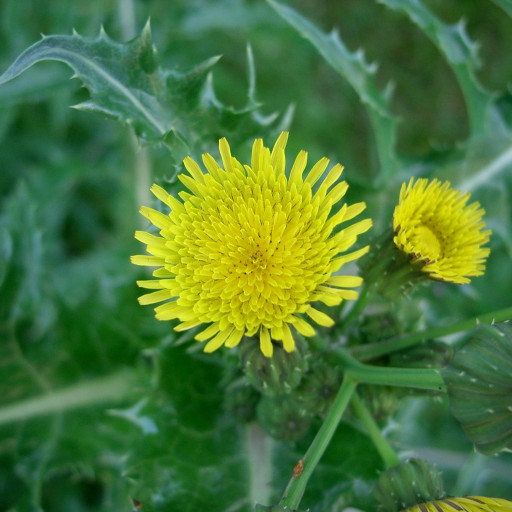
Often mistaken for a common dandelion on steroids or a true thistle, the Spiny Sowthistle is a hardy traveler found in gardens across the globe. Known colloquially as "Rough Milk Thistle," this plant is a master of adaptation, sporting glossy, "armored" leaves that look much more painful than they actually are. While many gardeners pull it as a weed, it has a long history as a nutritious forage plant for livestock and a sturdy survivor in the urban wild.
🔍 How to Identify
- 🍃 The Leaves: The most striking feature is the dark, waxy green leaves with wavy, prickly margins. Unlike true thistles, these "spines" are relatively soft to the touch.
- 👂 The "Ears": If you look where the leaf meets the stem, you’ll see rounded lobes (auricles) that tightly clasp and wrap around the stalk, often curling into a little spiral.
- 🌼 The Flowers: It produces clusters of small, bright yellow flower heads that resemble dandelions. When they go to seed, they turn into fluffy white "puffs" that carry on the wind.
- 🥛 The Milky Sap: If you snap the hollow stem, the plant exudes a thick, white milky latex, a classic trait of the Sonchus genus.
🏡 In Your Garden
- 🌱 Root Logic: The Spiny Sowthistle grows a deep, stubborn taproot. This makes it incredibly drought-tolerant but a nightmare to transplant. If you want to remove it, you must pull it early before that root anchors deep into the subsoil.
- 🦋 Wildlife Value: While it might be a "weed" to some, it is a high-value plant for pollinators. It is a frequent host for hoverflies and bees, and its seeds are a favorite snack for goldfinches in the late summer.
⚠️ Safety & Toxicity
- ✅ Status: Generally non-toxic to humans and common pets.
- 🧤 Skin Irritation: The milky sap contains latex which can cause mild skin irritation or "contact dermatitis" for people with sensitive skin. The prickles, while not venomous, can cause tiny mechanical scratches if handled without gloves.
✨ Fun Fact
The name "Sowthistle" isn't a coincidence—it dates back to ancient folk traditions where the plant was fed to nursing sows (female pigs) because the milky sap was believed to increase their milk production!

Detailed Care Instructions
| Color | Green With Yellow Blooms |
| Soil Ph | 5.5-8.5 |
| Invasive | Weed |
| Toxicity | Non-Toxic |
| Soil Type | Clay, Loamy, Rocky, Sandy |
| Bloom Time | Spring To Summer |
| Plant Type | Weed, Wildflower |
| Mature Size | Up To 6.5 Feet Tall |
| Native Area | Eurasia And Northern Africa |
| Sun Exposure | Full Sun |
| Hardiness Zones | 9A |
To grow Sonchus asper, also known as prickly sow thistle or spiny sow thistle, here are some steps to follow:
- Choose a suitable location: Sonchus asper prefers full sun or partial shade. Make sure the area you select has well-draining soil.
- Prepare the soil: Clear the area of any weeds or debris. Loosen the soil using a garden fork or tiller. Add organic matter like compost or well-rotted manure to enrich the soil.
- Sow seeds: Sonchus asper can be easily grown from seed. Scatter the seeds over the prepared soil and press them down gently. You can sow the seeds directly in the garden bed or start them indoors 4-6 weeks before the last frost and transplant later.
- Watering: Keep the soil consistently moist until the seeds germinate. After germination, water regularly, especially during dry periods. Sonchus asper prefers evenly moist soil but avoid overwatering as it may lead to root rot.
- Maintenance: Remove any competing weeds around the Sonchus asper plants to prevent them from being overcrowded. Apply a layer of organic mulch around the plants to suppress weeds and help retain moisture. Fertilize with a balanced, all-purpose fertilizer once or twice during the growing season.
- Support: Sonchus asper can grow quite tall, so consider providing support like stakes or a trellis to keep the plants upright and prevent them from flopping over.
- Harvesting: Sonchus asper leaves can be harvested for culinary use when they are young and tender. Be careful with the prickly spines on the leaves, so wear gloves when handling them. Harvesting the leaves regularly also encourages bushier growth.
Remember, Sonchus asper can be considered a weed in some areas due to its ability to spread prolifically. Make sure to check with your local authorities or gardening experts for any specific recommendations or regulations regarding this plant in your region.

Place in a bright room that is sun drenched almost all day. Or directly in a south-facing window.

Sonchus Asper plant needs a consistent water schedule to thrive. The soil should be evenly moist, but not waterlogged. It is important to avoid letting the soil dry out completely between watering, as this can cause stress to the plant and affect its growth. It is recommended to water the plant thoroughly and deeply, allowing the water to reach the roots. This can be achieved through slow watering or the use of a drip irrigation system. Additionally, it is important to avoid getting water on the leaves, as this can encourage fungal growth and disease. Overall, consistent and proper watering is essential for the health of the Sonchus Asper plant.
To fertilize this plant, begin by selecting a balanced organic fertilizer with equal parts nitrogen, phosphorus, and potassium. Fertilize once a month during the growing season, from early spring until late summer. Dilute the fertilizer to half strength and apply it directly to the soil around the plant. Avoid getting the fertilizer on the leaves or stems, as this can cause burning or damage to the plant. Water the plant after fertilizing to help distribute the nutrients into the soil.
The plant Sonchus Asper requires a well-draining soil that is rich in organic matter. The soil should have a pH level between 6.0 to 7.0. The soil should not be too compact as it can restrict root growth and inhibit water infiltration. The soil also needs to be adequately moist for the plant to thrive but not too wet as it can lead to root rot. Additionally, a layer of mulch can help retain moisture and suppress weed growth around the plant.
To propagate this plant, you can take stem cuttings in the spring or early summer. Select a healthy stem from the parent plant and cut a 4-6 inch piece from it. Make sure the stem has at least 2-3 leaves on it.
Remove the bottom pair of leaves and dip the cut end of the stem in a rooting hormone powder. Plant the stem in a pot filled with a well-draining potting mix and water it thoroughly.
Cover the pot with a clear plastic bag to create a humid environment and place it in a bright, indirect light. Keep the soil moist but not waterlogged.
Check after a few weeks for new growth and roots. Once the new plant is established, gradually acclimate it to outdoor conditions and transplant it to its permanent location in the garden.








