Plant Overview
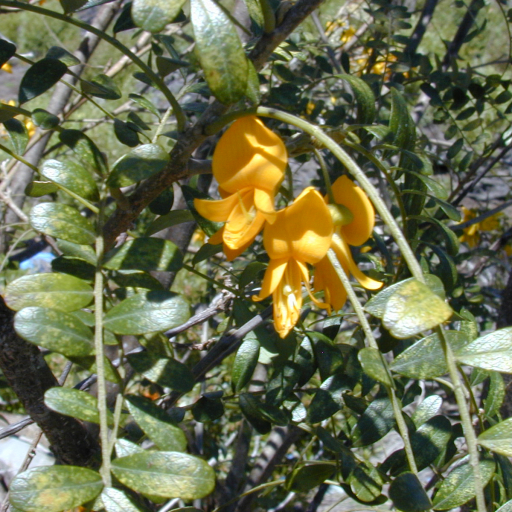
Known affectionately as Māmane, this golden-flowered beauty is a legendary survivor of the Hawaiian high-altitude forests. Found nowhere else on Earth, it is a cornerstone of the volcanic ecosystem, providing a vital lifeline for some of Hawaii’s rarest birds. With its gnarled, silvery wood and clusters of sun-drenched blossoms, it looks like something plucked from a botanical fairytale.
🔍 How to Identify
- 🌼 The Flowers: Large, drooping clusters of bright yellow, pea-like blossoms that can turn an entire hillside gold during a heavy bloom.
- 🍃 The Foliage: Small, oval leaflets arranged in pairs. They often have a fine, silky coating of hairs that gives the plant a distinct silvery or grayish-green shimmer in the sunlight.
- 📿 The Seed Pods: Highly recognizable "beaded" pods that are constricted between each seed, resembling a string of woody pearls. These turn brown and hard as they mature.
🏡 In Your Garden
- 🌋 Volcanic Heritage: Because it evolved on the slopes of Mauna Kea and Mauna Loa, Māmane demands exceptional drainage. It is highly susceptible to root rot if left in heavy, soggy soil; think "cinder or gravel" rather than "potting mix."
- 🏔️ Climate Nuance: While it is incredibly hardy against drought and frost, it prefers the "cool and dry" of the mountains. It may struggle in very hot, humid, or salty coastal gardens where the air doesn't move enough.
- 🕊️ Wildlife Magnet: If you live in its native range, planting Māmane is the best way to invite native honeycreepers into your yard, as they crave the high-energy nectar found in the bell-shaped flowers.
⚠️ Safety & Toxicity
- 🚫 Status: Toxic if ingested.
- 🧪 Details: The seeds of the Māmane contain high concentrations of cytisine, an alkaloid that is poisonous to humans, livestock, and most pets. Ingestion can lead to vomiting, tremors, and respiratory distress. While it's a beautiful ornamental, it should be kept away from curious toddlers or dogs who like to chew on fallen seed pods.
✨ Fun Fact
The Māmane tree and the Palila (a rare Hawaiian honeycreeper) share one of nature’s most incredible bonds. The Palila has evolved a specialized liver that allows it to eat the Māmane seeds, which are toxic enough to kill most other birds. Without the Māmane tree, the Palila bird would likely go extinct!

Detailed Care Instructions

Place in a bright room that is sun drenched almost all day. Or directly in a south-facing window.

To water this particular plant, you should follow the standard watering practices for most indoor plants. You want to ensure that you give your plant enough water to keep the soil consistently moist, without letting it become waterlogged. One way to gauge how much water your plant needs is to stick your finger into the soil about an inch deep. If it feels dry, it's time to water.
When watering, pour water slowly and evenly onto the soil, making sure to distribute it throughout the pot. You don't want to pour too quickly or too much, as this can create runoff that doesn't get absorbed by the plant's roots.
It's also important to avoid getting water on the leaves and stems of the plant, as this can promote the growth of mildew and other harmful fungi. If you accidentally get water on the plant, it's a good idea to wipe it off with a clean cloth or tissue.
Overall, the key to successfully watering this plant is consistency and attention to detail. By following these guidelines, you should be able to keep your Sophora Chrysophylla healthy and thriving for years to come.
Sophora chrysophylla is a plant that prefers to grow in well-draining and moisture-retentive soils. It is best to use a soil that is slightly acidic with a pH range between 5.0 and 6.5. Also, it requires a soil that is rich in organic matter, such as compost or peat moss. This plant does not tolerate heavy clay soils, as those types of soils hold too much water and can potentially damage the roots. Additionally, it is essential to avoid using soils that are too alkaline, as they can cause nutritional deficiencies. Upon planting, the soil should be thoroughly moistened, and regular watering is needed to keep the soil consistently moist but not waterlogged.








