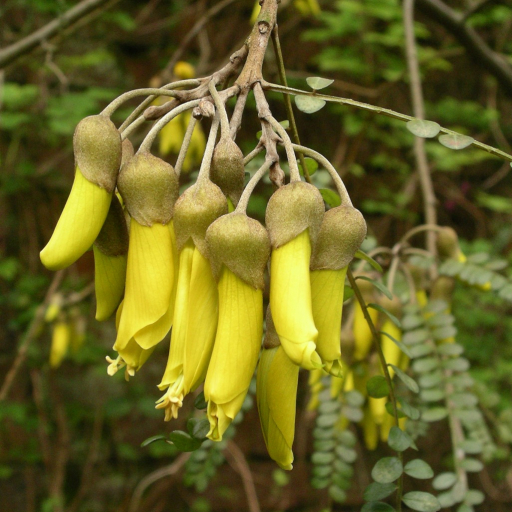
Plant Overview
Often called the Large-leaved Kōwhai or the Golden Bell, Sophora tetraptera is one of New Zealand’s most iconic native trees. To many, its vibrant yellow blooms are the official "herald of spring," signaling the end of winter as they drip from the branches like liquid sunshine. In Māori tradition, the flowering of the Kōwhai was a seasonal calendar, indicating the time to plant sweet potatoes (Kumara).
🔍 How to Identify
- 🦜 Parrot-Beak Flowers: The most striking feature is the clusters of drooping, tubular yellow flowers that look remarkably like the beak of a parrot.
- 🌿 Feathery Foliage: The leaves are "pinnate," meaning they consist of dozens of tiny, oval leaflets arranged in pairs along a central stem, giving the tree a delicate, fern-like appearance.
- 📿 Beaded Seed Pods: After flowering, the tree produces long, greyish-brown pods that are uniquely constricted between each seed, making them look like a string of wooden beads.
🏡 In Your Garden
- 🐦 A Bird Magnet: If you plant a Kōwhai, expect visitors. The nectar-rich flowers are the favorite food of honey-eating birds like the Tui and Bellbird, who will perform acrobatic feats to reach the nectar inside the "beaks."
- ☀️ Sun-Seeker Nuances: This tree craves full sun and sharp drainage. It is relatively hardy once established, but it possesses a deep taproot; this means it hates being moved, so choose its "forever home" in your garden carefully.
- 🍂 Semi-Deciduous Habit: Don't panic if your tree suddenly looks bare in late winter! Sophora tetraptera often drops many of its leaves right before it flowers to ensure the golden blooms are fully visible to pollinators.
⚠️ Safety & Toxicity
- 🚫 Toxic Seeds: While the flowers are beautiful, the hard yellow seeds inside the pods contain cytisine, a toxic alkaloid.
- 🧒 Keep Away from Kids & Pets: Ingesting the seeds can cause severe vomiting, dizziness, or worse. Because the pods look like interesting "rattles" or "jewelry," ensure young children are supervised and that pets don't chew on the fallen pods.
✨ Fun Fact
The name "Kōwhai" is actually the Māori word for the color yellow. It is so central to the identity of the landscape that the plant and the color share the same name!

Detailed Care Instructions
To grow Sophora Tetraptera, commonly known as the Kowhai tree, you can follow the steps mentioned below:
- Climate and soil requirements: Kowhai trees thrive in temperate climates with mild winters and warm summers. They prefer well-draining soil rich in organic matter. If your climate is not suitable, you can try growing it in a container and move it indoors during colder seasons.
- Seed collection: Collect seeds from mature Sophora Tetraptera pods. These pods are typically formed after the tree flowers in spring and summer. Allow the pods to fully ripen and turn brown before collecting the seeds.
- Seed treatment: Soak the seeds in warm water for 24 hours to soften the hard seed coat. This will aid in germination.
- Germination: Fill seed trays or pots with a well-draining potting mix. Sow the seeds at a depth of about 1 cm and lightly cover them with the soil. Water the seeds gently.
- Growing conditions: Place the seed trays or pots in a warm and bright location, preferably in full sun. Keep the soil moist, but not waterlogged, throughout the germination and growing process.
- Transplanting: Once the seedlings reach a height of around 15 cm and develop a few sets of true leaves, they can be transplanted into individual pots or directly into the ground. Choose a sunny spot with well-draining soil for planting.
- Watering and care: Sophora Tetraptera requires regular watering, especially during dry spells. However, make sure not to overwater as it may cause root rot. Mulching around the base of the plant can help conserve moisture and deter weed growth. Prune the tree if needed to maintain shape and remove any dead or diseased branches.
- Pest and disease control: The Kowhai tree is generally quite resistant to pests and diseases. However, keep an eye out for aphids, caterpillars, or scale insects. If any infestation occurs, you can use natural or organic methods of pest control or consult with a local gardening expert for advice.
- Patience: Sophora Tetraptera takes time to mature and reach its full size, so be patient with its growth.
Remember to check with your local gardening or agricultural department for any specific care instructions or recommendations based on your region's climate and environmental conditions.

Place in a bright room that is sun drenched almost all day. Or directly in a south-facing window.

Sophora Tetraptera is a plant that is typically grown in moist, well-drained soils. To water this plant, you should water it deeply and thoroughly. This means that you should aim to water the roots of the plant, rather than just the surface soil.
One way to do this is by using a drip irrigation system. This will allow you to control the amount of water that is delivered to the roots of the plant, and will also help to reduce water waste.
Another option is to use a soaker hose. This is a hose that is placed in the soil around the plant, and water is delivered slowly and evenly to the roots of the plant.
Regardless of the method you choose, it is important to water your Sophora Tetraptera regularly, especially during hot, dry weather. This will help to keep the plant healthy and thriving.
To fertilize Sophora Tetraptera, use a well-balanced fertilizer with equal parts nitrogen, phosphorus, and potassium. Apply the fertilizer once a month during the growing season, which is typically from spring to early fall. Use a slow-release fertilizer or dilute the fertilizer to half strength to prevent burning the roots. Water the plant well before and after fertilizing to help the nutrients penetrate into the soil. Avoid fertilizing during the winter when the plant is dormant.
For optimal growth and health of the Sophora Tetraptera plant, it is recommended to use a well-draining and nutrient-rich soil. The soil should be slightly acidic with a pH range of 5.5 to 6.5. It is advisable to mix the soil with a good quality organic compost to supply necessary nutrients and improve its overall texture. The soil should also be kept slightly moist but not waterlogged to prevent root rot. The plant prefers well-drained soils, but it can also adapt to sandy or loamy soils with sufficient drainage. It is also recommended to add a layer of mulch around the base of the plant to maintain moisture in the soil and prevent weeds.
Sophora tetraptera can be propagated through both seed and hardwood cuttings. When propagating through seeds, the seeds should be collected from mature plants in the fall and planted immediately. The seeds should be sown in well-drained soil and kept moist. The seedlings will emerge in the spring.
To propagate by hardwood cuttings, select a stem from a mature plant and cut a 30-40 cm section. Remove all leaves except for a few at the top. Dip the cutting in rooting hormone and plant it in a container with a well-draining soil mix. Keep the soil moist and place the container in a shaded area. In a few weeks, roots will form and the cutting can be planted in a permanent location.
It is important to note that Sophora tetraptera prefers well-drained soil and a sunny location. They are fairly drought-tolerant but should still be watered regularly during dry spells. It is a hardy plant and can grow up to 10 meters tall.








