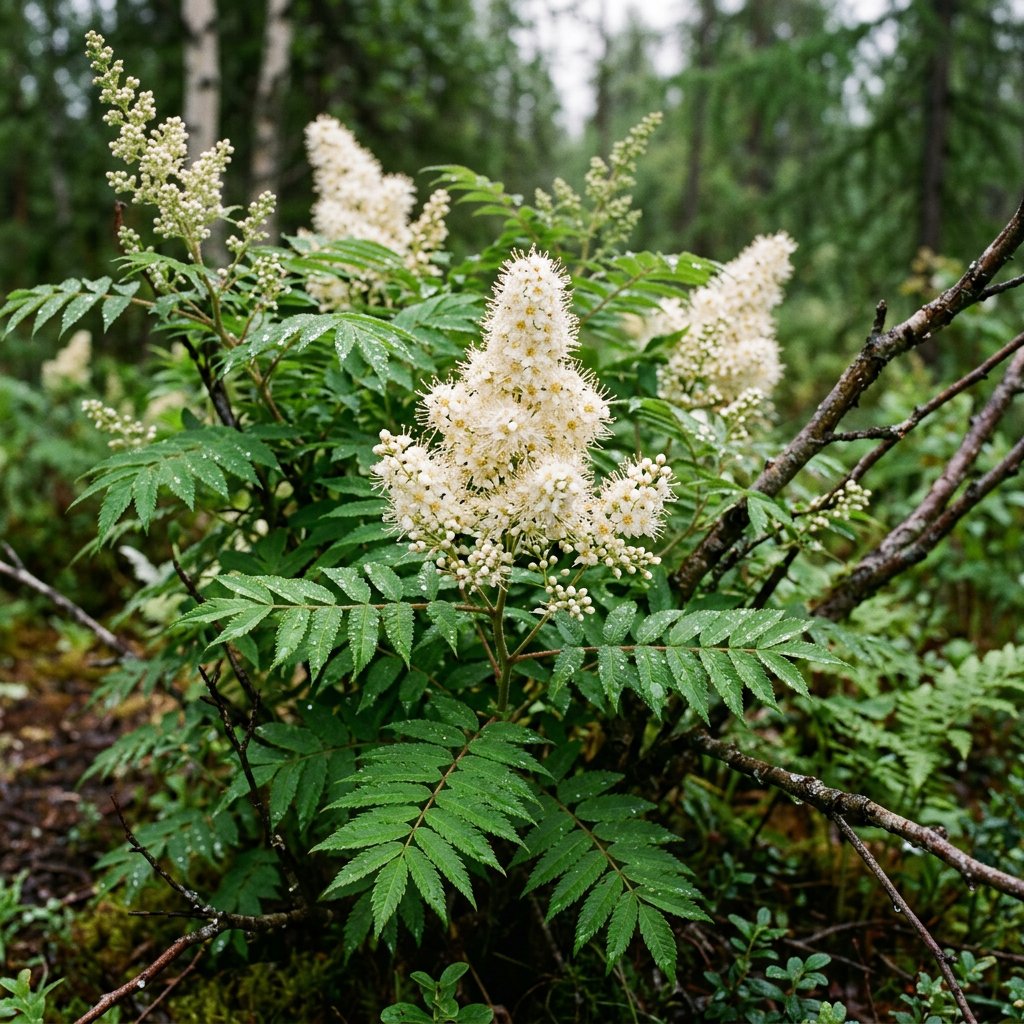
Plant Overview
Often called the False Spirea or Ural False Spirea, this plant is a master of disguise. Its foliage looks remarkably like a row of delicate ferns or a mountain ash tree, but it surprises everyone in midsummer with massive, frothy white flower plumes. Hailing from the cold regions of Siberia and Northern Asia, it is built for extreme endurance and rapid growth.
🔍 How to Identify
- 🌿 Fern-like Foliage: The leaves are "pinnate," meaning multiple small, serrated leaflets grow along a central stem, creating a feathered, tropical appearance in a hardy shrub.
- ☁️ Lacy Plumes: In July and August, it produces large, upright pyramidal clusters of tiny white flowers that look like creamy sea foam or clouds of lace.
- 🍂 Spring Tint: One of its most beautiful features is the new growth; in early spring, the emerging leaves often sport a stunning bronze, pink, or reddish hue before maturing to deep green.
🏡 In Your Garden
- 🏃 The Great Colonizer: This shrub spreads aggressively via underground "runners" (suckers). It is a fantastic choice for stabilizing a hillside or filling a massive empty gap, but it may "bully" smaller neighbors in a tight garden bed.
- ✂️ Hardy Pruning: Because it blooms on "new wood" (growth from the current year), you can prune it back hard in late winter. This keeps the shrub compact and encourages more dramatic flowering in the summer.
- 💧 Thirst for Life: While it is incredibly tough, it thrives best in moist soil. If it gets too dry, the leaf tips may turn brown, signaling it's time for a deep soak.
⚠️ Safety & Toxicity
- 🐾 Mildly Toxic: Like many members of the Rose family, the leaves and seeds contain small amounts of cyanogenic glycosides. While not usually fatal, it can cause vomiting or lethargy in dogs, cats, or horses if consumed in large quantities.
- 👶 Keep Away from Kids: While the frothy flowers look inviting, the plant is not edible. Ensure children don't graze on the foliage to avoid stomach upset.
✨ Fun Fact
The False Spirea is a true "Early Bird" of the botanical world. It is often the very first shrub in a garden to break dormancy, unfurling its bright green leaves while the rest of the landscape is still brown and waking up from winter.

Detailed Care Instructions
| Humidity | Dry |
| Lighting | Full Sun |
| Difficulty | Medium |
| Temperature | 10°C - 26°C |
| Hardiness Zones | 2 - 8 |
To grow Sorbaria Sorbifolia, also known as false spiraea or false goat's beard, follow these steps:
- Planting: Start by choosing a suitable location for your Sorbaria Sorbifolia. It prefers full sun to partial shade and moist, well-draining soil. Plant it in the spring or fall when the soil is workable.
- Soil preparation: Prepare the planting area by removing any weeds, rocks, or debris. Loosen the soil and amend it with organic matter like compost or well-rotted manure to improve drainage and fertility.
- Digging the hole: Dig a hole that is slightly larger and deeper than the root ball of the plant. Make sure the hole is wide enough to accommodate the spread of the roots.
- Planting: Place the Sorbaria Sorbifolia in the hole, making sure the top of the root ball is level with the surrounding soil. Backfill the hole with soil, gently firming it around the roots to eliminate air pockets.
- Watering: After planting, water the Sorbaria Sorbifolia thoroughly to settle the soil and ensure good root-to-soil contact. Water regularly during the first growing season, especially in dry spells or extreme heat.
- Mulching: Apply a layer of organic mulch around the plant, leaving a gap around the stem to prevent moisture-related issues. Mulching helps conserve moisture, suppress weeds, and regulate soil temperature.
- Pruning: Sorbaria Sorbifolia is a fast-growing shrub that can benefit from annual pruning. Prune in late winter or early spring before new growth starts. Remove dead or damaged branches and thin out crowded growth to maintain an open and attractive shape.
- Fertilizing: Fertilize the plant in early spring with a balanced, slow-release fertilizer formulated for shrubs. Follow the package instructions for application rates.
- Pests and diseases: While generally resistant to pests and diseases, keep an eye out for common issues like aphids or powdery mildew. Monitor regularly and take appropriate action if necessary, such as using insecticidal soap or a fungicide.
- Division/propagation: Sorbaria Sorbifolia can be propagated through division. Dig up the plant in early spring or fall, and carefully divide the root ball into smaller sections. Replant the sections in prepared soil and water thoroughly.
Remember to consult local gardening resources or a horticulturist for specific details about growing Sorbaria Sorbifolia in your region, as conditions may vary.

Place in a bright room that is sun drenched almost all day. Or directly in a south-facing window.

To properly water this plant, first ensure that the soil is well-draining and not waterlogged. Water deeply but infrequently, allowing the soil to dry somewhat between waterings. Avoid getting water on the foliage, as this can promote fungal growth. For best results, use tepid water and water early in the day to allow the plant to fully absorb the moisture before the sun sets.
To fertilize this plant, you should provide it with a balanced fertilizer during the growing season. Apply the fertilizer in early spring before new growth begins and again in mid-summer. Follow the instructions on the label and avoid over-fertilizing, as this can damage the plant. Water the plant well after each application to ensure the nutrients are absorbed properly.
The plant Sorbaria Sorbifolia prefers to grow in a well-draining soil. It requires soil that is rich in organic matter, with a pH that is slightly acidic to neutral. Adding compost or aged manure to the soil prior to planting can help to improve its fertility and texture. Additionally, this plant prefers soil that is consistently moist but not waterlogged. However, it can tolerate periods of drought once established. It is recommended to avoid using heavy soils with high clay content since these types of soils can retain too much water and may cause problems with root rot.
Propagation of this plant can be done through softwood cuttings taken in early summer when the plant is actively growing. The cuttings should be approximately 10cm in length and stripped of their lower leaves. They should then be dipped in hormone rooting powder before being placed in a potting mix of equal parts peat moss and sand. The potting mix should be kept moist and warm, in a location with indirect sunlight, until rooting occurs. Once the cuttings have developed roots, they can be transplanted into individual pots or directly into the ground.
Common pests of the false spiraea include Scale insect, spider mites, aphids, larvae. Make a habit of checking your false spiraea frequently for pests so that any infestations can be caught and managed early.








