Plant Overview
Known as the California Mountain Ash, this high-altitude beauty is a favorite for those who love the wild aesthetics of the Sierra Nevada. Despite its name, it isn't a true "Ash" but is actually a member of the Rose family. It is most famous for its dramatic transformation throughout the seasons, shifting from delicate white blooms in the spring to fiery, glowing orange foliage and bright red berries in the autumn.
🔍 How to Identify
- 🌿 The Leaves: It features "pinnately compound" leaves, meaning several small leaflets grow along a central stalk like a feather. Each leaflet is finely toothed along the edges.
- 🌼 The Flowers: In early summer, it produces dense, flat-topped clusters of tiny, creamy-white flowers that have a sweet, slightly heavy scent.
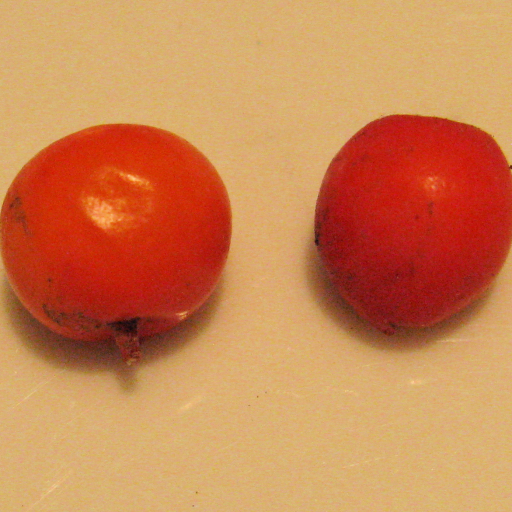
- 🍒 The Fruit: The most striking feature is the heavy clusters of glossy, small berries that turn from a pale orange to a brilliant, deep red as the weather cools.
🏡 In Your Garden
- 💧 Moisture Lover: In the wild, this plant clings to mountain seeps and stream banks. In a garden setting, it hates "wet feet" but needs consistently moist, well-draining soil to mimic its cool mountain home.
- 🏔️ Climate Sensitivity: Because it is a subalpine species, it struggles in extreme heat or low-elevation humidity. It is happiest in zones where it can experience a true, cold winter dormancy.
- 🦋 Wildlife Magnet: It is a vital resource for pollinators when in bloom, and the berries are a high-energy snack for migratory birds like Cedar Waxwings and Robins.
⚠️ Safety & Toxicity
- 🐾 Mild Toxicity: Like many members of the Rose family (including apples), the seeds contain small amounts of cyanogenic glycosides. While the fruit flesh is not inherently "poisonous," the seeds should never be chewed or swallowed in large quantities.
- 🤢 Digestive Upset: The raw berries are extremely bitter and astringent. If eaten by curious children or pets, they are likely to cause a stomach ache or nausea, though serious poisoning is rare.
✨ Fun Fact
The California Mountain Ash is an "indicator species" for heavy snowpack! Because its branches are incredibly flexible, it can be buried under several feet of snow for months without snapping, simply springing back into shape once the spring melt begins.

Detailed Care Instructions
To grow Sorbus californica, also known as California mountain ash, follow these steps:
- Location: Choose a suitable location for planting the Sorbus californica. It prefers full sun to partial shade and well-draining soil. It can tolerate a variety of soil types but prefers moist, loamy soil.
- Planting: Plant the Sorbus californica in the spring or fall. Dig a hole that is slightly wider and deeper than the root ball of the plant. Place the plant in the hole, ensuring that it is planted at the same level it was in the container. Backfill the hole with soil and gently firm it around the roots.
- Watering: Water the plant regularly, especially during its first year of growth. Keep the soil evenly moist, but avoid overwatering or letting it dry out completely. Mulching around the base of the plant can help retain moisture.
- Pruning: Prune the Sorbus californica in late winter or early spring to maintain its shape and remove any dead, diseased, or crossing branches. Avoid heavy pruning, as it can negatively impact flowering and fruiting.
- Fertilizing: Apply a balanced, slow-release fertilizer in spring to promote healthy growth. Follow the manufacturer's instructions for the dosage and application method.
- Protection: Protect the plant from pests and diseases. Regularly inspect for signs of aphids, caterpillars, or other common pests. Use appropriate insecticides or organic pest control methods if necessary. Ensure good air circulation around the plant to prevent fungal diseases.
- Propagation: Sorbus californica can be propagated using seeds or by taking softwood cuttings in early summer. However, keep in mind that seed-grown plants may not necessarily retain the desired characteristics of the parent plant.
By following these steps, you can successfully grow the Sorbus californica plant. Remember to provide it with proper care and maintenance to ensure its healthy growth and development.

Place in a bright room that is sun drenched almost all day. Or directly in a south-facing window.

To properly water this type of plant, it is first necessary to ensure that the soil is thoroughly moistened at planting time and for the first few weeks afterward. After this initial period, the plant should be watered deeply and infrequently, allowing the soil to dry out between waterings. Overwatering can be detrimental to the plant's health, as it can lead to root rot or other issues. When watering, it is important to direct the water toward the base of the plant, avoiding the leaves and stems as much as possible. This can help prevent fungal growth and other diseases from developing. Additionally, if the plant is located in a hot or sunny area, it may need more frequent watering to prevent it from drying out. Overall, it is important to monitor the soil moisture level and adjust watering frequency as needed based on the plant's specific needs and growing conditions.
- Choose a fertilizer that is specifically formulated for trees or woody plants.
- Apply the fertilizer in the early spring, just before new growth appears.
- Use a slow-release fertilizer to ensure continuous feeding throughout the growing season.
- Spread the fertilizer evenly around the base of the plant, taking care not to let it touch the trunk.
- Water the fertilizer thoroughly into the soil to ensure it reaches the root system.
- Repeat the fertilization process annually to promote healthy growth and fruit production.
The type of soil that is best suited for the Sorbus Californica plant is one that is well-draining, moist, and rich in organic matter. Ideally, the soil should be slightly acidic with a pH range of around 5.5 to 6.5. It is important to ensure that the soil is not too sandy or too heavy, as either of these conditions can lead to problems with drainage or water retention.
To prepare the soil for planting, it is recommended to amend it with compost or other organic matter to help improve its nutrient content and water retention. The plant should be planted in a hole that is slightly larger than its root ball, and it should be positioned so that the top of the root ball is level with the soil surface.
After planting, it is important to water the Sorbus Californica regularly, especially during dry periods. Mulching around the base of the plant can also help to retain moisture in the soil and suppress weeds. A balanced fertilizer can be applied to the soil in the spring to help promote healthy growth and flowering.
To propagate this plant, you will need to collect mature seeds from the fruit in the fall. After cleaning the seeds, stratify them in the refrigerator for 60-90 days before sowing them in a well-draining soil mix. Keep the soil moist and place the container in a cool location with indirect light. Once the seedlings emerge, you can gradually expose them to more light and warmer temperatures. Alternatively, you can take hardwood cuttings in late winter and root them in a moist, sandy soil mix with bottom heat. Keep the cuttings in a humid environment until they begin to form new growth. Transplant the rooted cuttings into a well-draining potting mix and keep them in a protected location until they are established.








