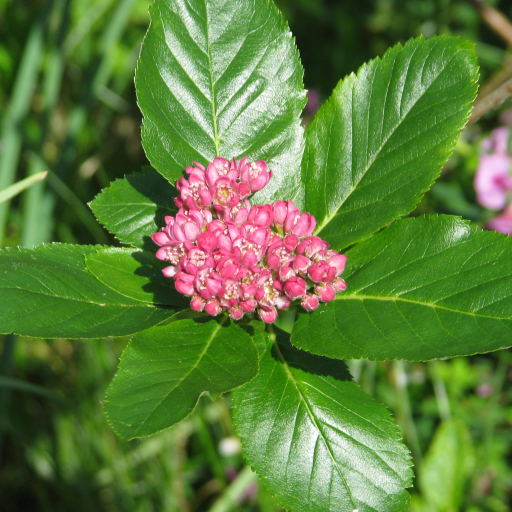
Plant Overview
Often called the False Medlar or Dwarf Whitebeam, this charming shrub is the rebel of the mountain ash family. Unlike its tall, white-flowered Rowan cousins, this alpine specialist stays low to the ground and surprises hikers with rare, rosy-pink blossoms. It is a rugged survivor found clinging to the limestone crags of the European Alps and Balkans.
🔍 How to Identify
- 🌸 The Blooms: Unlike most Sorbus species that have flat white clusters, this plant produces small, upright clusters of pale pink to deep rose-colored flowers in early summer.
- 🍃 Leathery Leaves: The leaves are simple (not divided like a Rowan), oval-shaped, and feature finely "toothed" edges with a smooth, dark green topside.
- 🍎 Oval Berries: In autumn, it produces decorative, egg-shaped red fruits (pomes) that stand out against the rocky terrain.
🏡 In Your Garden
- ⛰️ Alpine Specialist: Because it originates from high altitudes, it thrives in rock gardens or scree beds. It specifically craves well-drained, lime-rich (alkaline) soil and struggles in heavy, waterlogged clay.
- ❄️ Cooler Climates: This is not a plant for the tropics; it loves cold winters and breezy, cool summers. It is exceptionally hardy against frost but may pout in high humidity or sweltering lowland heat.
⚠️ Safety & Toxicity
- 🟢 General Safety: The False Medlar is generally considered non-toxic to touch, and its berries are a vital food source for mountain birds.
- 🍎 Seed Caution: Like many members of the Rose family (including apples), the seeds contain trace amounts of hydrogen cyanide. While the fruit is technically edible once cooked or overripe, it is best enjoyed by the birds rather than kept as a snack for pets or children.
✨ Fun Fact
The species name chamaemespilus literally translates to "ground medlar." It was given this name because early botanists thought the shrub looked like a miniature, earth-hugging version of the Medlar tree (Mespilus germanica).

Detailed Care Instructions
To grow a Sorbus chamaemespilus plant, also known as the dwarf wild service tree, you can follow these steps:
- Choose a suitable location: Sorbus chamaemespilus prefers full sun or partial shade. Select a site with well-drained soil. The plant can tolerate various soil types, but prefers acidic to slightly alkaline soils.
- Obtain a healthy plant: Purchase a Sorbus chamaemespilus seedling or container-grown plant from a reputable nursery or propogate it from seeds or cuttings.
- Planting: Dig a hole slightly larger than the root ball of the plant. Place the plant in the hole so that the top of the root ball is level with or slightly above the soil surface. Backfill the hole with soil, ensuring firm contact around the roots. Water thoroughly after planting.
- Watering: Keep the soil consistently moist but not waterlogged. Water deeply once or twice a week, especially during hot and dry periods. Avoid overwatering, as it can lead to root rot.
- Mulching: Apply a layer of organic mulch around the base of the plant to conserve moisture and suppress weed growth. Leave a gap around the stem to prevent rotting.
- Pruning: Prune Sorbus chamaemespilus in late winter or early spring to encourage healthy growth and maintain the desired shape. Remove any dead, diseased, or crossing branches. Thin out the canopy to improve air circulation.
- Fertilizing: Apply a balanced, slow-release fertilizer in early spring or according to the manufacturer's instructions. This can help promote healthy growth.
- Protection: Shield the plant from strong winds and severe frost during its early years, as it may still be establishing its roots.
- Pest and disease management: Monitor the plant for common pests such as aphids and caterpillars. Treat any infestations promptly using appropriate insecticides or natural remedies. Keep an eye out for diseases like powdery mildew or fire blight and take necessary actions if detected.
- Regular maintenance: Regularly check the plant for any signs of stress, pests, or diseases. Provide adequate water, sunlight, and care to ensure its overall health and vigor.
Remember that growing conditions may vary based on your specific location and climate. Conduct research or seek advice from local gardening experts for region-specific tips.

Place in a bright room that is sun drenched almost all day. Or directly in a south-facing window.

To properly water this plant, it is important to take into account several factors such as its location, soil quality and moisture needs. When watering, it is crucial to ensure that the soil is moist but not waterlogged, as excess moisture can lead to root rot and other plant diseases.
The best way to water this plant is to water deeply at the base of the plant, allowing the water to reach the roots. It is recommended to water the plant when the top inch of soil is dry to the touch, usually once a week during the growing season. During drier summer months, more frequent watering may be necessary.
It is important to avoid getting water on the leaves or flowers, as this can lead to fungal diseases and damage to the plant. If the plant is in a location where it receives rainwater, this can supplement the amount of watering that is necessary.
Overall, it is important to monitor the plant's moisture needs and adjust watering accordingly to ensure the plant remains healthy and thriving.
To fertilize this plant, use a balanced fertilizer with equal amounts of nitrogen, phosphorus, and potassium. Apply the fertilizer in early spring, just before the plant begins to bud. Spread the fertilizer evenly around the base of the plant, being careful not to let it touch the trunk. Water the plant thoroughly immediately after fertilizing. Repeat the process once or twice during the growing season, spacing the applications about 4-6 weeks apart. Avoid fertilizing the plant in late summer or fall, as this can encourage tender new growth that may not have time to harden off before winter.
Sorbus Chamaemespilus thrives in well-draining soil that is rich in organic matter. The soil should have a pH level between 5.0 to 6.5 and must be well-aerated to allow the root system to breathe. It also requires soil that is moist but not waterlogged; hence sandy loam soil with good water holding capacity is preferable.
The plant also benefits from soil that is slightly acidic to neutral in nature. Fertile loam soil with an addition of perlite and peat moss can improve soil permeability, allowing the roots to take in the necessary nutrients. Using compost and manure can enhance soil fertility.
Avoid using heavy clay soils as they retain water and do not allow the water to drain, resulting in poor root growth and even root rot. Similarly, avoid using soils that have high salinity content, which can damage the roots and adversely affect the growth of the plant.
Overall, the soil required for Sorbus Chamaemespilus should be well-drained, loamy, fertile, and slightly acidic to neutral in pH.
To propagate this plant, first choose a healthy and mature specimen from which to take cuttings. Using sharp and clean pruning shears, take a stem cutting that is between 4-6 inches long and has several leaves attached to it. Remove any leaves from the bottom half of the stem, leaving only the top half with leaves intact. Dip the cut end of the stem in rooting hormone powder, tapping off any excess. Place the cutting into a container filled with moist potting soil or a mixture of sand and peat moss, making sure the bottom half is buried in the soil. Cover the container with a plastic bag or clear plastic wrap to create a mini greenhouse environment, ensuring the soil remains consistently moist without becoming waterlogged. Place the container in a bright but shaded area, avoiding direct sunlight. Be patient and wait for the cutting to root and establish itself over several weeks before transplanting to a larger container or garden bed.








