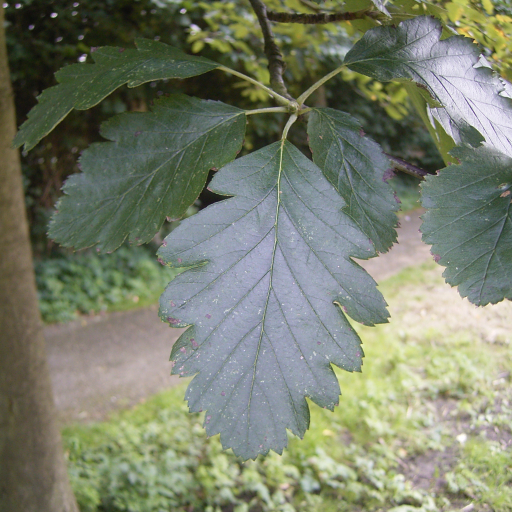
Plant Overview
Often called the Swedish Whitebeam, this tree is a true "Rugged Survivor of the North." Originating from the Baltic region, it is a natural hybrid that has become a staple of Scandinavian coastal landscapes and European city streets. It is beloved by gardeners for its ability to maintain a neat, silvery appearance even when subjected to harsh winds or urban pollution.
🔍 How to Identify
- 🍃 Two-Tone Leaves: The leaves are broad and lobed, featuring a dark, glossy green top and a distinctively fuzzy, felt-like underside that appears silver or grey in the wind.
- 🌸 Creamy Clusters: In late spring, the tree is covered in dense, flat-topped clusters of creamy-white flowers that provide a feast for local pollinators.
- 🍒 Bright Berries: By autumn, it produces oval-shaped, orange-red berries. These fruits are slightly larger and more elongated than those of the common Rowan tree.
🏡 In Your Garden
- 🛡️ The Ultimate Windbreak: Because it evolved in coastal areas, it is incredibly wind-resistant and salt-tolerant. It is the perfect choice for exposed gardens where other trees might lean or lose their leaves.
- 🧱 Urban Resilience: It is one of the best trees for "street life." It handles compacted soil and air pollution remarkably well, and its roots are generally deep enough not to disturb nearby pavement or foundations.
- 🐦 A Winter Pantry: If you love birdwatching, this is a must-have. The berries often persist into the cold months, attracting waxwings, thrushes, and blackbirds when other food sources are scarce.
⚠️ Safety & Toxicity
- 🟢 General Safety: The Swedish Whitebeam is considered non-toxic to humans and pets. It is a common sight in public parks and playgrounds.
- 🍒 Seed Caution: While the fruit is technically edible and often used in traditional jellies, the seeds—like those of apples—contain small amounts of cyanogenic glycosides. They should not be consumed in large quantities.
✨ Fun Fact
The Swedish Whitebeam is "apomictic," meaning it can produce seeds that are exact genetic clones of the mother tree without needing any pollination! This unique biological trick allows it to stabilize its characteristics across generations without the "chaos" of cross-breeding.

Detailed Care Instructions
To grow a Sorbus intermedia plant, also known as Swedish Whitebeam, follow these steps:
- Choose a suitable location: Sorbus intermedia prefers a spot with full sun or partial shade and well-drained soil. It can tolerate a range of soil types but prefers slightly acidic to neutral soil.
- Planting time: The best time to plant Sorbus intermedia is in early spring or late autumn. Avoid planting during the hot summer months.
- Prepare the soil: Dig a hole that is wide and deep enough to accommodate the plant's roots. Mix some well-rotted organic matter or compost into the soil to improve drainage and fertility.
- Plant the Sorbus intermedia: Gently remove the plant from its container and place it in the hole, ensuring that the top of the root ball is level with the surrounding soil. Backfill the hole with soil, firm it gently, and water thoroughly.
- Watering: Keep the soil evenly moist but not waterlogged, particularly during the plant's establishment period. Water regularly, especially during dry spells.
- Mulching: Apply a layer of organic mulch around the base of the plant, such as wood chips or bark. This will help retain moisture, suppress weed growth, and protect the roots from extreme temperatures.
- Pruning: Minimal pruning is required for Sorbus intermedia. Remove any dead, damaged, or diseased branches in late winter or early spring. Avoid heavy pruning as it may affect the overall shape and health of the plant.
- Fertilization: Sorbus intermedia generally does not require regular fertilization. However, you can apply a balanced slow-release fertilizer in early spring to provide nutrients for optimal growth.
- Pest and disease control: Sorbus intermedia is generally resistant to pests and diseases. However, occasional susceptibility to aphids, caterpillars, or mildew may occur. Monitor the plant regularly and take appropriate measures if any issues arise.
- Regular care: Regularly check the moisture levels of the soil and water as needed. Remove weeds around the base of the plant to prevent competition. Monitor the overall health and appearance of the Sorbus intermedia, providing support or stake if necessary.
With proper care and maintenance, your Sorbus intermedia plant should grow and thrive, providing you with beautiful foliage and ornamental berries.

Place in a bright room that is sun drenched almost all day. Or directly in a south-facing window.

To properly water this plant, it's important to consider its specific needs. A good way to determine when it needs to be watered is to check the soil moisture level. Insert your finger into the soil up to your second knuckle. If the soil feels dry at this depth, it's time to water. When watering, make sure to soak the entire root ball thoroughly. Allow excess water to drain out of the bottom of the pot or container. Avoid watering the plant too frequently as this can lead to root rot. However, it's important to maintain consistent moisture levels to prevent the plant from drying out completely. Use a watering can or hose with a gentle spray to avoid damaging the plant or causing soil erosion.
Firstly, ensure that the plant has established roots within the soil. Then, apply a balanced fertilizer that contains equal amounts of nitrogen, phosphorus, and potassium. Spread the fertilizer evenly around the base of the plant, avoiding any direct contact with the stem. Water the plant thoroughly after fertilizing to help the nutrients soak into the soil. Repeat this process annually in the spring before the growing season begins.
It is recommended to use well-draining soil with adequate organic matter content when planting this particular plant species. The soil pH should be ideally between 5.5 and 7.5. It is also important to ensure that the soil is not too compacted and that it has access to sufficient water and nutrients. Additionally, it is advised to add mulch around the base of the plant to help retain moisture and suppress weed growth.
Propagation of this plant can be achieved through various techniques such as using cuttings, layering, and seeds. The most common method is through cuttings, which involves taking a stem from a healthy mature plant and rooting it in soil or water. The cutting should be about 4 to 6 inches long, taken from the new growth of the plant and should have at least two nodes. The leaves should be removed from the bottom third of the cutting, and the remaining leaves should be trimmed to half their size. The cutting should be dipped in rooting hormone and then inserted into the moist soil or water. The cutting should be kept in a warm and humid environment until roots appear and then transplanted to a permanent location. Layering is another method where a stem is bent towards the ground and covered with soil until new roots form. Lastly, the plant can be propagated through seeds, which are collected from the mature fruit and then planted in soil for germination.








