Plant Overview
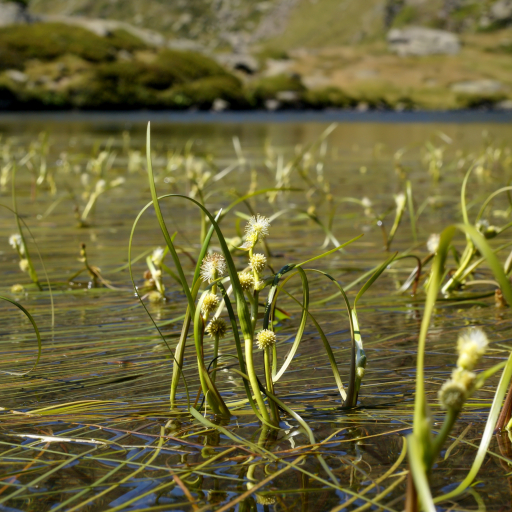
Often called the Floating Bur-reed, this graceful aquatic perennial is the minimalist of the pond world. It is known for its long, ribbon-like leaves that trail lazily across the surface of mountain lakes and cold northern streams. While its name sounds a bit prickly, its soft, flowing green tresses add a sense of serene movement to any body of water it inhabits.
🔍 How to Identify
- 🍃 Ribbon Leaves: The leaves are incredibly narrow, flat, and can grow several feet long, floating gracefully on the water's surface like green streamers.
- ⚽ Spiky Flower Heads: It produces distinct, spherical flower clusters that look like tiny, soft maces or "burs." The male flowers sit at the top of the stalk, while the female "burs" sit below.
- 📏 Growth Habit: Unlike its upright cousins, this species is primarily a floater, rarely standing tall out of the water unless the water level drops significantly.
🏡 In Your Garden
- 💧 Cold Water Lover: This plant is native to alpine and northern regions. It struggles in warm, stagnant koi ponds and thrives best in clean, moving, or very cool water with low nutrient levels.
- 🐟 Wildlife Haven: In a naturalistic pond, its submerged stems and floating leaves provide excellent "nurseries" for small fish and aquatic insects, offering protection from birds.
- 🏔️ Substrate Needs: It prefers a sandy or silty bottom rather than rich potting soil. Because it is adapted to nutrient-poor (oligotrophic) lakes, over-fertilizing your pond will likely cause it to be outcompeted by algae.
⚠️ Safety & Toxicity
- ✅ Safe Status: Sparganium angustifolium is considered non-toxic to humans, dogs, cats, and horses.
- 🧤 Physical Texture: While not "poisonous," the dried seed heads (the burs) can become quite stiff and prickly. If you are cleaning out a pond in the autumn, wearing gloves will protect your hands from these tiny spikes.
✨ Fun Fact
The Floating Bur-reed acts as a natural "water cleaner." Because it thrives in pristine environments, its presence is often used by ecologists as a biological indicator that the water is high quality and free from heavy pollution.

Detailed Care Instructions
To grow Sparganium Angustifolium, also known as narrow-leaved bur-reed, follow these steps:
- Choose the right location: Sparganium Angustifolium prefers wet, marshy areas or the shallow edges of ponds, lakes, or streams. Ensure the location receives full to partial sunlight throughout the day.
- Prepare the planting area: Clear the planting area of any weeds or debris. If planting in a container, ensure it has adequate drainage holes.
- Plant the seeds or rhizomes: Sparganium Angustifolium reproduces through seeds or rhizomes. If using seeds, plant them in a thin layer in the damp soil or on the water's edge. If using rhizomes, plant them about 1-2 inches deep in the soil or shallow water. Space them around 1-2 feet apart.
- Maintain water levels: Sparganium Angustifolium requires consistently moist soil or shallow water. Ensure that the plants receive enough water to keep the soil damp but not waterlogged. Consider using a drip irrigation system or watering from below to maintain moisture levels. Avoid letting the plant dry out.
- Fertilize sparingly: Sparganium Angustifolium does not generally require heavy fertilization. However, you can use a slow-release, aquatic plant-specific fertilizer if needed. Follow the manufacturer's instructions for application rates.
- Control weeds: Remove any weeds that compete with Sparganium Angustifolium for nutrients or space. This can be done manually or by using a safe aquatic herbicide. Ensure that any herbicides used are specifically labeled for use in aquatic environments.
- Monitor and protect from pests: Sparganium Angustifolium is generally not susceptible to many pests or diseases. However, monitor for any signs of damage or infestation and take appropriate measures if necessary, such as using organic pest control methods.
- Propagate and divide: Sparganium Angustifolium can be propagated by dividing mature plants. Once established and mature, you can gently divide the plants and replant them in different areas if desired. This can help expand their presence in your garden or water feature.
Remember to check with your local authorities before growing Sparganium Angustifolium in natural water bodies, as it may be considered invasive in some areas.

Place in a bright room that is sun drenched almost all day. Or directly in a south-facing window.

To water this plant, provide it with adequate amounts of water that enable it to grow and stay healthy. The type of soil and potting medium used for the plant plays a critical role in determining the amount and frequency of watering needed.
Ensure that the soil remains consistently moist but not waterlogged to avoid the roots from rotting. The natural environment of the Sparganium Angustifolium plant should guide your watering habits.
If you cultivate this plant in a pot or container, check for drainage holes at the bottom. The drainage holes should be adequate to allow excess water to flow out of the container.
It's best to water this plant in the morning or the evening since the temperatures are cooler, which limits the chances of the water evaporating too fast. Avoid watering the plant when it's too hot since this will cause the water to evaporate, leaving the soil dry.
Observe the plant closely to determine the watering needs. If the leaves are drooping, that's a sign that it needs water. Similarly, the plant may need to be watered more frequently during the hot summer season.
Overall, ensure that you strike a balance between keeping the soil moist but not waterlogged to prevent root rot.
To fertilize this aquatic plant, use a slow-release fertilizer with equal amounts of nitrogen, phosphorus, and potassium. Apply the fertilizer once a month during the growing season, making sure to distribute it evenly around the root system. Avoid applying too much fertilizer, as this can lead to algae blooms and other negative effects on water quality. Monitor the plant's growth and adjust fertilization as needed to achieve optimal health and performance.
When planting for Sparganium Angustifolium, it is important to choose a soil that is rich in organic matter and well-draining. The ideal pH level for this plant should be between neutral and slightly acidic, and it prefers moist soil conditions. To achieve these conditions, a mixture of soil with compost or peat moss can be used. In addition, adding sand or perlite to the soil can help improve drainage and prevent waterlogging. It is important to avoid using heavy clay soils or soils with poor drainage as these conditions can lead to root rot and other harmful diseases. Overall, selecting a high-quality, nutrient-rich soil that is well-suited to Sparganium Angustifolium's preferences is essential for the long-term health and growth of the plant.
To propagate this plant, take a vigorous stem cutting with a clean, sharp knife or pruners. Remove the lower leaves, up to about half of the stem, to reduce transpiration and encourage root growth. Dip the cut end in rooting hormone and plant in a moistened potting mix that drains well. Keep the soil slightly moist and the cutting in a bright, indirect light location. After a few weeks to a few months, the cutting should start to produce roots and new growth. Once it has established itself in the pot, it can be transplanted to a larger container or planted directly in the ground in a suitable location.








