Plant Overview
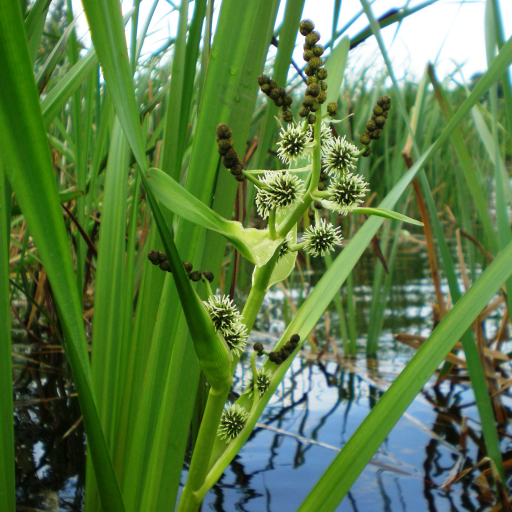
Meet the Branched Bur-reed, a structural masterpiece of the wetlands. Often mistaken for a common reed or a large grass at a distance, this plant reveals its true identity through its quirky, spikey flower heads that look like miniature medieval maces. It is a staple of European and Asian waterways, providing a wild, prehistoric aesthetic to any garden pond or marshy edge.
🔍 How to Identify
- 🌿 Sword-Like Leaves: The leaves are long, vibrant green, and distinctly triangular at the base. They stand upright, often reaching up to 4 feet in height, creating a dense, architectural screen.
- 🎋 Branched Stems: Unlike its cousins, Sparganium erectum has flower stems that branch out (hence the name "Branched"). This gives the plant a much bushier, more complex appearance than the Simple Bur-reed.
- 🟢 The "Burrs": The flowers are unique green spheres. The male flowers sit at the top of the branches and eventually wither, while the female flowers below them swell into hard, prickly nutlets that resemble a burr.
🏡 In Your Garden
- 💧 The Water Requirement: This is an "obligate" wetland plant. It doesn't just like water; it needs it. It thrives in the "marginal" zone of a pond, where its roots can be submerged in up to 12 inches of water or thick, saturated mud.
- 🏗️ Natural Architect: Because it spreads via creeping rhizomes, it is excellent for stabilizing loose soil on pond banks. However, be careful in small liner ponds—it is a vigorous grower and can easily dominate a small space if not contained in a planting basket.
⚠️ Safety & Toxicity
- ✅ Safe for All: The Branched Bur-reed is generally considered non-toxic to humans, dogs, cats, and horses.
- ✂️ Physical Safety: While not chemically toxic, the leaves have sharp edges, and the dried "burrs" can be quite prickly to the touch. Wear gloves when thinning out a colony to avoid minor skin scrapes or "grass cuts."
✨ Fun Fact
The Branched Bur-reed is a master of "zoning" its family. On every branch, the plant places the male flowers at the very tip and the female flowers lower down. This arrangement helps ensure that when the pollen falls, it has a better chance of being caught by the wind and traveling to a different plant rather than just pollinating itself!

Detailed Care Instructions
To grow Sparganium Erectum, also known as bur-reed, you can follow these steps:
- Choosing the right location: Bur-reed plants prefer to grow in areas with full sun to partial shade. They also thrive in wet soils, so you may consider growing them near a pond or in a bog garden.
- Preparing the soil: Bur-reed requires fertile, moist soil. If your soil is sandy or lacks organic matter, amend it by adding compost or well-rotted manure to improve its moisture-retaining capabilities.
- Planting the seeds: Sow the seeds directly in the ground in the spring or early summer. Ensure the seeds are moist before planting. Lightly press the seeds into the soil, ensuring they are covered in a thin layer of soil. Maintain a spacing of about one foot between each seed.
- Watering: Keep the soil consistently moist, as bur-reed plants require ample water. Ensure that the soil remains damp but not waterlogged. You may consider using a soaker hose or drip irrigation system to supply regular water to the plants.
- Mulching: Apply a layer of organic mulch, such as straw or wood chips, around the base of the plants. This helps to retain moisture in the soil and suppress weed growth.
- Maintenance: Prune back any dead or yellowing leaves regularly to keep the plant healthy. Additionally, remove any weeds that may compete with the plant for nutrients and water.
- Propagation: Bur-reed can also be propagated through division. When the plant becomes overcrowded or has spread out, you can dig up the plant, divide the clumps into smaller sections, and replant them in suitable locations.
- Winter care: Bur-reed is typically hardy and can withstand cold temperatures. However, in areas with severe winters, you may want to provide some protection by applying a layer of mulch or straw to insulate the plant's roots.
By following these steps, you can successfully grow Sparganium Erectum plants in your garden or wetland area.

Place in a bright room that is sun drenched almost all day. Or directly in a south-facing window.

Sparganium Erectum is a perennial plant that requires consistent watering in order to thrive. When watering this plant, it is important to avoid overwatering or allowing the soil to become too dry.
To water Sparganium Erectum, start by checking the soil moisture level. Stick your finger about an inch into the soil. If it feels dry, it's time to water. If it feels moist, wait a day or two before checking again.
When watering, aim to moisten the soil to a depth of at least six inches. This will ensure that the plant's roots receive adequate moisture and nutrients. Be careful not to water too much, as this can lead to waterlogged soil and root rot.
In general, Sparganium Erectum prefers consistently moist soil, but it can tolerate periods of drought. However, if the soil becomes too dry, the plant may stop growing and become stunted. To avoid this, consider mulching around the base of the plant to help retain moisture in the soil.
Overall, the key to watering Sparganium Erectum is to check the soil regularly and provide it with consistent moisture without overwatering.
To fertilize this type of plant, it is recommended to use a balanced water-soluble fertilizer, applied once a month during the growing season. Dilute the fertilizer to half strength and apply to the soil around the base of the plant, taking care not to get any on the leaves. Water thoroughly after fertilizing.
Sparganium Erectum is a plant that thrives in soil that is moist and nutrient-rich. It generally requires soil with a pH level that ranges from slightly acidic to neutral. The soil should be well-draining and have adequate water retention capacity to ensure that the plant receives enough moisture without becoming waterlogged.
The ideal soil for Sparganium Erectum should also be moderately fertile, with adequate levels of organic matter such as compost or leaf mulch. This organic matter helps to improve soil structure, drainage, and nutrient availability for the plant.
In addition, Sparganium Erectum prefers soil that is rich in minerals such as potassium, phosphorus, and nitrogen. These nutrients are vital for the healthy growth and development of the plant, particularly during the early stages of its growth.
When planting Sparganium Erectum, it is advisable to use a high-quality potting mix that is specifically designed for aquatic plants. This type of soil contains the appropriate mix of organic matter, minerals, and other nutrients to ensure that the plant thrives and grows to its full potential.
To propagate this plant, first locate a mature and healthy specimen. Then, identify and remove one or more mature flower stalks or stems from the plant. Cut the stems into sections that are approximately 6 inches in length, making sure that each section has at least one healthy leaf node and a portion of the rhizome (underground stem).
Fill a container with a well-draining soil mix and moisten it with water. Make holes in the soil with a stick or your finger and place the stem cuttings in the holes. Gently press the soil around the stem cuttings. If propagating in water, fill a jar or vase with clean water and place the stem cuttings in it. Be sure to replace the water every few days to prevent bacterial growth.
Keep the cuttings in a bright, indirect light and maintain a consistent level of moisture in the soil or water. The cuttings should start to develop roots within a few weeks. Once the roots are established, transfer the new plants to separate containers or to an outdoor location with good water and soil conditions.








