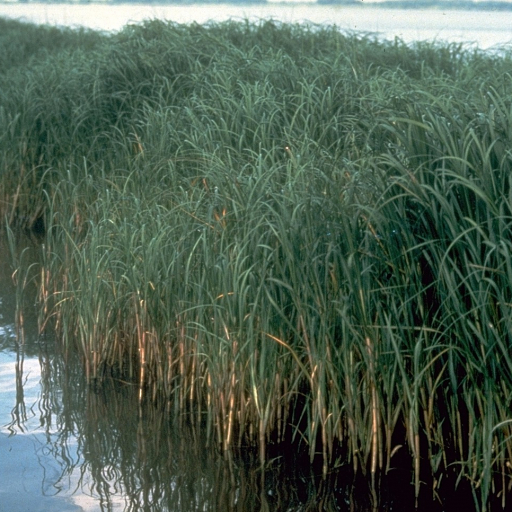
Plant Overview
Smooth Cordgrass, often hailed as the "Marsh Architect," is the resilient heart of the world’s coastal salt marshes. Known for its incredible ability to thrive in the harsh, salty embrace of the daily tides, this plant acts as a vital buffer against storms and a nursery for marine life. If you’ve ever walked along an Atlantic coastline and seen vast ribbons of green swaying in the breeze, you have likely met this coastal guardian.
🔍 How to Identify
- 🍃 Blade Shape: The leaves are long, slender, and tapering, often reaching up to 2 feet in length. They are typically a deep, waxy green but turn a beautiful golden-brown in the winter.
- 🌾 Smooth Stems: True to its name, the stems are remarkably smooth to the touch and hollow, which helps the plant transport oxygen down to its roots even when buried in oxygen-poor mud.
- 🌼 Flower Spikes: In late summer and autumn, it produces narrow, inconspicuous flower spikes at the very top of the stems that turn from greenish-yellow to a straw-like tan as they mature.
🏖️ Habitat & Landscape Role
- 🌊 The Salt Specialist: This is a "halophyte," meaning it is one of the few plants on Earth that can grow with its roots submerged in saltwater. It is almost exclusively found in the intertidal zone, where it is flooded twice daily.
- 🏗️ Coastal Engineer: It spreads through a dense network of underground runners called rhizomes. This creates a thick "mat" that traps sediment and builds new land, making it the primary tool for coastal restoration and erosion control.
⚠️ Safety & Toxicity
- ✅ Non-Toxic: Spartina alterniflora is considered non-toxic to humans, dogs, cats, and horses. It is a vital food source for many wild animals, including snow geese and various marsh-dwelling insects.
- 🧤 Sharp Edges: While not poisonous, the mature blades can have very fine, serrated edges. Handling the grass without gloves can lead to "grass cuts," similar to paper cuts, which can be irritating in salty environments.
✨ Fun Fact
To survive drinking saltwater, this plant has evolved "salt glands" on its leaves. It actually "sweats" out excess salt, and on sunny days, you can often see tiny white crystals of pure salt sparkling on the surface of the blades!

Detailed Care Instructions
To properly water this plant, it is important to consider its natural habitat. This plant typically grows in wetlands and marshes, where it has access to ample amounts of water. When cultivating this plant, it is essential to maintain a consistently moist soil environment.
The easiest way to determine if the plant needs watering is to feel the top layer of soil. If it feels dry to the touch, it is time to water. When watering, it is important to provide enough water to thoroughly saturate the soil, but not so much water that it becomes waterlogged.
To avoid overwatering, it is advisable to allow the soil to dry out somewhat before watering again. It is also important to note that this plant prefers slightly acidic soils. Thus, it is advisable to monitor soil pH levels and make adjustments as necessary to maintain a slightly acidic environment. Overall, providing adequate and consistent moisture is key to ensuring healthy growth and development of this plant.
Spartina Alterniflora plant thrives in a specific type of soil that is typically found in coastal environments. The soil should be a mixture of sand, silt, and clay with a neutral to slightly alkaline pH. This type of soil allows for proper water drainage while retaining enough moisture for the plant to grow and establish its roots. It is important that the soil is not too nutrient-rich as this can cause the plant to grow too quickly and become too thick, leading to a decline in its health and ability to withstand adverse environmental conditions. Additionally, the soil should be free from any type of contaminants, pollutants, or heavy metals that may harm the plant or its surrounding ecosystem.








