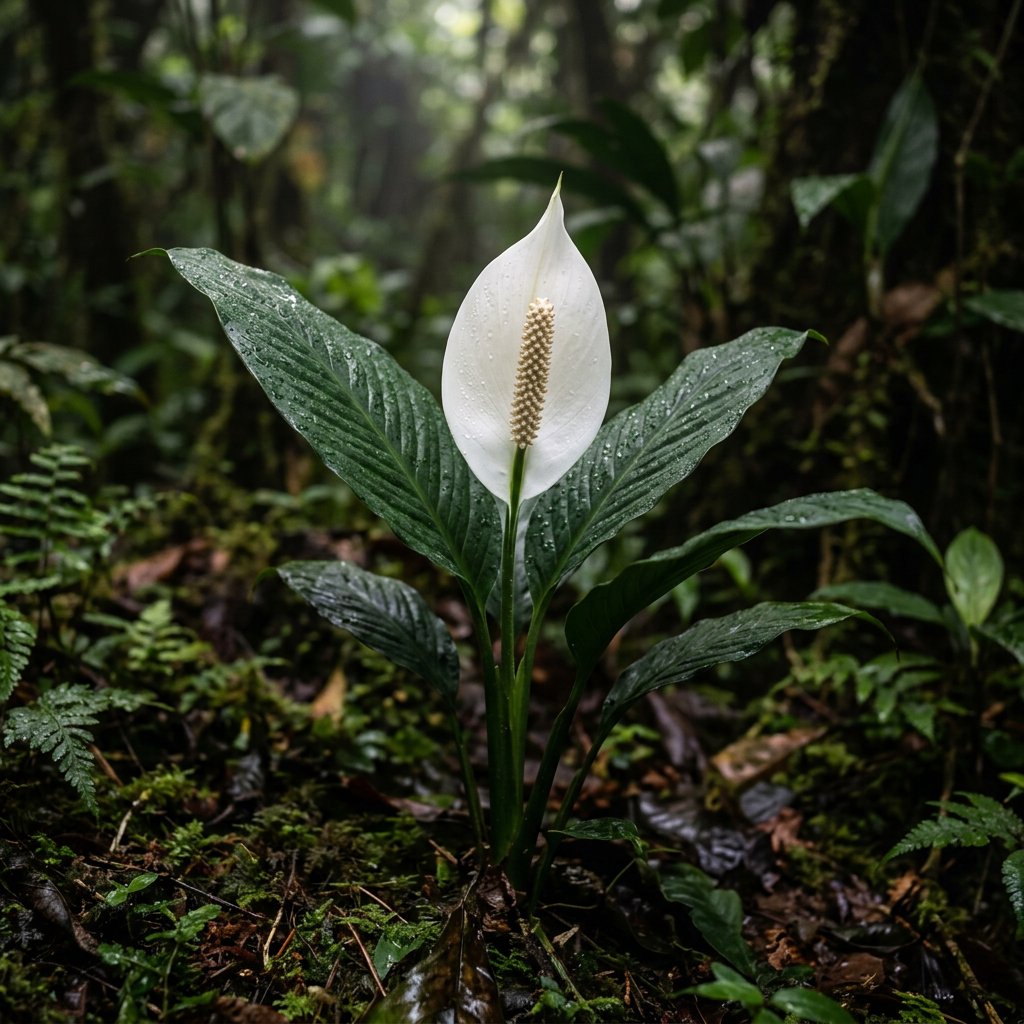
Plant Overview
Known as the "Peace Lily" or "White Sails," this elegant beauty is a staple in homes worldwide. With its stark white bracts rising above lush green foliage like flags of surrender, it is frequently gifted as a symbol of tranquility and sympathy. Originating from the damp, shaded forest floors of Central and South America, it has adapted perfectly to life in our indoor "understory."
🔍 How to Identify
- 🍃 Lush Foliage: Large, lance-shaped leaves that are deep glossy green, featuring prominent veins and growing in dense, arching clumps.
- 🏳️ The "Flower": What looks like a white petal is actually a "spathe"—a specialized leaf. It gracefully curves around the central spike to protect the reproductive parts.
- 🌽 The Spadix: Inside the white spathe is a textured, cream-colored spike called a spadix, which holds the tiny, true biological blossoms.
🏡 In Your Garden
- ☁️ Master of Shadows: Because it naturally grows under the dense canopy of tropical jungles, it is famous for its ability to thrive in low-light corners where other plants might struggle.
- 🎭 The Drama Queen: This plant is highly communicative. If you forget to water it, the Peace Lily will dramatically collapse and wilt flat against the pot. Don't panic—a thorough soak usually sees it "resurrect" and stand tall within hours.
- 💧 Sensitive Sipper: It can be sensitive to the chlorine and fluoride found in tap water. If the leaf tips turn brown, try using filtered water or letting tap water sit out overnight.
⚠️ Safety & Toxicity
- 🚫 Toxic to Pets: It contains insoluble calcium oxalate crystals. If chewed by cats or dogs, it causes intense mouth irritation, drooling, and difficulty swallowing.
- 👶 Keep Out of Reach: While not usually fatal, it should be kept away from curious toddlers as ingestion can lead to a painful burning sensation in the throat and stomach upset.
✨ Fun Fact
🌬️ Air Purifier Extraordinaire: The Peace Lily was a star performer in NASA’s famous Clean Air Study, proven to be highly effective at filtering harmful indoor toxins like benzene, formaldehyde, and trichloroethylene from the air we breathe.

Detailed Care Instructions
| Humidity | High |
| Lighting | Shade |
| Toxicity | Poisonous |
| Difficulty | Medium |
| Hibernation | Cold Period |
| Temperature | 18°C - 24°C |
| Hardiness Zones | 9B - 11B |
To grow Spathiphyllum Wallisii, also known as peace lily, follow these steps:
- Light: Place your peace lily in bright, indirect light. Avoid direct sunlight, as it can scorch the leaves. However, the plant can also tolerate low light conditions.
- Temperature: Maintain a consistent temperature between 65-75°F (18-24°C). Avoid exposing the plant to cold drafts or sudden temperature changes.
- Watering: Keep the soil consistently moist but not waterlogged. Water the plant when the top inch of soil feels dry to the touch. Avoid overwatering, as it can lead to root rot.
- Humidity: Peace lilies prefer high humidity. You can increase humidity by placing the plant on a tray filled with water and pebbles or using a humidifier in the room. Misting the leaves occasionally also helps.
- Fertilizer: Feed your peace lily with a balanced houseplant fertilizer every 2-3 months during the growing season (spring and summer). Follow the package instructions for dosage.
- Repotting: If your plant outgrows its current pot, repot it in a slightly larger container using a well-draining potting mix. Aim to repot every 1-2 years.
- Pruning: Remove any dead or yellowing leaves to maintain the plant's appearance. Trim any damaged or spent flowers to encourage new growth.
- Propagation: Spathiphyllum Wallisii can be propagated through division. When repotting, separate the plant into smaller sections and plant them individually in their own pots.
- Pest control: Keep an eye out for common houseplant pests like aphids, mealybugs, and spider mites. If necessary, use a gentle insecticidal soap or neem oil to treat the affected areas.
Remember to be patient with your peace lily, as it can take some time to adjust and grow. With proper care, you can enjoy its lush green foliage and beautiful white flowers.

Place in a window with dappled sun or a spot in the middle of a room. Or directly in a window facing west or east.

The best approach to watering this plant is to ensure that the soil is kept consistently moist but never waterlogged. One way to achieve this is to allow the top inch of soil to dry out slightly between waterings, then apply water thoroughly until it begins to drain from the bottom of the pot. Avoid letting the plant sit in standing water, as this can encourage root rot and other diseases. In addition, it's important to use room-temperature, filtered water for watering, as chlorine and other chemicals in tap water can harm the plant over time. Finally, take care to avoid getting water on the leaves, as this can contribute to problems like leaf spotting or fungal growth.
- Choose a balanced fertilizer that contains equal parts of nitrogen, phosphorus, and potassium.
- Dilute the fertilizer according to package instructions or half-strength.
- Apply the fertilizer to the soil around the base of the plant.
- Water the plant thoroughly after applying the fertilizer.
- Fertilize the plant once every month during the growing season (spring and summer).
- Reduce fertilizing frequency in the fall and winter months.
The ideal soil for Spathiphyllum Wallisii plant is a well-draining, porous mixture that is rich in nutrients. It should be slightly acidic with a pH range of 5.5 to 6.5. The soil should be loose and airy, allowing for good aeration and water drainage. A blend of peat moss, perlite, and vermiculite would work well for this plant. It is important to avoid using heavy soils that retain water, as this can lead to root rot and other issues. Additionally, the soil should be kept evenly moist but not waterlogged.
In order to propagate this plant, the first step is to choose a healthy and mature parent plant with strong roots. Cut a healthy, non-flowering stem from the parent plant using a sharp and sterile pair of scissors or pruning shears. The stem should be approximately 4-6 inches long and should have at least one node where the leaves attach to the stem.
Next, remove the lower leaves from the stem, leaving only the top few leaves. This will reduce the amount of stress on the plant and will encourage root growth.
Dip the cut end of the stem into rooting hormone powder. This will help the plant to form roots more quickly and effectively.
Plant the stem in a pot filled with moist, well-draining potting soil. Water the soil thoroughly and cover the pot with a plastic bag or clear plastic wrap to create a humid environment.
Place the pot in a bright, indirect light location and keep the soil consistently moist but not waterlogged. The propagation process will typically take a few weeks to a few months, depending on the individual plant and other environmental factors.
Once the plant shows signs of new growth, such as new leaves or roots protruding from the soil, it can be gradually acclimated to the normal growing conditions of a mature plant.
Common pests of the peace lily include Mealybugs, spider mites, fungus gnats. Make a habit of checking your peace lily frequently for pests so that any infestations can be caught and managed early.








