Plant Overview
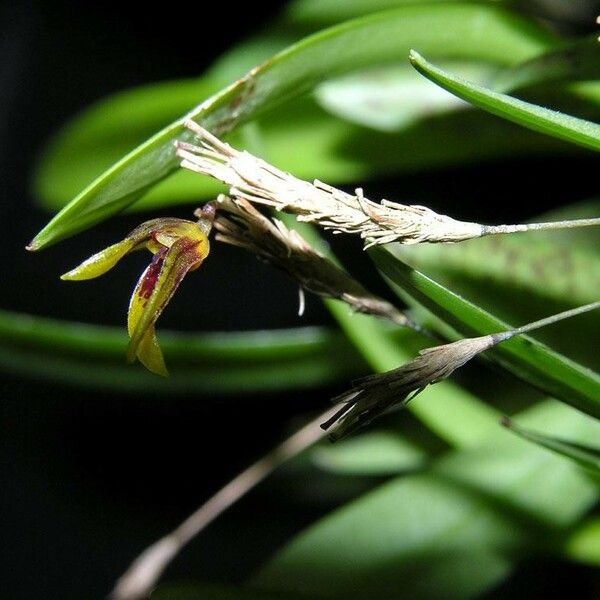
Known affectionately by micro-orchid enthusiasts as Brigham’s Specklinia, this Central American gem is a "living jewel" of the cloud forests. Often found clinging to mossy branches in Panama and Costa Rica, it is celebrated for its tiny size and strikingly patterned, "polka-dotted" flowers. It is the perfect choice for terrarium hobbyists who love a plant that tells a big story in a very small space.
🔍 How to Identify
- 🍃 The Foliage: This plant forms dense, tufted clumps of thick, paddle-shaped leaves that rarely exceed two inches in height.
- 🌸 The "Freckled" Blooms: The flowers are tiny and star-like, featuring a base color of pale yellow or creamy orange, heavily splattered with dark maroon or purple spots.
- 📏 Miniature Stature: One of its most defining traits is its scale; the entire plant often fits comfortably inside a teacup, making it a true "micro-orchid."
🏡 In Your Garden
- 💧 The "No Reservoir" Rule: Unlike many orchids, Specklinia brighamii does not have pseudobulbs (thickened stems for water storage). This means it cannot handle long dry spells; it prefers to stay consistently moist, like a damp sponge.
- ☁️ Humidity is Key: Because of its cloud forest origins, it thrives in high-humidity environments. If you aren't growing it in a glass terrarium, it will appreciate a pebble tray or a nearby humidifier to keep its leaves plump.
- 🌬️ Gentle Breezes: While it loves moisture, it hates stagnant air. Ensuring there is a tiny bit of air movement around the plant prevents the "damping off" or rot that can plague miniature species.
⚠️ Safety & Toxicity
- ✅ Status: Non-toxic and Pet-Safe.
- 🐾 Details: Like the vast majority of orchids, this species is considered safe for cats, dogs, and children. However, because the plant is so small and delicate, it should be kept out of reach to prevent the plant itself from being damaged by curious paws.
✨ Fun Fact
The Specklinia brighamii is a "sequential bloomer." Instead of opening all its flowers at once, it produces one or two flowers at a time on a single stem. Once one flower fades, another often emerges right behind it, extending its blooming season for several months!

Detailed Care Instructions








