Plant Overview
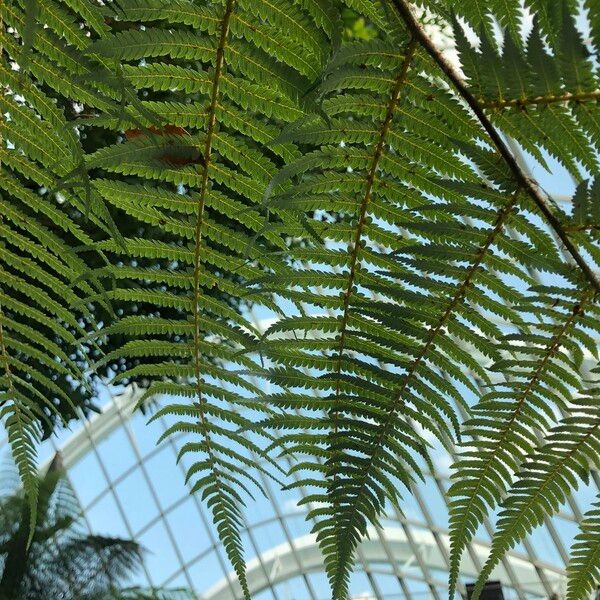
Known as the Blue Tree Fern, Sphaeropteris glauca is a breathtaking relic from the prehistoric-looking cloud forests of Reunion Island. Looking like something plucked straight from a dinosaur’s backyard, it stands as a living emerald sculpture with a shimmering secret hidden beneath its leaves. Its name "glauca" refers to the soft, dusty blue-gray coating that gives this fern its ethereal, silvery glow.
🔍 How to Identify
- 🏗️ The Trunk: It develops a sturdy, dark vertical trunk that can reach impressive heights, often patterned with oval scars where old fronds have naturally detached.
- 🌿 The Fronds: Massive, lace-like leaves arch gracefully from the crown; in mature plants, these fronds can stretch several meters long, creating a wide, tropical canopy.
- ❄️ The Glaucous Coating: The most iconic trait is the underside of the foliage, which is covered in a waxy, silvery-blue powder that looks like a permanent dusting of fine frost.
🏡 In Your Garden
- 🌫️ Cloud Forest Vibes: This fern is a "moisture lover" in the extreme. It craves high humidity and consistent misting; it essentially wants to live inside a cool, damp cloud. If the air becomes too dry or hot, the delicate fronds will brown and crisp rapidly.
- 🌬️ Shelter is Key: Because the fronds are so large and heavy, they are easily damaged by high winds. It performs best in a "cathedral" of taller trees or a sheltered courtyard where it is protected from both the wind and the scorching midday sun.
⚠️ Safety & Toxicity
- ✅ Non-Toxic: Sphaeropteris glauca is generally considered safe and non-poisonous to curious cats, dogs, and humans.
- ☁️ Spore Irritation: While not "toxic," the fine hairs (scales) on the stems and the dust-like spores on the undersides of the leaves can occasionally cause mild skin or eye irritation for people with high sensitivities during maintenance or pruning.
✨ Fun Fact
This species is endemic to the volcanic island of Reunion in the Indian Ocean. This means that in the entire natural world, it originated in only one tiny geographic spot, thriving in the rich, acidic volcanic soil and the constant mist of the high-altitude peaks.

Detailed Care Instructions
To grow Sphaeropteris Glauca, also known as the tree fern, follow these steps:
- Choose a suitable planting location: Sphaeropteris Glauca prefers a partially shaded area with indirect sunlight. The soil should be well-draining and rich in organic matter.
- Prepare the soil: Amend the soil with compost or organic matter to improve fertility and drainage. Additionally, make sure the soil pH is slightly acidic, around 5.5 to 6.5.
- Select a healthy plant: Purchase a healthy Sphaeropteris Glauca plant from a reputable nursery or online store. Look for a plant with a sturdy trunk and lush, green fronds.
- Dig a planting hole: Dig a hole deep and wide enough to accommodate the plant's root ball. The hole should be slightly larger than the root ball. Ensure there is enough space for the plant to grow.
- Planting the fern: Place the plant in the hole, ensuring that the top of the root ball is level with the soil surface. Backfill the hole with soil, gently firming it around the roots. Water thoroughly after planting.
- Watering: Keep the soil consistently moist but not waterlogged. Water the plant regularly, especially during dry periods. Avoid letting the soil completely dry out as it can harm the fern.
- Mulching: Apply a layer of organic mulch, such as bark chips or leaf litter, around the base of the plant. Mulching helps conserve moisture, suppress weeds, and maintain a cool root environment.
- Fertilizing: Use a balanced, slow-release fertilizer specifically formulated for ferns. Apply the fertilizer according to the package instructions, typically during the growing season, and avoid overfertilizing.
- Pruning: Remove any dead or damaged fronds using clean pruning shears. Regularly pruning helps maintain the plant's health and appearance.
- Protection from frost: If you live in a colder climate, protect the plant from frost by covering it with a frost cloth or moving it indoors during winter.
Remember to research specific care requirements for Sphaeropteris Glauca in your specific location, as the plant's needs may vary depending on the region.

Place in a window with dappled sun or a spot in the middle of a room. Or directly in a window facing west or east.

To ensure the proper watering of Sphaeropteris Glauca plant, also known by its scientific name, it is important to consider the specific requirements of this particular species. Here are some details on how to water this plant effectively:
1. Watering frequency: Sphaeropteris Glauca generally prefers slightly moist soil. Water the plant regularly during the growing season, typically from spring to early fall. Aim for a consistent watering schedule without overwatering or allowing the soil to dry out completely.
2. Soil moisture level: Check the moisture level of the soil before watering. Insert your finger about an inch (2.5 cm) into the soil to assess if it feels dry. Avoid watering if the soil is still moist, as excessive moisture can lead to root rot.
3. Proper drainage: Ensure that the pot or planting area has good drainage. Excessive moisture retention can be harmful to Sphaeropteris Glauca, so make sure that the water can freely flow out of the container or drain from the soil.
4. Watering method: Use a gentle watering technique to avoid disturbing the plant's delicate roots. Directly watering the soil around the base of the plant rather than showering the entire plant is generally effective.
5. Water quality: Sphaeropteris Glauca prefers slightly acidic to neutral pH levels in the soil. Consider using filtered, distilled, or rainwater instead of tap water, which may contain excess minerals or chemicals that can affect the plant's health.
6. Seasonal variations: During winter or dormancy periods, when growth slows down, reduce the frequency of watering. Allow the soil to dry out slightly between watering sessions while ensuring it doesn't become completely arid.
7. Environmental factors: Adjust the watering frequency based on external conditions such as temperature, humidity, and sunlight exposure. Higher temperatures and intense sunlight can increase the water requirements, while cooler or shadier conditions may require less frequent watering.
Remember that these guidelines provide general recommendations for watering Sphaeropteris Glauca. Always assess the plant's specific needs by considering factors like pot size, climate, and growth stage. Monitoring the moisture levels and observing signs of stress or overwatering will help you establish an effective watering routine for this unique plant species.
- Choose a well-draining potting mix suitable for subtropical plants.
- Fill a container that is spacious enough to accommodate the plant's root system with the potting mix.
- Make a small hole in the center of the potting mix, ensuring it is deep enough to support the root ball.
- Carefully remove the plant from its current container, taking care not to damage the roots.
- Place the plant into the hole in the potting mix, ensuring the root ball is centered and covered.
- Gently pat down the potting mix around the plant to secure it in place.
- Water the plant thoroughly until excess water drains out from the bottom of the container.
- Wait for the water to drain completely before applying fertilizer.
- Choose a balanced liquid fertilizer suitable for potted plants.
- Dilute the recommended amount of fertilizer in water as per the instructions on the product label.
- Pour the diluted fertilizer solution onto the soil around the plant, ensuring it is evenly distributed.
- Avoid splashing the fertilizer directly onto the plant's foliage as it may cause damage.
- After fertilizing, water the plant lightly to help the nutrients settle into the soil.
- Repeat the fertilization process according to the fertilizer's recommended frequency, usually every 4-6 weeks during the growing season.
- Monitor the plant's growth and adjust fertilization as needed, taking care not to over-fertilize which can lead to nutrient burn or other issues with the plant.
Sphaeropteris glauca is a plant that belongs to the fern family. When selecting soil for this plant, it is important to consider its natural habitat and growing conditions. This plant typically thrives in moist and well-draining soil that is rich in organic matter.
The ideal soil type for Sphaeropteris glauca is a mix of peat moss, perlite, and a good quality potting mix. This combination provides excellent drainage to prevent waterlogging, which can be detrimental to the plant's roots. The inclusion of peat moss helps in retaining moisture, promoting a humid and suitable environment for the fern.
Additionally, it is recommended to add organic matter such as compost or well-rotted manure to enhance the fertility of the soil. This helps in providing essential nutrients to the plant, which contributes to healthy growth and development.
Avoid using heavy clay-based soils as they tend to retain too much water, leading to root rot. Similarly, sandy soils may not retain enough moisture, causing the plant to suffer from dehydration.
Regularly monitoring the moisture levels of the soil is crucial for Sphaeropteris glauca. The plant requires consistently moist soil, but not overly saturated. It is advisable to water the plant thoroughly when the top inch of soil feels dry, allowing excess water to drain out to avoid waterlogged conditions.
In conclusion, the soil for Sphaeropteris glauca should be well-draining, rich in organic matter, and capable of retaining adequate moisture while avoiding excessive water retention. Maintaining these soil conditions will offer the fern optimal growing conditions for healthy growth and lush foliage.
To propagate Sphaeropteris glauca plants, you can follow these steps:
- Propagation through spores: Collect mature spore cases from the underside of the fronds. These cases will appear brown and papery. Remove the spore cases from the fronds and place them in a paper bag for drying.
- Spore preparation: Once the spore cases are dry, gently shake them to release the spores. Collect the spores in a clean container or a petri dish.
- Growing medium preparation: Prepare a propagation tray or container filled with a suitable growing medium for ferns. This can be a mix of peat moss, perlite, sand, or a commercial fern-specific potting mix. Sterilize the medium by baking it in an oven at a low temperature or Microwaving it briefly.
- Sowing spores: Sow the spores evenly over the prepared growing medium. It's essential to spread them evenly to allow each spore to develop into an individual plant.
- Enclosure and humidity: Cover the tray or container with a clear plastic lid or place it inside a clear plastic bag to create a humid environment. This helps to simulate the natural conditions required for spore germination.
- Provide indirect light: Place the tray or container in a location with bright, indirect light. Avoid placing it under direct sunlight, as this can cause overheating and damage to the delicate spores.
- Moisture maintenance: Ensure that the growing medium remains consistently moist. Mist the tray or container regularly with water. However, be cautious not to overwater, as excess moisture can lead to fungal growth.
- Patience and observation: Spore germination can take several weeks to months, so be patient during this process. Keep a close eye on the tray or container, looking for signs of green growth or small fern-like structures.
- Transplanting: Once the spores have germinated and small plants have developed, wait until they have grown to a manageable size before carefully transferring them into individual pots or a larger container. Use a well-draining potting mix suitable for ferns.
- Growing conditions: Place the newly transplanted plants in a location with bright, indirect light. Maintain a consistent level of moisture in the soil, but avoid overwatering. Monitor the environmental conditions, such as temperature and humidity, to ensure they are suitable for the Sphaeropteris glauca plants.
By following these propagation steps, you can successfully propagate Sphaeropteris glauca plants and enjoy their unique beauty in your garden or indoor plant collection.








