Plant Overview
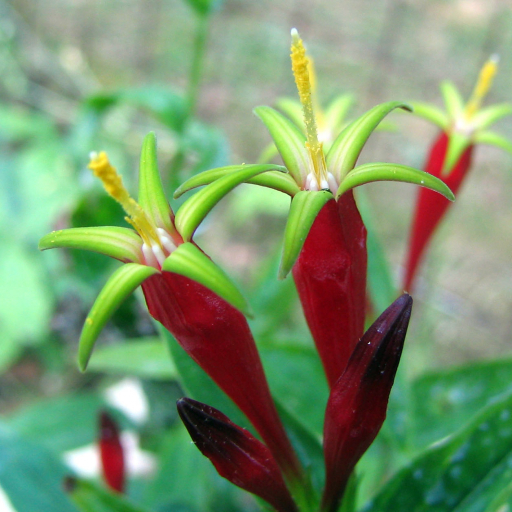
Commonly known as Indian Pink or Woodland Pinkroot, this striking North American native is a true woodland showstopper. Its tubular, firecracker-red flowers open to reveal vibrant neon-yellow stars inside, creating a stunning "star" effect that looks almost tropical. Historically used in traditional medicine by Native American tribes, it is now a prized gem for shade gardeners looking to bring a pop of high-contrast color to the shadows.
🔍 How to Identify
- 🎺 Trumpet Blooms: Bright scarlet-red, upright tubular flowers that grow in one-sided clusters at the top of the stems.
- ⭐ Starry Throat: The tips of the red tubes flare open to reveal a five-pointed, lemon-yellow star interior.
- 🍃 Lance-Shaped Leaves: Deep green, glossy foliage with prominent veins, arranged in opposite pairs directly on the stem.
- 🌱 Upright Habit: Grows in tidy, clumping mounds that typically reach 1 to 2 feet in height.
🏡 In Your Garden
- 🌳 The Dappled Light Specialist: This plant naturally thrives in the "edge" of the forest. In your garden, it craves "bright shade"—think of the light that filters through a tall tree canopy rather than a dark, sunless corner.
- ⚓ The Taproot Rule: Indian Pink develops a deep, sturdy root system. While this makes it remarkably drought-tolerant once established, it means the plant hates being moved. Choose its "forever home" carefully to avoid transplant shock.
- 🦋 Hummingbird Magnet: Because of the tubular shape and brilliant red color, it is one of the most effective plants for attracting hummingbirds to shady areas where other "bird-friendly" flowers won't grow.
⚠️ Safety & Toxicity
- 🚫 Toxic Status: All parts of the plant contain the alkaloid spigeline, which is poisonous if ingested.
- 🐾 Pet & Child Safety: Ingestion can lead to dizziness, increased heart rate, and blurred vision. While the plant isn't typically "tasty" to animals, it should be kept away from curious pets and toddlers who might be attracted to the bright "candy-like" flowers.
✨ Fun Fact
The genus name Spigelia honors Adriaan van den Spiegel, a 17th-century Flemish anatomist. He is the same scientist whose name is attached to the "Spigelian lobe" of the human liver!

Detailed Care Instructions
To grow Spigelia Marilandica, also known as Indian Pink or Woodland Pinkroot, follow these steps:
- Choose the right location: Select a spot in your garden that receives partial to full shade. Spigelia Marilandica prefers moist, well-draining soil.
- Prepare the soil: Before planting, loosen the soil and remove any weeds or rocks. If the soil is heavy or compacted, amend it with organic matter, such as compost or aged manure, to improve drainage.
- Planting: Dig a hole that is slightly larger than the root ball of the Spigelia Marilandica plant. Place the plant in the hole, ensuring that the crown of the plant is level with or slightly above the soil surface. Backfill the hole with soil and gently firm it around the plant's roots.
- Watering: After planting, water the Spigelia Marilandica thoroughly to help it settle in. Keep the soil moist but not waterlogged throughout the growing season. Deep watering once or twice a week is usually sufficient, but adjust according to weather conditions.
- Mulching: Apply a layer of organic mulch, such as shredded bark or leaf compost, around the base of the plant. This helps to conserve moisture and suppress weeds.
- Fertilizing: Spigelia Marilandica generally doesn't require heavy fertilization. However, you can apply a balanced, slow-release fertilizer in early spring to provide some nutrients.
- Pruning: Prune Spigelia Marilandica lightly after flowering to remove any spent blooms and maintain a neat appearance. Avoid cutting back too much as the plant benefits from having some foliage to generate energy through photosynthesis.
- Propagation: Spigelia Marilandica can be propagated through division in early spring or by sowing seeds in containers indoors. Allow the plant to establish for a few years before dividing it.
- Pests and diseases: Spigelia Marilandica is relatively pest-free and disease-resistant. However, keep an eye out for snails, slugs, and aphids, which may occasionally attack the plant. Address any pest issues promptly.
By following these steps, you can successfully grow Spigelia Marilandica in your garden and enjoy its vibrant, trumpet-shaped flowers.

Place in a bright room that is sun drenched almost all day. Or directly in a south-facing window.

To water this plant, thoroughly soak the soil around the base of the plant, making sure that any excess water drains away. Avoid getting water on the leaves or flowers, as this can lead to fungal diseases. Water the plant deeply and less frequently, rather than lightly and frequently, as this encourages deeper root growth and better drought tolerance. Monitor the soil moisture level regularly and adjust watering frequency as needed based on temperature, humidity, and rainfall. In hot, dry weather or in sandy soils, this plant may need more frequent watering than in cooler, moister conditions.
To fertilize this plant, apply a balanced fertilizer, such as a 10-10-10 or 20-20-20 blend, in early spring just as new growth begins. Use a slow-release granular fertilizer and apply it at the base of the plant, being careful not to get it on the leaves. Water the plant deeply after fertilizing to help the nutrients reach the roots. Repeat this process every 4-6 weeks throughout the growing season. Avoid fertilizing in late summer or early fall, as this can encourage new growth that may not have time to harden off before winter.
Spigelia Marilandica plant requires well-draining soil with a slightly acidic pH level between 5.5 and 6.5. The soil should be rich in nutrients, organic matter, and should remain moist, but not waterlogged. Sandy loam or loamy soil is ideal for this plant, providing aeration and good drainage. The soil should be worked to a depth of 8-10 inches prior to planting to ensure adequate root development and topdressed with compost before planting in the ground. This plant prefers full sunlight or partial shade and thrives in zones 5-9.
To propagate this plant, you will need to collect seeds in the fall after the seed pods have dried and split open. The seeds should be cleaned and stored in a cool, dry place until the following spring. In the early spring, the seeds can be sown indoors in trays filled with a well-draining soil mix. Once the seedlings have emerged and grown to a suitable size, they can be transplanted outdoors into a sunny location with moist, fertile soil. Alternatively, stem cuttings can be taken in early summer and rooted in a soilless mix. The cuttings should be kept moist and shaded until they develop roots and can be transplanted outdoors.
Common pests of the indian-pink include Aphids, thrips. Make a habit of checking your indian-pink frequently for pests so that any infestations can be caught and managed early.








