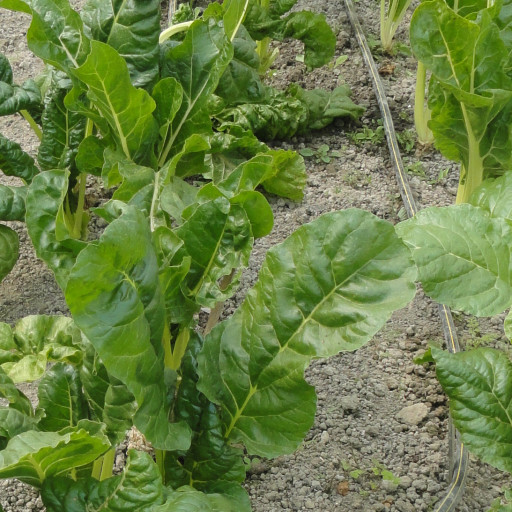
Plant Overview
Known to the world as the "Prince of Leafy Greens," Spinach (Spinacia oleracea) originated in ancient Persia before traveling the Silk Road to China and eventually Europe. While most of us associate it with the muscle-bound sailor Popeye, this cool-weather favorite has been a staple of royal kitchens for centuries—Catherine de' Medici loved it so much that dishes served on a bed of spinach are still called "Florentine" in her honor.
🔍 How to Identify
- 🍃 Leaf Texture: Depending on the variety, leaves can be "savoy" (deeply crinkled and curly), "semi-savoy," or "flat-leaf" (smooth and easy to clean).
- 🟢 Color and Shape: Look for a vibrant, deep forest green. Younger "baby" leaves are often spoon-shaped, while mature leaves become more triangular or arrow-shaped.
- 🌱 Growth Habit: It grows in a low-to-the-ground rosette pattern. If you see it suddenly shooting upward with a thick stalk, it is "bolting" to produce tiny, inconspicuous green flowers.
🏡 In Your Garden
- ❄️ The Chill Factor: Spinach is a true winter warrior. It actually tastes sweeter after a light frost because the plant converts starches into sugars to act as a natural antifreeze.
- 🚫 Sensitive Roots: It develops a delicate taproot early on, which makes it "fussy" about being moved. It’s always best to sow the seeds directly into the soil rather than transplanting seedlings from a pot.
- ☀️ Beat the Heat: As soon as the days get long and hot, spinach gets stressed and goes to seed, making the leaves bitter. To extend your harvest, plant it in the shadow of taller plants like tomatoes or corn.
⚠️ Safety & Toxicity
- ✅ Human Safety: Perfectly safe and incredibly nutrient-dense, packed with Vitamin K, A, and Vitamin C.
- 🐾 Pet Caution: While not "toxic" in the traditional sense, spinach contains high levels of oxalates. If your dog or cat snacks on large amounts frequently, it can interfere with their calcium absorption and potentially lead to kidney stones.
- 🧪 Kidney Health: Humans with a history of calcium-oxalate kidney stones are often advised to moderate their intake of raw spinach.
✨ Fun Fact
The famous belief that spinach is an astronomical source of iron was actually caused by a math error! In 1870, a researcher misplaced a decimal point in his notes, making spinach appear ten times more iron-rich than it actually was. The myth persisted for decades, fueling the "Popeye" craze of the 1930s.

Detailed Care Instructions
| Color | Green |
| Soil Ph | 6.5-8.0 |
| Humidity | Normal |
| Lighting | Full Sun |
| Toxicity | Toxic |
| Soil Type | Loamy, Moist, Well-Drained |
| Bloom Time | Summer |
| Difficulty | Medium |
| Plant Type | Annual |
| Hibernation | Cold Period |
| Mature Size | 6 To 12 Inches Tall |
| Native Area | North America, Central America, South America, Asia |
| Temperature | 18°C - 24°C |
| Sun Exposure | Full Sun, Partial Sun |
| Hardiness Zones | 1-11 |
To grow Spinacia Oleracea plants, also known as spinach, follow these steps:
- Choose a suitable location: Spinach grows best in cool weather, so choose a location that receives partial shade or full sun. Also, ensure that the soil is well-drained.
- Prepare the soil: Spinach prefers fertile soil with a pH between 6.0 and 7.5. Amend the soil with organic matter, such as compost or well-rotted manure, to improve its fertility and drainage.
- Planting seeds: Sow spinach seeds directly into the prepared soil, preferably in early spring or early fall. Make sure the soil is moist before planting. Plant the seeds about 1/2 inch deep and space them 2-3 inches apart in rows. You can also broadcast the seeds over a bed and then thin the seedlings later.
- Watering: Keep the soil consistently moist to ensure successful germination. Water the plants regularly, providing about 1-1.5 inches of water per week. Avoid overwatering or letting the soil dry out completely.
- Thinning the seedlings: Once the spinach seedlings have grown a few inches tall, thin them to provide sufficient spacing. Thin the plants to about 4-6 inches apart to allow proper development.
- Fertilization: Spinach plants benefit from regular fertilization. Apply balanced organic or slow-release fertilizer according to the package instructions. Avoid over-fertilization as it can lead to excessive leafy growth and decrease the flavor.
- Weed management: Regularly remove weeds that may compete with spinach for nutrients, light, and space. Be careful while weeding not to disturb the shallow roots of spinach plants.
- Pest and disease control: Monitor your spinach plants for common pests like aphids, snails, slugs, or leaf miners. Remove any affected leaves or treat with organic pest control methods if necessary. To prevent diseases, avoid overwatering and overcrowding plants.
- Harvesting: Harvest spinach leaves when they are large enough to eat, making sure not to remove all the leaves from one plant. Pick larger outer leaves first, allowing the inner ones to continue growing. Harvesting can begin when the plants reach about 4-6 inches tall, usually around 4-6 weeks after planting.
- Successive planting: To ensure a continuous harvest, consider successive plantings every few weeks to extend the spinach growing season.
Remember to check the specific requirements of the spinach variety you are growing, as some varieties may have slight variations in their growth habits.

Place in a bright room that is sun drenched almost all day. Or directly in a south-facing window.

Spinacia Oleracea plants require regular irrigation to maintain their growth and health. Proper watering is a crucial part of their care and can vary depending on the growing conditions and climate. It is important to avoid overwatering as this can lead to root rot and other fungal diseases.
To water Spinacia Oleracea plants, it is best to check the soil moisture levels first by probing the soil with your finger or a moisture meter. The soil should be moist but not waterlogged or dry.
If the soil is dry, water the plant thoroughly until the water drains out of the drainage holes but do not let the plant sit in standing water. In hot and dry weather, the plants may require more frequent watering, but be careful not to water them too frequently. It is better to water deeply and less often than to water shallowly and often.
It is also important to avoid getting water on the foliage as this can cause fungal diseases. It is best to water the plants at the base and avoid overhead irrigation. Watering early in the day is also recommended as it gives the leaves time to dry off before nightfall.
To promote healthy growth for this green leafy vegetable, apply a balanced fertilizer with equal amounts of nitrogen, phosphorus, and potassium. This can be done once a month during the growing season. Avoid over-fertilization as it can lead to excessive leaf growth and reduce the taste of the plant's edible parts. Additionally, it is recommended to supplement with organic matter such as compost to enrich the soil and improve the plant's nutrient uptake ability.
The ideal soil for the plant belongs to the family of sandy loam. It should have good drainage capability and be rich in nutrients. A pH range of 6.0 to 7.0 is also suitable. The soil should be kept moist but not waterlogged. Organic compost can be added to improve soil quality. It is important to avoid using heavy clay soils as they can restrict root growth and cause root rot. Ensuring proper soil conditions can help promote healthy growth and yield in the plant.
Spinacia Oleracea can be propagated through seeds. The seeds should be planted in well-draining soil and should be kept moist, but not waterlogged. Germination occurs within 7-14 days. The seedlings should be thinned out once they have grown to a few inches in height to give them enough space to grow properly. Spinacia Oleracea can also be propagated through stem cuttings. Cuttings should be taken from mature plants, and the lower leaves should be removed. The cuttings should be placed in a pot filled with well-draining soil and kept moist until they root and start to grow. It is important to keep the cuttings in a warm, humid environment to promote rooting. Once the cuttings have rooted, they can be transplanted to a larger pot or into the garden.
Common pests of the spinach include Aphids, whiteflies. Make a habit of checking your spinach frequently for pests so that any infestations can be caught and managed early.








