Plant Overview
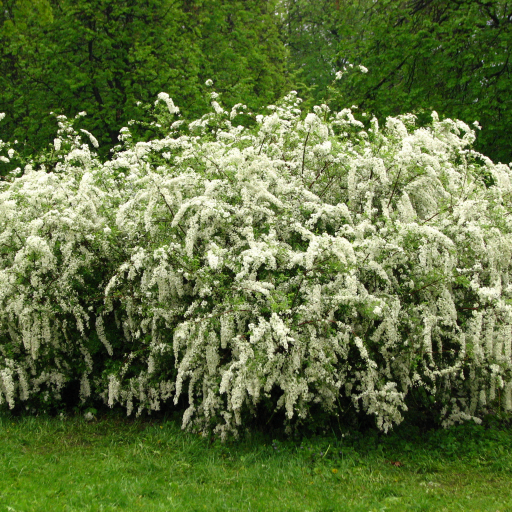
Known for its dramatic "white fountain" appearance, Spiraea × cinerea (often called the Gray Spirea) is the elegant herald of spring. This hardy hybrid is beloved by gardeners for its graceful, arching branches that look as though they have been dusted by a sudden, heavy snowfall. It provides a romantic, ethereal aesthetic to any landscape just as the winter frost begins to retreat.
🔍 How to Identify
- 🌸 Floral Clusters: Tiny, five-petaled white flowers grow in dense, stalkless clusters (umbels) that completely smother the stems, often appearing before the leaves are fully out.
- 🍃 Dusty Foliage: The small, narrow leaves have a distinctive grayish-green hue (giving it the name cinerea, meaning "ash-colored") and a fine, felt-like texture on the underside.
- 🏹 Fountain Habit: It forms a rounded, deciduous shrub with long, slender branches that arch elegantly toward the ground, reaching a height and spread of about 4 to 5 feet.
🏡 In Your Garden
- ✂️ Pruning Timing: This is a "spring-bloomer," meaning it produces flowers on the previous year’s growth (old wood). To avoid cutting off next year's display, only prune or shape the plant immediately after the flowers have faded in late spring.
- 🛡️ Hardiness & Versatility: It is exceptionally tough and resistant to urban pollution. It thrives in well-drained soil and is often used as a "living fence" or a focal point in a cottage garden due to its low-maintenance nature.
- ☀️ The Sun Factor: While it can tolerate partial shade, the iconic "snow-covered" look is only achieved in full sun. More light equals more blooms and a tighter, more attractive arching shape.
⚠️ Safety & Toxicity
- ✅ Status: Safe and Non-Toxic.
- 🐾 Details: Unlike many ornamental shrubs, Spiraea × cinerea is not known to be poisonous to cats, dogs, or horses. It lacks thorns, making it a very "friendly" plant for high-traffic areas where children and pets play.
✨ Fun Fact
The most famous variety of this plant, 'Grefsheim', was discovered in a nursery in Norway in the late 1940s. It was selected specifically for its ability to withstand harsh northern winters while still producing a massive, cloud-like explosion of white flowers every year.

Detailed Care Instructions
Growing Spiraea × cinerea (commonly known as gray spirea or garland spirea) can be a rewarding experience as this deciduous shrub is known for its beautiful, cascading white flowers and ease of care. Here's how you can successfully grow and maintain Spiraea × cinerea:
1. Choosing the Right Location
- Sunlight: Spiraea × cinerea thrives best in full sun, which means it should receive at least 6 hours of direct sunlight daily. While it can tolerate partial shade, too much shade can result in fewer flowers.
- Soil: This plant is not particularly fussy about soil conditions, but it prefers well-drained soil. Slightly acidic to neutral pH is ideal.
2. Planting
- Timing: The best time to plant Spiraea × cinerea is in the spring or fall. Cooler temperatures help reduce transplant shock.
- Spacing: Space the plants about 3-4 feet apart to allow for good air circulation, which helps prevent disease.
- Planting Hole: Dig a hole that is twice as wide and just as deep as the root ball. Mix some compost into the soil to improve fertility.
- Planting: Place the plant in the hole, ensuring the top of the root ball is level with the surrounding soil. Fill the hole with soil and tamp down gently to remove air pockets. Water well after planting.
3. Watering
- Initial Watering: Water the plant thoroughly after planting and keep the soil consistently moist but not waterlogged during the first growing season to help establish the roots.
- Established Plants: Once established, Spiraea × cinerea is fairly drought-tolerant. Water during prolonged dry spells.
4. Mulching
- Apply a 2-3 inch layer of mulch around the base of the plant to help conserve moisture, reduce weeds, and regulate soil temperature. Keep mulch a few inches away from the stem to prevent rot.
5. Fertilizing
- Timing: Fertilize in early spring before new growth begins.
- Type: Use a balanced, slow-release fertilizer or one specifically formulated for shrubs.
6. Pruning
- Timing: Prune immediately after flowering, which typically occurs in late spring. Spiraea × cinerea blooms on old wood, so pruning too late in the season may reduce next year’s flowers.
- Method: Remove any dead, damaged, or diseased wood. Trim back any overly long branches to maintain the desired shape and size. For more compact growth, you can also perform light pruning on the new growth.
7. Pest and Disease Management
- Spiraea × cinerea is relatively pest and disease-resistant but keep an eye out for common issues like aphids, spider mites, or powdery mildew.
- Inspect plants regularly and use appropriate organic or chemical controls if problems arise.
8. Winter Care
- Spiraea × cinerea is quite hardy and generally does not require special winter protection. However, a layer of mulch can help protect the roots in particularly cold climates.
By following these guidelines, you can enjoy a healthy and beautiful Spiraea × cinerea that will add charm to your garden for many years.
To properly water this plant, you should first make sure the soil is dry to the touch before watering. When watering, pour water slowly and evenly onto the soil around the base of the plant, being careful not to get water on the foliage. Allow the water to soak into the soil and then repeat the process several times until the soil is moist but not waterlogged. It is important not to let the soil dry out completely or become waterlogged, as both can harm the plant. Additionally, it is recommended to water this plant in the morning or evening when temperatures are cooler and the sun is less intense, as this will allow the plant to absorb water more efficiently and reduce the risk of evaporation.
Here are the fertilizing instructions for Spiraea × Cinerea:
- Initial Planting:
- When you first plant Spiraea × Cinerea, mix a balanced, slow-release fertilizer into the planting soil. A 10-10-10 formulation (Nitrogen-Phosphorus-Potassium) is generally a good choice.
- Follow the recommended application rate on the fertilizer package.
- When you first plant Spiraea × Cinerea, mix a balanced, slow-release fertilizer into the planting soil. A 10-10-10 formulation (Nitrogen-Phosphorus-Potassium) is generally a good choice.
- Spring Feeding:
- In early spring, before new growth begins, apply a balanced, slow-release granular fertilizer.
- Broadcast the fertilizer evenly around the base of the plant, avoiding direct contact with the stems.
- Water thoroughly after application to ensure the nutrients reach the root zone.
- In early spring, before new growth begins, apply a balanced, slow-release granular fertilizer.
- Midseason Feeding:
- If the plant appears to need a nutrient boost in midseason (around late spring to early summer), you can apply a second dose of the same balanced fertilizer.
- Follow the same procedure as the spring feeding, ensuring the fertilizer is watered in well.
- If the plant appears to need a nutrient boost in midseason (around late spring to early summer), you can apply a second dose of the same balanced fertilizer.
- Organic Option:
- If you prefer organic fertilizers, compost or well-rotted manure can be used.
- Spread a 1-2 inch layer of compost or manure around the base of the plant in early spring.
- Organic fertilizers will gradually release nutrients as they decompose.
- If you prefer organic fertilizers, compost or well-rotted manure can be used.
- Avoid Over-Fertilizing:
- Be careful not to over-fertilize, as this can lead to excessive, weak growth and reduced flowering.
- Stick to the recommended rates and timings.
- Be careful not to over-fertilize, as this can lead to excessive, weak growth and reduced flowering.
- Mulching:
- Mulching around the plant with organic material like bark chips or shredded leaves can help retain soil moisture, regulate temperature, and gradually add nutrients to the soil as it decomposes.
- Mulching around the plant with organic material like bark chips or shredded leaves can help retain soil moisture, regulate temperature, and gradually add nutrients to the soil as it decomposes.
- Watering:
- Adequate watering is essential, especially after fertilizing. Ensure the plant gets consistent moisture, particularly during dry spells.
Following these guidelines will help ensure that your Spiraea × Cinerea plants remain healthy and vibrant throughout the growing season.
- Adequate watering is essential, especially after fertilizing. Ensure the plant gets consistent moisture, particularly during dry spells.
There are a few factors to consider when choosing soil for Spiraea × Cinerea.
First, it is important to note that this plant prefers well-draining soil. This means that the soil should allow water to flow through relatively quickly, rather than pooling on the surface or saturating the soil.
Additionally, Spiraea × Cinerea thrives in soil that is rich in organic matter, which can help to retain moisture while also providing nutrients for the plant. Organic matter can take many forms, including compost, aged manure, and leaf mulch.
It is also a good idea to ensure that the soil pH is within the appropriate range for Spiraea × Cinerea. This plant prefers a slightly acidic pH between 5.5 and 6.5.
Finally, it is important to choose a soil type that is suitable for the growing conditions you are providing. For example, if you are growing Spiraea × Cinerea in a container, you will want to choose a high-quality potting mix. If you are growing it in a garden bed, you may need to amend the existing soil to improve drainage and nutrient content.
Certainly, propagating Spiraea × cinerea involves several methods, including cuttings, layering, and division. Here’s a detailed guide for each method:
Propagation by Cuttings
- Timing: The best time to take cuttings is in late spring to early summer when the plant is actively growing.
- Selecting the Cutting:
- Use healthy, non-flowering stems.
- Choose stems that are semi-hardwood, which means they are partially mature and flexible but not too soft.
- Use healthy, non-flowering stems.
- Preparing the Cutting:
- Cut a 4-6 inch (10-15 cm) section of the stem using sterilized pruning shears.
- Remove the lower leaves, leaving only a few at the top.
- Cut a 4-6 inch (10-15 cm) section of the stem using sterilized pruning shears.
- Rooting Medium:
- Prepare a potting mix that is well-draining. A mix of coarse sand and peat moss works well.
- Moisten the potting mix.
- Prepare a potting mix that is well-draining. A mix of coarse sand and peat moss works well.
- Planting:
- Dip the cut end of the stem in rooting hormone to encourage root development.
- Insert the cuttings into the prepared potting mix about 1-2 inches (2.5-5 cm) deep.
- Firm the soil around the base of the cutting.
- Dip the cut end of the stem in rooting hormone to encourage root development.
- Aftercare:
- Place the container in a location with indirect sunlight.
- Keep the soil consistently moist but not waterlogged.
- Covering the container with a plastic bag can help maintain humidity, but ensure good air circulation to prevent mold.
- Place the container in a location with indirect sunlight.
- Root Development:
- Roots should begin to develop in 4-6 weeks. You can check by gently tugging on the cutting; if you feel resistance, roots have formed.
- Once the roots are established, transplant the new plant into a larger container or directly into the garden.
Propagation by Layering
- Roots should begin to develop in 4-6 weeks. You can check by gently tugging on the cutting; if you feel resistance, roots have formed.
- Timing: Early spring is ideal for layering.
- Selection:
- Choose a healthy, flexible branch that reaches the ground or can be bent easily.
- Choose a healthy, flexible branch that reaches the ground or can be bent easily.
- Preparing the Branch:
- Gently scrape the bark on the underside of the branch where it touches the ground to expose the cambium layer.
- Apply rooting hormone to the exposed area.
- Gently scrape the bark on the underside of the branch where it touches the ground to expose the cambium layer.
- Securing the Branch:
- Bend the branch to the ground and secure it using a wire, stake, or rock.
- Cover the wounded section with soil, leaving the tip of the branch exposed.
- Bend the branch to the ground and secure it using a wire, stake, or rock.
- Aftercare:
- Keep the soil around the layered branch moist.
- Ensure the parent plant continues to receive proper care.
- Keep the soil around the layered branch moist.
- Separation:
- After several months, roots will develop at the point where the branch was buried.
- Cut the new plant from the parent plant and transplant it to its new location.
Propagation by Division
- After several months, roots will develop at the point where the branch was buried.
- Timing: Early spring or late fall when the plant is dormant.
- Digging Up:
- Carefully dig up the entire plant, ensuring you don't damage the root system.
- Carefully dig up the entire plant, ensuring you don't damage the root system.
- Dividing:
- Use a sharp spade or knife to divide the root clump into smaller sections.
- Each section should have several healthy shoots and a portion of the root system.
- Use a sharp spade or knife to divide the root clump into smaller sections.
- Replanting:
- Immediately replant the divisions in well-prepared soil.
- Water thoroughly to establish the plants in their new locations.
By following these propagation methods, you can successfully propagate Spiraea × cinerea and enhance your garden with more of these attractive plants.
- Immediately replant the divisions in well-prepared soil.








