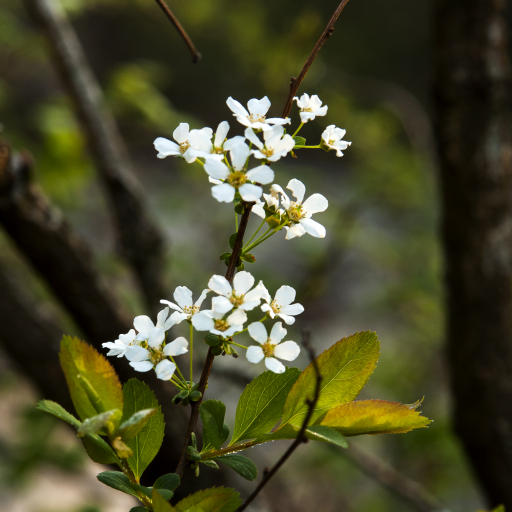
Plant Overview
Often called the "Bridal Wreath Spirea," this classic deciduous shrub has been a staple in romantic cottage gardens for generations. Its long, gracefully arching branches transform into snowy cascades of white "buttons" every spring, creating a floral display that looks like a frozen waterfall. Originally hailing from East Asia, it earned its place in landscapes for its tough-as-nails nature and reliable, vintage charm.
🔍 How to Identify
- 🌸 The Flowers: Tiny, double white blossoms that resemble miniature roses or "shoe buttons," clustered tightly in groups of 3 to 6 along the entire length of the stems.
- 🍃 The Foliage: Small, dark green, oval leaves with finely toothed edges; the name prunifolia translates to "plum-leaved," referring to their resemblance to plum tree foliage.
- 🌿 Growth Habit: A fountain-like silhouette with thin, wiry, dark brown branches that arch elegantly toward the ground.
🏡 In Your Garden
- ☀️ Sun & Bloom: To get that iconic "blanket of snow" look, give it full sun. While it can survive in partial shade, the flowering will be sparse and the branches may become "leggy" as they reach for light.
- ✂️ The Pruning Rule: This plant is an "old wood" bloomer. To avoid accidentally cutting off next year's flower buds, only prune or shape the shrub immediately after the spring flowers have faded.
- 🍂 Autumn Interest: Beyond its spring beauty, it provides a second show in the fall when the leaves transition into surprisingly vivid shades of bronze, gold, and orange-red.
⚠️ Safety & Toxicity
- ✅ Pet & Human Safe: Spiraea prunifolia is generally considered non-toxic to dogs, cats, and humans, making it a "worry-free" choice for family landscapes.
- 👐 Physical Texture: While not chemically toxic, the branches are thin and tough; they can be a bit scratchy when dry, so wear gloves if you are doing heavy thinning or clearing out old wood.
✨ Fun Fact
The genus name Spiraea comes from the Greek word speira, meaning "wreath" or "coil." This refers to the plant's long, flexible stems, which were historically used to weave festive floral crowns and garlands for celebrations.

Detailed Care Instructions
Bridal wreath spirea makes a great specimen plant set at the back of a large yard, or planted in masses as a screen. It also works well in foundation plantings for large homes, such as farm-house style residences, but should be kept well away from entrances. It is excellent when planted in the sunny margins abutting woodland areas, similar to the way azaleas are often used. Make sure to plant this shrub where it will not scratch human passers-by—unless you are planting it with the intention of discouraging intruders.
How long does bridal wreath spirea live?
This shrub can happily live in a favorable location for many decades. Hundred-year-old specimens are common, and are plentiful around historical farmhouses across the Midwest and East.
What about wildlife?
Although no shrub is entirely safe from browsing by hungry deer or rabbits, the thorny nature of spirea (it is a member of the rose family) makes it largely free of serious damage from creatures. However, when young, the shrubs can be susceptible to serious browsing by rabbits. And this shrub is very attractive to butterflies and other pollinators during its bloom season. Its dense growth habit and thorny protective stems make it a favorite nesting spot for small birds.
Are there any native plant alternatives to bridal wreath spirea?
If you prefer a native white-flowering species, try Spiraea alba, a native plant of the Eastern U.S. and Midwest. It grows to about 4 feet tall, flowers in summer, and is hardy to zone 3.
Is there a bridal wreath spirea with colored flowers?
No. This is a white-flowered species. Most spireas with colored flowers (usually pink or purple) are cultivars of S. japonica, Japanese spirea.
To grow Spiraea prunifolia, also known as Bridal Wreath spirea, follow these steps:
- Select a suitable location: Choose a spot in your garden that receives full sun to partial shade. The soil should be well-draining and rich in organic matter.
- Planting: Dig a hole that is slightly larger than the roots of the plant. Place the plant in the hole, ensuring that the top of the root ball is level with the soil surface. Backfill the hole with soil and gently firm it around the plant.
- Watering: After planting, give the plant a thorough watering to settle the soil. Water regularly, especially during dry periods, to keep the soil evenly moist but not waterlogged.
- Pruning: Spiraea prunifolia blooms on old wood, so prune it immediately after flowering. Remove any dead, diseased, or damaged branches. You can also shape the plant to your desired form, but avoid severe pruning as it may reduce flowering.
- Mulching: Apply a layer of organic mulch, such as wood chips or compost, around the base of the plant. This helps conserve moisture, suppress weeds, and improve soil fertility.
- Fertilizing: Optional, but you can apply a balanced slow-release fertilizer in early spring to provide nutrients for healthy growth and flowering.
- Pests and diseases: Spiraea prunifolia is generally resistant to pests and diseases. However, monitor for common issues like aphids or powdery mildew and utilize appropriate control methods if necessary.
- Winter care: Bridal Wreath spirea is hardy to USDA zones 5-8. In colder regions, protect the plant during winter by applying a layer of mulch around the base and wrapping it with burlap to shield it from harsh weather.
By following these guidelines, you can successfully grow Spiraea prunifolia in your garden.

Place in a bright room that is sun drenched almost all day. Or directly in a south-facing window.

To properly water this plant, you should ensure that the soil is consistently moist but not waterlogged. This can be achieved by watering deeply but infrequently, allowing the soil to partially dry out between watering sessions. It is important to avoid getting water on the plant's leaves as this can increase the risk of disease. Additionally, providing a layer of mulch around the base of the plant can help retain moisture in the soil.
To fertilize this plant, use a slow-release fertilizer with a balanced N-P-K ratio in early spring. Apply the fertilizer according to package instructions, and work it into the top few inches of soil around the base of the plant. Avoid getting fertilizer on the foliage or flowers. Water the plant deeply after fertilizing. Repeat every six to eight weeks during the growing season if necessary.
When planting the Spiraea Prunifolia, it is best to use a well-draining soil that is rich in organic matter. The soil should be slightly acidic, with a pH range between 5.0 and 6.5. The plant prefers moist soil, but not waterlogged, and it can tolerate a wide range of soil textures, from sand to clay.
To ensure healthy growth, it is recommended to amend the soil with compost or well-rotted manure before planting. This will help improve soil structure, retain moisture, and provide essential nutrients for the plant.
It is also important to provide adequate drainage when planting the Spiraea Prunifolia. Raised beds or mounds can be helpful in achieving proper drainage, especially in heavy clay soils.
Overall, selecting the right soil for Spiraea Prunifolia is crucial for its growth and development. A well-draining, slightly acidic, and nutrient-rich soil will provide the ideal growing conditions for this plant.
To propagate this particular plant, first take a healthy stem cutting from the parent plant. Using a sharp, clean knife, cut a stem that is around four to six inches long. Remove any leaves from the bottom two inches of the stem.
Next, dip the bottom of the stem into a rooting hormone. This hormone will help encourage root growth. Then, plant the stem into a pot filled with a well-draining soil mix. Water the soil lightly, making sure not to overly dampen the soil.
Place the newly potted cutting in a spot with indirect sunlight. Keep the soil moist, but not soaked, and cover the pot with a plastic bag to help retain moisture. After a few weeks, check to see if roots have formed by gently tugging on the stem. If there is resistance, roots have formed. Once the roots have developed, remove the plastic bag and move the plant into a larger pot or to its permanent outdoor location.
Common pests of the bridal-wreath spiraea include Scale insect, spider mites, aphids, larvae. Make a habit of checking your bridal-wreath spiraea frequently for pests so that any infestations can be caught and managed early.








