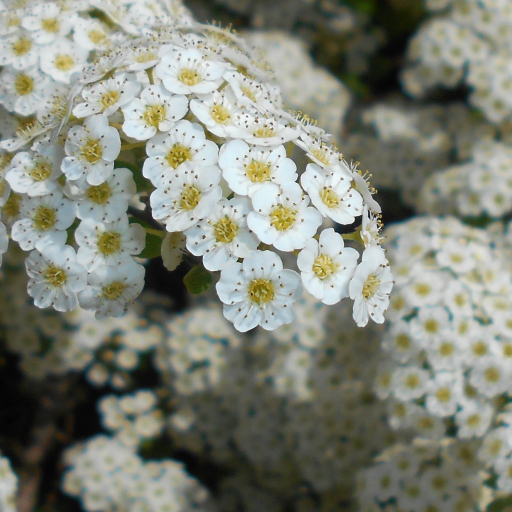
Plant Overview
Often called the Three-lobed Spirea, this elegant shrub is a hardy wanderer from the rocky mountains of Central Asia and Siberia. It is the "secret ancestor" to many of our most popular garden hybrids, prized for its fountain-like sprays of snow-white blossoms. Its compact size and rounded shape make it a favorite for gardeners who want high-impact beauty without the maintenance of larger bushes.
🔍 How to Identify
- 🍃 The Leaves: Distinctive, small, bluish-green leaves that are divided into three shallow lobes, vaguely resembling a tiny, rounded maple or gooseberry leaf.
- 🌸 The Blooms: Dense, umbrella-shaped clusters (corymbs) of tiny, brilliant white flowers that smother the branches so thickly the foliage often disappears in late spring.
- 🌿 Growth Habit: A tidy, mounded shrub that stays naturally compact (usually 3–4 feet tall), featuring graceful, arching stems that give it a soft, flowing silhouette.
🏡 In Your Garden
- 🏔️ Mountain Hardiness: Because it hails from harsh Siberian climates, this plant is incredibly cold-hardy and drought-tolerant once established. It’s a "survivor" plant that can handle poor soil and neglect better than most ornamentals.
- ✂️ The Pruning Rule: This Spirea blooms on "old wood" (the growth from the previous year). To ensure a massive flower show, only prune it immediately after the flowers have faded; pruning in winter will remove all of next year's flower buds!
- 🌞 Powdery Mildew Defense: While many Spireas struggle with mildew in humid weather, the Three-lobed Spirea is notably resistant, especially if planted in a spot with full sun and good airflow.
⚠️ Safety & Toxicity
- ✅ Non-Toxic: Spiraea trilobata is generally considered safe and non-toxic for dogs, cats, and horses. It is a "worry-free" choice for family landscapes and play areas.
- 👐 Gentle Branches: Unlike many woody shrubs, it lacks thorns or irritating sap, making it very safe to handle during maintenance or for children playing nearby.
✨ Fun Fact
This plant is the "Mother of the Bridal Wreath." It was crossed with Spiraea cantoniensis in France back in the 1860s to create the famous Spiraea x vanhouttei, which is now one of the most common white-flowered shrubs in the world!

Detailed Care Instructions
| Humidity | Normal |
| Lighting | Full Sun |
| Difficulty | Medium |
| Hibernation | Cold Period |
| Hardiness Zones | 3 - 8 |
To grow Spiraea Trilobata, also known as Three-lobed Spirea or Steeplebush, follow these steps:
- Choose the right location: Spiraea Trilobata prefers full sun to partial shade. It can tolerate a wide range of soil types, but well-draining soil is preferable.
- Prepare the soil: Before planting, improve the soil by adding organic matter, such as compost, to improve water retention and fertility. Ensure that the soil is loose and well-draining.
- Planting: Dig a hole that is slightly wider and deeper than the plant's root ball. Place the Spiraea Trilobata in the hole and backfill it with soil, gently firming it around the base of the plant. Water thoroughly after planting.
- Watering: Keep the soil consistently moist during the first year of growth. Afterward, Spiraea Trilobata is generally drought-tolerant, but regular watering during dry periods can help it thrive.
- Mulching: Apply a layer of organic mulch, such as wood chips or straw, around the base of the plant to help conserve moisture, suppress weeds, and regulate soil temperature.
- Pruning: Spiraea Trilobata generally benefits from some annual pruning. In late winter or early spring, before new growth begins, remove any dead or damaged branches and shape the plant as desired. This promotes healthy growth and maintains a compact form.
- Fertilization: Apply a balanced, slow-release fertilizer in early spring to provide essential nutrients for growth. Follow the manufacturer's instructions for application rates.
- Pest and disease control: Spiraea Trilobata is generally resistant to pests and diseases. Monitor the plant regularly and address any issues promptly. Prune out or treat affected areas as necessary.
- Propagation: Spiraea Trilobata can be propagated by taking semi-hardwood cuttings in late summer or early autumn. Dip the cuttings in rooting hormone and plant them in a well-draining rooting medium. Place the cuttings in a warm, bright location and keep the soil consistently moist until roots develop.
By following these steps and providing proper care, your Spiraea Trilobata plant should grow and flourish.

Place in a window with dappled sun or a spot in the middle of a room. Or directly in a window facing west or east.

One way to water this plant is to carefully pour water at the base of the stem, being mindful not to splash water onto the leaves or flowers. Another method is to use a hose or watering can with a gentle spray attachment to evenly distribute water throughout the soil around the base of the plant. It is important to avoid over-watering the plant and to allow the soil to partially dry out between watering sessions. Additionally, it may be helpful to mulch around the base of the plant to help regulate moisture levels and prevent weeds from growing.
To fertilize this plant, it is recommended to apply a balanced fertilizer with equal amounts of nitrogen, phosphorus, and potassium in early spring before new growth appears and again in early summer after flowering has finished. Use a slow-release granular fertilizer and distribute evenly around the base of the plant. Water thoroughly after fertilizing. Avoid over-fertilizing to prevent damage to the plant.
The ideal soil for the Spiraea Trilobata plant is a well-draining soil that is rich in organic matter. The pH level of the soil should be neutral to slightly acidic. It is best to avoid soils that are too heavy or compacted as they may limit the plant's root growth and hinder its ability to absorb water and nutrients. A soil mix that contains a combination of peat moss, perlite, and compost is recommended to provide optimal drainage and moisture retention. Additionally, the plant prefers a moist environment, so regular watering is necessary.
To propagate this plant, first select healthy stems from the parent plant. These should be at least 6 inches long and have several nodes on them. Remove the lower leaves from the stem, leaving only a few at the top.
Next, dip the cut end of the stem in rooting hormone powder and plant it in a pot filled with moist soil. Keep the pot in a bright, indirect light location and make sure to keep the soil consistently moist.
After a few weeks, check for roots by gently tugging on the stem. If there is resistance, roots have formed and the plant is ready to be transplanted.
To transplant, prepare a hole in well-draining soil and insert the plant, being careful not to damage the roots. Water thoroughly and continue to keep the soil moist until the plant is established.
Common pests of the asian meadowsweet include Scale insect, spider mites, aphids, larvae. Make a habit of checking your asian meadowsweet frequently for pests so that any infestations can be caught and managed early.








