Plant Overview
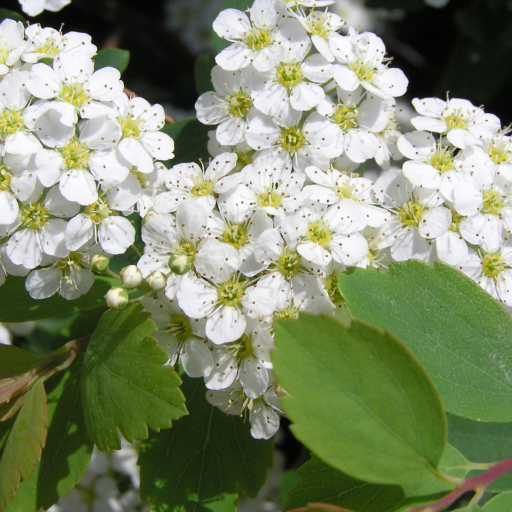
Often called the "Bridal Wreath Spirea," this hybrid shrub is a classic of landscape design, beloved for its romantic, sweeping silhouette. When in full bloom during late spring, its gracefully arching branches are so heavily laden with white flowers they resemble a cascading waterfall of snow. It is a hardy, time-tested favorite that brings a sense of old-world elegance to any garden.
🔍 How to Identify
- 🌸 Floral Clusters: Small, five-petaled white flowers grow in dense, flat-topped clusters (umbels) that can almost entirely hide the foliage during peak bloom.
- 🌿 Diamond Foliage: The leaves are small, dark blue-green, and roughly diamond-shaped with "toothed" or serrated edges near the tips.
- 🏹 Arching Habit: It possesses a distinct "fountain" shape; the slender, woody stems grow upward and then curve elegantly toward the ground.
🏡 In Your Garden
- ✂️ Timing is Everything: This shrub blooms on "old wood" (stems from the previous year). To avoid losing next year's flowers, only prune or shape the plant immediately after the current flowers have faded.
- ☀️ Sun Seeker: While it can survive in partial shade, it needs full sun to produce that iconic "snow-covered" look. More sun leads to more flowers and tighter, healthier growth.
- 🌬️ Airflow is Key: Because it grows quite dense, it appreciates a spot with good air circulation. This helps prevent powdery mildew, which can occasionally dull the blue-green luster of its leaves in humid summers.
⚠️ Safety & Toxicity
- ✅ Non-Toxic: Spiraea × vanhouttei is generally considered safe and non-toxic for dogs, cats, and horses. It is a "worry-free" addition to yards with curious pets or children.
- 🧤 Physical Protection: While not chemically dangerous, the thin, twiggy branches can become brittle. It is best to wear gardening gloves when pruning to avoid minor scratches or skin irritation from the woody debris.
✨ Fun Fact
This plant is a "garden aristocrat" with a long history; it was hybridized in France around 1862 by a nurseryman named Billiard and named in honor of the famous Belgian horticulturist Louis van Houtte. It has remained one of the most popular ornamental shrubs in the world for over 160 years!

Detailed Care Instructions
To grow Spiraea × Vanhouttei, commonly known as Vanhoutte Spirea, you can follow these steps:
- Choose the right location: Vanhoutte Spirea thrives in full sun to partial shade. Select a location with well-draining soil that is rich in organic matter.
- Planting: Dig a hole that is wide and deep enough to accommodate the root ball of the plant. Place the plant in the hole and backfill it with soil, gently firming it around the roots.
- Watering: After planting, water the plant thoroughly to help settle the soil and promote root establishment. Afterward, water the plant regularly, especially during dry periods, to keep the soil consistently moist but not waterlogged.
- Mulching: Apply a layer of organic mulch around the base of the plant, such as wood chips or shredded bark. This helps retain moisture, suppress weeds, and regulate soil temperature.
- Pruning: Vanhoutte Spirea blooms on old wood, so it is essential to prune it immediately after flowering. Remove any dead, damaged, or crossing branches to maintain an open and attractive growth habit.
- Fertilizing: Apply a balanced, slow-release fertilizer in early spring to provide necessary nutrients. Follow the instructions on the fertilizer package for proper application rates.
- Pest and disease control: Vanhoutte Spirea is generally resistant to many pests and diseases. However, it may occasionally encounter issues with aphids or powdery mildew. If necessary, treat infestations with a suitable insecticide or fungicide, following the label instructions carefully.
- Winter protection: Vanhoutte Spirea is hardy and can tolerate cold temperatures. However, in severe climates, consider providing winter protection, such as a layer of mulch or burlap, to shield the plant from harsh winds and extreme cold.
By following these steps, you should be able to successfully grow Spiraea × Vanhouttei and enjoy its beautiful white flowers and graceful arching branches.

Place in a bright room that is sun drenched almost all day. Or directly in a south-facing window.

To water this particular plant, it is important to first check the soil moisture level. Water deeply and thoroughly, making sure the water reaches the root zone. Avoid shallow watering, which can encourage the plant to develop shallow roots and become weaker overall. It is best to water early in the morning or late in the evening to reduce evaporation and water loss due to heat. Avoid pouring water on the foliage, as this can increase the risk of fungal disease. Consider mulching the soil around the base of the plant to help retain moisture and suppress weed growth. Monitor the plant regularly and adjust watering frequency and amount depending on the weather conditions and soil moisture level.
For optimal growth and health of this shrub, it is recommended to fertilize in early spring before new growth emerges. Use a balanced fertilizer with equal parts nitrogen, phosphorus, and potassium. Apply the fertilizer evenly around the base of the plant, avoiding contact with the foliage or stems. Water thoroughly after applying the fertilizer to allow the nutrients to penetrate the soil. Repeat this process once or twice more during the growing season, spaced out by several weeks. Avoid over-fertilizing as this can result in excessive growth and weaken the plant.
The ideal soil to use with this plant would be a well-draining soil that is neither too acid nor too alkaline. It should have a pH level between 6.0 and 7.5. The soil should be rich in nutrients, but not overly fertile. The plant prefers a soil that is moist but not waterlogged, and it does not tolerate drought well. Organic matter such as compost or well-rotted manure can be added to the soil to improve its quality. It is important to avoid using heavy clay soils or soils that are prone to waterlogging, as this can cause root rot and other problems. Adequate drainage is essential for the health of this plant.
There are several ways to propagate this plant. One method is to take softwood cuttings in early summer. Cuttings should be around 10cm long and should include a few leaves. Remove the bottom leaves and dip the base of the cutting in rooting hormone before planting it in a well-draining potting mix. Place the pot in a warm, bright spot and keep the soil moist. Roots should form within a few weeks.
Another method is to layer a stem in late winter or early spring. Choose a flexible stem near the base of the plant and bend it down to the ground. Scrape the bark on the underside of the stem and bury it in the soil, leaving the top of the stem exposed. Place a rock or brick on top of the buried stem to keep it in place. Roots should form on the buried stem within a few months. Once well-rooted, the new plant can be separated from the parent plant and transplanted.
Finally, Spiraea × Vanhouttei can also be propagated from seed. Harvest seed pods in autumn when they have turned brown and split open. Remove the seeds and sow them thinly in a seed tray filled with compost. Cover with a layer of compost and water gently. Keep the tray in a bright, cool spot and keep the compost moist. Seeds should germinate within a few weeks. Once the seedlings have grown large enough, they can be transplanted to individual pots and grown on until they are large enough to be planted outside.
Common pests of the spirea include Scale insect, spider mites, aphids, larvae. Make a habit of checking your spirea frequently for pests so that any infestations can be caught and managed early.








