Plant Overview
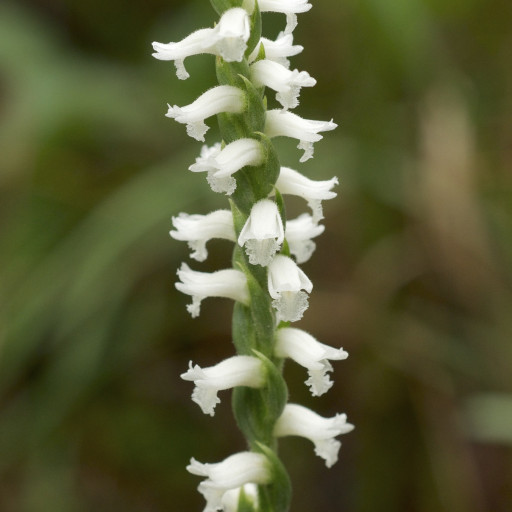
Commonly known as Nodding Lady's Tresses, this delicate wild orchid is a late-season gem that graces wetlands and meadows just as other flowers begin to fade. Its tiny, crystalline white blooms are arranged in a distinctive spiral, resembling a braided lock of hair. In the language of flowers, it has long been a symbol of "the lady of the house," adding a touch of untamed elegance to the autumn landscape.
🔍 How to Identify
- 🌸 The Braid: Tiny, tubular white flowers grow in one or more spiraling rows around a central stalk, looking like a literal braid of pearls.
- 🔔 Nodding Blooms: Each individual flower curves slightly downward or "nods," which distinguishes it from other similar orchid species.
- 🌿 Basal Leaves: Long, narrow, grass-like leaves typically hug the ground at the base, though they may wither by the time the flower spike reaches full height.
🏡 In Your Garden
- 💧 Moisture is Key: Unlike many orchids that prefer dry air, this one loves "wet feet." It thrives in boggy areas, damp meadows, or near the edges of ponds where the soil stays consistently moist.
- 🍂 Late Season Interest: This plant is a "late bloomer," often waiting until September or October to show its flowers, providing essential nectar for late-season pollinators like bumblebees.
- 🌱 Root Sensitivity: It relies on a complex relationship with soil fungi (mycorrhiza) to survive. Because of this, it is notoriously difficult to transplant and should never be dug up from the wild.
⚠️ Safety & Toxicity
- ✅ Status: Generally considered non-toxic to humans and common household pets.
- 🐾 Sensitive Nature: While not poisonous, these are delicate orchids. Their presence in a landscape usually indicates a healthy, undisturbed ecosystem, so they are best admired without being picked or stepped on.
✨ Fun Fact
The genus name Spiranthes is derived from the Greek words speira (a coil) and anthos (a flower), perfectly describing the DNA-like spiral of its beautiful white blossoms.

Detailed Care Instructions

Place in a window with dappled sun or a spot in the middle of a room. Or directly in a window facing west or east.

Spiranthes cernua is a plant that requires consistent and moderate watering to ensure its health and growth. When watering, it is important to avoid over-watering or under-watering.
One effective way to water this plant is to use a soaker hose or drip irrigation system. These methods help to deliver water directly to the plant roots, preventing excess water from sitting on top of the soil and potentially causing root rot.
It is also important to water the plant in the morning or evening when temperatures are cooler. This reduces the amount of water lost to evaporation and ensures that the plant has enough water to make it through the day.
When watering this plant, it is important to pay attention to the soil moisture level. The soil should be moist, but not wet. To check the soil moisture, place your finger into the soil to a depth of about 1-2 inches. If it feels dry, it's time to water.
It is also important to avoid getting the foliage wet when watering. Wet leaves can increase the risk of fungal disease.
Finally, it is important to adjust the watering schedule based on the plant's needs. During periods of high heat or drought, the plant may require more frequent watering. Conversely, during periods of cooler temperatures or low rainfall, the plant may require less frequent watering.
The Spiranthes Cernua plant requires a well-draining soil that is rich in nutrients. It is recommended to use a soil mixture that consists of equal parts sand, peat moss, and perlite. The soil should have a pH level of 6.0 to 7.0 and should be kept moist but not soggy. It is important to avoid using heavy clay soils or soils with low drainage as these can lead to root rot and other problems for the plant. Additionally, the plant prefers a slightly acidic soil, so it may be beneficial to add organic matter or other soil amendments to adjust the pH if necessary.








