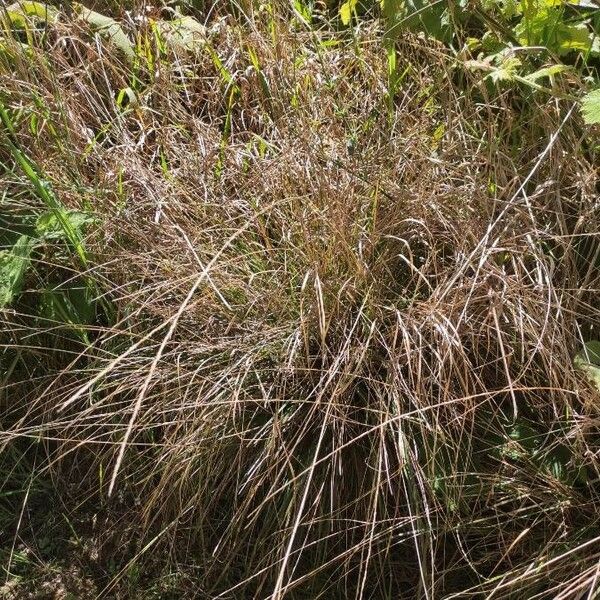
Plant Overview
Often called "Rat's Tail Grass" or "Parramatta Grass," Sporobolus africanus is a rugged, tufted perennial that originated in Africa but has since traveled the globe. Known for its incredible resilience, it is often seen as a stubborn survivor that thrives where other grasses give up, particularly in high-traffic areas and compacted soils.
🔍 How to Identify
- 🐀 The "Rat Tail": Its most defining feature is the flowering spike—a long, slender, and dense seed head that looks remarkably like a dark, smoky-green rat’s tail.
- ⚔️ Tough Foliage: The leaves are narrow, hairless, and feel leathery or "wire-like" to the touch, growing in a dense, upright clump.
- 🌑 Seed Color: As the seeds mature, the spike often takes on a darker, almost brownish-grey hue, distinguishing it from softer, lighter pasture grasses.
🏡 In Your Garden
- 🏗️ The Compaction Specialist: This plant is an indicator of "tired" soil. It loves footpaths, driveways, and heavily trodden garden edges because its deep, fibrous roots can penetrate ground that is too hard for other plants.
- 👟 The Hitchhiker: If you find this in your yard, it likely arrived on the bottom of a shoe or a pet's paw. The seeds become sticky when wet, making them expert travelers. While it’s great for erosion control on slopes, most gardeners treat it as a weed because it outcompetes softer lawn grasses.
⚠️ Safety & Toxicity
- ✅ Safe for Touch: Sporobolus africanus is non-toxic to humans and common household pets. It does not have thorns or stinging hairs.
- 🦷 Lawn Mower Logic: While not poisonous, the plant is incredibly "tough." For grazing animals, the leaves are so fibrous and abrasive that they can actually cause premature wear on the teeth of livestock if eaten in large quantities over time.
✨ Fun Fact
The genus name Sporobolus is derived from the Greek words spora (seed) and ballein (to cast), referring to the way the plant "throws" its seeds. When the seed heads get wet, the outer layer of the seed swells and ejects the inner seed—a clever mechanical trick to ensure the next generation finds a new spot to grow!

Detailed Care Instructions
To grow Sporobolus africanus, also known as African dropseed grass, follow these steps:
- Find a suitable planting location: Sporobolus africanus prefers full sun to partial shade and well-draining soil. It can tolerate both sandy and clay soil types.
- Prepare the soil: Clear any weeds or vegetation from the planting area. Loosen the soil with a garden fork or tiller to a depth of about 6-8 inches. Remove any rocks or debris.
- Amend the soil: If your soil is heavy clay or poor in nutrients, consider adding organic matter such as compost or well-aged manure. This will improve the soil structure and fertility.
- Sow the seeds: Sporobolus africanus can be directly sown by scattering the seeds evenly over the prepared soil. Press the seeds gently into the soil, ensuring good seed-to-soil contact, but do not bury them too deep. Alternatively, you can start the seeds indoors in pots or trays and transplant them outdoors once they have developed.
- Watering: After sowing the seeds, water the area thoroughly to ensure good moisture penetration. Keep the soil consistently moist but not waterlogged until the seeds germinate. Once established, African dropseed grass is drought-tolerant and does not require much watering.
- Maintenance: Sporobolus africanus does not require regular fertilizer application. However, you can provide a light application of balanced slow-release fertilizer in spring if desired. In terms of maintenance, pruning is not necessary unless you want to maintain a specific shape or height. This plant can handle light foot traffic, so it is suitable for a low-traffic area but not heavily frequented areas.
- Propagation: Sporobolus africanus can also be propagated by division. In late winter or early spring when the plant is still dormant, dig up a mature clump and carefully divide it into smaller sections, ensuring each division has enough roots. Replant the divisions in the desired locations.
- Pest and disease control: African dropseed grass is generally not susceptible to major pest or disease issues. However, keep an eye out for common garden pests and diseases and take appropriate measures if needed.
Remember to consult with local gardening experts or nursery professionals for specific guidance tailored to your location and climate.

To provide the optimal watering for the Sporobolus Africanus plant, follow these guidelines:
1. Understand the plant's water requirements: Sporobolus Africanus generally prefers moist soil but can tolerate periods of drought. It is important not to overwater the plant as it may lead to root rot.
2. Observe the soil moisture: Check the soil regularly by inserting your finger about an inch deep into the soil. If it feels dry, it's time to water the plant. However, if the soil feels slightly moist, it is better to wait before watering.
3. Watering technique: When watering, use a gentle stream or a watering can with a sprinkler head attachment. This ensures a slow and even distribution of water, allowing it to penetrate into the soil without causing any damage to the plant's delicate roots.
4. Water deeply: This plant prefers deep watering rather than frequent shallow watering. When you water, ensure that the water reaches the roots by allowing it to soak into the soil for a few minutes. This encourages healthy root growth and prevents the plant from becoming dependent on frequent watering.
5. Time of day: Water the Sporobolus Africanus plant in the early morning or late afternoon to avoid excessive evaporation. Watering during these times also allows the foliage to dry before evening, reducing the risk of fungal diseases.
6. Monitor environmental conditions: Aside from checking soil moisture, take into account factors such as temperature, humidity, and rainfall patterns. Adjust your watering schedule accordingly, as the plant will have different water requirements during hot, dry periods compared to cooler, rainy seasons.
7. Consider cultural site requirements: Factors like the plant's location, exposure to sunlight, and soil type can affect the watering needs. If the plant is placed in a sunny spot with well-draining soil, it may require more frequent watering compared to a plant in a shaded area with moisture-retaining soil.
Remember, it is always essential to understand the specific needs of the Sporobolus Africanus plant you have to ensure the most appropriate watering regimen.
To fertilize the Sporobolus Africanus plant, follow these instructions:
- Choose a balanced fertilizer: Look for a slow-release or controlled-release fertilizer with equal proportions of nitrogen (N), phosphorus (P), and potassium (K). This balanced formulation will promote overall plant health and encourage steady growth.
- Determine the correct dosage: Read the fertilizer packaging instructions to determine the recommended dosage for your plant's size and age. Use a measuring cup or scale to measure out the appropriate amount.
- Apply the fertilizer: Scatter the fertilizer granules evenly around the base of the plant, ensuring that they are spread over the root zone. Take care not to place the fertilizer directly on the plant's stems or foliage.
- Water thoroughly: After applying the fertilizer, water the plant thoroughly to dissolve the fertilizers' nutrients and allow them to penetrate the soil. This will help prevent fertilizer burn and ensure that the plant can uptake the nutrients effectively.
- Follow the recommended fertilization schedule: Sporobolus Africanus plants generally benefit from fertilization during the growing season, which is typically spring and summer. Follow the fertilizer manufacturer's guidelines regarding the frequency of application. Typically, fertilizing every 4-6 weeks is sufficient, but adjust based on the plant's response and environmental conditions.
- Monitor plant health: Keep an eye on the plant's overall health and growth rate. If you notice any signs of nutrient deficiencies, such as yellowing leaves or stunted growth, adjust the fertilizer application accordingly.
Remember, always follow the instructions provided on the fertilizer packaging, as different brands and formulations may have specific guidelines for application. Additionally, consider testing the soil periodically to get a better understanding of its nutrient content and make informed fertilizer decisions.
The ideal soil type to use for the Sporobolus Africanus plant is a well-draining soil that is rich in organic matter. The soil should have a slightly acidic to neutral pH level, preferably between 6.0 and 7.0, to promote optimal nutrient uptake and root growth.
Additionally, the soil should have good moisture retention capabilities, as the Sporobolus Africanus plant requires regular watering to thrive. However, the soil should not be waterlogged or excessively saturated, as this can lead to root rot.
It is important to ensure that the soil is loose and friable, allowing for proper aeration and root development. This will aid in the healthy growth of the Sporobolus Africanus plant. Regularly incorporating organic matter, such as compost or well-rotted manure, into the soil will help improve its structure and fertility.
Furthermore, it is advisable to choose a soil that is not excessively sandy or clayey. Sandy soils can quickly drain water and nutrients, potentially leading to drought stress for the plant. On the other hand, clay soils tend to retain water and can become heavy and compacted, inhibiting root growth. Thus, a well-balanced loamy soil is typically most suitable for the Sporobolus Africanus plant.
In summary, when selecting soil for the Sporobolus Africanus plant, prioritize a well-draining, slightly acidic to neutral soil with good moisture retention qualities. Incorporating organic matter and ensuring the soil is loose and friable will enhance the overall health and growth of the plant.
To propagate Sporobolus Africanus, you can follow these step-by-step instructions:
- Collection of seeds: Identify mature seed heads on healthy plants. Wait for the seed heads to dry and turn brown, indicating that the seeds are ripe. Carefully harvest the seed heads by cutting them off with clean, sharp scissors or pruning shears. Place the harvested seed heads in a clean container.
- Seed cleaning: Separate the seeds from the seed heads by gently rubbing the seed heads between your fingers or shaking them in a clean container. This will help remove any debris or chaff from the seeds.
- Seed treatment: Soaking the seeds in water for 24 hours can help improve germination rates. Add the seeds to a container and cover them with lukewarm water. Allow them to soak for the designated time.
- Preparing the planting medium: Choose a well-draining soil mixture with a balanced composition of organic matter and sand. Fill seed trays or small pots with the prepared planting medium, leaving some space at the top for planting the seeds.
- Sowing the seeds: Sow the treated seeds onto the surface of the prepared soil, evenly spacing them apart. Lightly press the seeds into the soil with your fingertips or a flat object, ensuring good seed-to-soil contact while ensuring they are not buried too deep.
- Moisture and temperature: Water the planted seeds gently using a fine mist spray to avoid displacing them. Place the trays or pots in a warm location with indirect sunlight. Maintain a consistent temperature between 70°F to 85°F (21°C to 29°C), which is optimal for germination.
- Watering and care: Keep the soil evenly moist, but not waterlogged, throughout the germination period. Water the trays or pots from below to prevent seeds from getting washed away. Monitor the moisture levels regularly and adjust watering accordingly.
- Germination: Sporobolus Africanus seeds usually germinate within 1 to 3 weeks. Once the seedlings emerge, provide them with bright, indirect sunlight for healthy growth.
- Transplanting: When the seedlings have grown to a suitable size, typically with several sets of leaves, they can be transplanted into larger pots or directly into the ground. Handle the young plants gently and avoid damaging the delicate root system during the transplanting process.
- Continued care: Provide the transplanted seedlings with adequate water, regular fertilization, and protection from extreme weather conditions. Gradually expose the plants to longer durations of direct sunlight to help them acclimate to outdoor conditions.
By following these steps, you can successfully propagate Sporobolus Africanus from seeds and enjoy the growth and beauty of this plant in your garden or landscape.








