Plant Overview
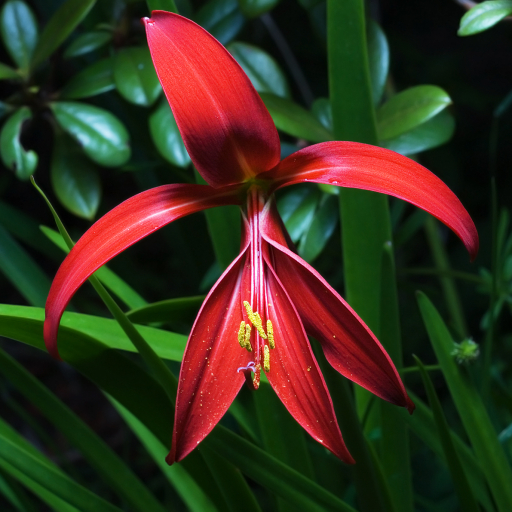
Often called the Aztec Lily or Jacobean Lily, this striking Mexican native is a true showstopper that looks like it belongs in a royal court. With its deep, velvety crimson petals and architectural shape, it was once associated with the Spanish Knights of St. James because the blossom resembles the cross on their cloaks. It is a bold, dramatic choice for anyone looking to add a touch of ancient elegance to their collection.
🔍 How to Identify
- 🌺 Exotic Bloom: Unlike symmetrical lilies, its flowers are zygomorphic (orchid-like), featuring six brilliant red tepals—three that stand upright and curve back, and three that droop downward to form a "lip."
- 🍃 Strap-like Foliage: Long, slender, dark green leaves emerge in a fountain-like shape, often appearing just after the flower spike has begun its dramatic ascent.
- ✨ Sparkling Texture: If you look closely at the petals in direct sunlight, they often appear to be dusted with microscopic gold or silver "diamond dust," giving the flower a shimmering quality.
🏡 In Your Garden
- 🌱 The "Snug" Factor: This plant actually prefers its roots to be slightly crowded. If planting in a pot, choose one that feels a bit small; being "pot-bound" often triggers the bulb to produce its most spectacular blooms.
- 💧 Dry Dormancy: The Aztec Lily follows a strict seasonal rhythm. After the leaves yellow in the fall, the bulb requires a completely dry resting period. Rot is the biggest enemy, so "neglecting" it during the winter is actually the best care you can provide.
⚠️ Safety & Toxicity
- 🚫 Toxic Status: Like many members of the Amaryllis family, the entire plant—especially the bulb—is considered toxic.
- 🐾 Pet & Child Warning: It contains lycorine, which can cause vomiting, diarrhea, and drooling if ingested by curious cats, dogs, or toddlers. Always wash your hands after handling the bulbs to avoid skin irritation.
✨ Fun Fact
The Aztec Lily is so resilient that it was a favorite of Thomas Jefferson, who grew it in his famous gardens at Monticello. Despite its delicate, orchid-like appearance, it is remarkably hardy in dry conditions, surviving through the heat of the Mexican highlands for centuries.

Detailed Care Instructions
| Humidity | Normal |
| Lighting | Part Sun |
| Toxicity | Poisonous |
| Difficulty | Easy |
| Temperature | 14°C - 30°C |
| Hardiness Zones | 11 - 12 |
To grow Sprekelia Formosissima, also known as the Jacobean lily or aztec lily, follow these steps:
- Choose the right location: Sprekelia Formosissima prefers bright, indirect light. Select a spot that receives morning sun or filtered light throughout the day. Avoid placing the plant in direct sunlight, as it can scorch the foliage.
- Optimal temperature: These plants thrive in temperatures between 60-75°F (15-24°C). Avoid extreme temperature fluctuations or cold drafts.
- Planting: Sprekelia Formosissima is typically grown from bulbs. When planting, ensure the tip of the bulb is level with the soil surface and the roots are well-covered. Use a well-draining soil mix composed of equal parts of potting soil, sand, and perlite.
- Watering: Water the plant thoroughly when the top inch of soil is dry. Ensure that the soil doesn't become waterlogged, as this can lead to root rot. During active growth, the plant requires more frequent watering but reduces watering during the dormant period.
- Fertilizing: Feed the plant with a balanced, water-soluble fertilizer every 4-6 weeks during the growing season. Follow the instructions on the fertilizer packaging for application rates.
- Humidity: Sprekelia Formosissima prefers moderate humidity. If your environment is dry, consider using a humidifier or placing the pot on a tray filled with pebbles and water to increase humidity around the plant.
- Pruning: Remove any dead or yellowing leaves to improve the plant's appearance and overall health.
- Dormancy: After the flowering period, Sprekelia Formosissima may enter a dormant period. Reduce watering and withhold fertilizer during this time. Store the plant in a cool, dry place until new growth resumes.
- Propagation: Sprekelia Formosissima can be propagated through offsets or bulb division. When the plant is dormant, carefully separate the new bulbs or offsets from the parent plant and plant them separately.
By following these steps, you should be able to successfully grow and care for Sprekelia Formosissima. Remember to provide adequate light, temperature, water, and care specific to its needs.

Place in a window with dappled sun or a spot in the middle of a room. Or directly in a window facing west or east.

One way to water this plant is to use lukewarm water and pour it slowly around the base of the stem. Avoid getting water on the leaves as this could cause damage or rot. Before watering, check the soil moisture level by sticking your finger about 1 inch deep into the soil to see if it feels dry. If the soil feels moist, wait until it dries out a bit before watering again. In general, this plant prefers to have moist but well-draining soil, so avoid letting it sit in waterlogged soil for long periods of time. Additionally, it may benefit from occasional misting to provide some humidity around the leaves.
- Select a balanced fertilizer with equal amounts of nitrogen, phosphorus, and potassium.
- Apply the fertilizer once per month during the growing season (spring and summer).
- Mix the fertilizer according to the manufacturer's instructions.
- Water the plant thoroughly before applying the fertilizer.
- Apply the fertilizer evenly around the base of the plant, taking care not to touch the leaves or flowers.
- Gently work the fertilizer into the soil with a small garden fork.
- Water the plant again after applying the fertilizer to ensure it reaches the roots.
- Do not fertilize during the dormant season (fall and winter).
The soil suitable for Sprekelia Formosissima plant is a well-draining and rich soil mix that contains equal parts of peat moss, sand, and loam. The pH level of the soil should be slightly acidic, with a range between 5.5 to 6.5. It is important to avoid using heavy clay soil, as it can retain too much moisture and lead to root rot. The soil should also be fertile and contain organic matter to promote healthy growth. Mulching the soil with organic matter such as leaves or bark can help retain moisture and improve soil fertility. Regularly adding a balanced fertilizer containing nitrogen, phosphorus, and potassium can also help keep the soil healthy and promote vibrant blooms.
To propagate this plant, you need to start by taking offsets from the parent plant. These offsets are young plants that develop from the parent plant's roots. Carefully dig around the base of the parent plant and locate the offsets. Gently remove them from the parent plant, ensuring that they have enough roots to survive.
Prepare a well-draining potting mix, such as a mixture of peat moss and perlite, or sand and soil. Plant the offsets in the prepared potting mix, making sure that their roots are covered with soil and the top part of the plant is just above the soil.
Water the newly planted offsets thoroughly, until water drains out of the bottom of the pot. Place the pots in a semi-shady location and keep the soil moist. Avoid overwatering, as this can cause the soil to become waterlogged and lead to root rot.
After a few weeks, the new plants will start to grow and develop roots. At this point, you can transplant them into larger pots or into the garden, depending on your preference. Make sure to provide them with adequate sunlight, water, and fertilizer to promote healthy growth. With proper care, your new plants will soon mature into blooming plants.
Common pests of the jacobean lily include Spider mites, aphids, thrips. Make a habit of checking your jacobean lily frequently for pests so that any infestations can be caught and managed early.








