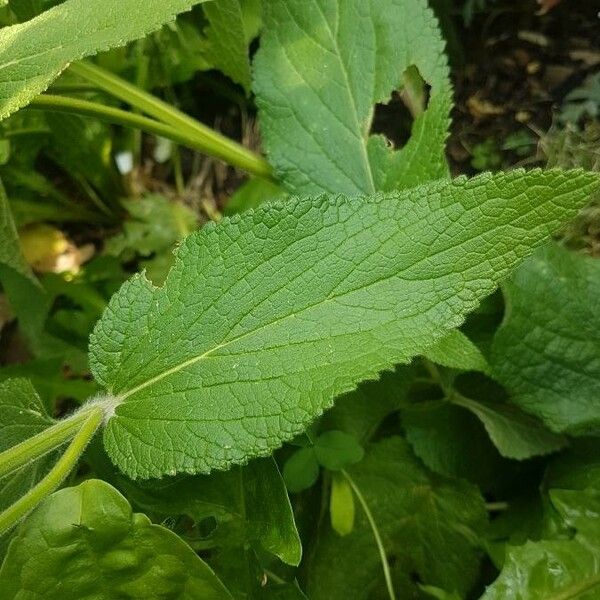
Plant Overview
Often called the Alpine Woundwort, Stachys alpina is the rugged, mountain-dwelling cousin of the popular Lamb’s Ear. Native to the limestone slopes of the European Alps and Pyrenees, this perennial is as tough as it is tactile. Historically, it earned its "Woundwort" name from ancient herbalists who believed its velvety leaves could staunch bleeding and heal the injuries of weary travelers.
🔍 How to Identify
- 🌿 The Foliage: The leaves are heart-shaped, wrinkled, and covered in soft, fine hairs. Unlike the silvery-white Lamb’s Ear, these leaves are a deep, earthy green with a distinct "quilted" texture.
- 🌸 The Blooms: It produces tall, upright spikes adorned with whorls of hooded flowers. The color is a unique, moody palette of dusky purple, brownish-red, or dull burgundy.
- 📐 The Stem: Like most members of the Mint family (Lamiaceae), the stem is noticeably square when felt between your fingers, providing a sturdy structure for the heavy flower spikes.
🏡 In Your Garden
- ⛰️ Alpine Origins: Because it hails from rocky heights, this plant thrives in well-draining, slightly alkaline soil. It is particularly "fuss-free" once established, as its deep roots allow it to tolerate periods of drought that would wither thirstier garden plants.
- 🐝 Pollinator Magnet: The tubular shape of the flowers is perfectly evolved for long-tongued bees. In mid-summer, you will likely find it buzzing with activity, making it an excellent choice for a "wild" or cottage-style garden.
- ☁️ Tactile Appeal: It is often planted along pathways where people can brush against its soft, felt-like leaves. It adds a wonderful sensory dimension to any garden space.
⚠️ Safety & Toxicity
- ✅ Safe for Most: Stachys alpina is generally considered non-toxic to humans, cats, and dogs.
- 🧤 Skin Sensitivity: While not poisonous, the dense, fine hairs on the leaves can occasionally cause mild skin irritation or "itchiness" for people with very sensitive skin. Wearing gloves during heavy pruning is a good precaution.
✨ Fun Fact
The term "Woundwort" comes from the Old English word wort, which simply means "plant." In folklore, it was said that if you applied the crushed leaves to a cut, the plant’s "protective spirit" would move into the body to guard the blood.

Detailed Care Instructions
To grow Stachys Alpina (alpine betony), follow these steps:
- Choose a suitable location: Stachys Alpina prefers full sun to partial shade. The soil should be well-drained and fertile.
- Prepare the soil: Before planting, loosen the soil and remove any weeds. You can amend the soil with compost or organic matter to improve its fertility and drainage, if needed.
- Planting: Dig a hole slightly larger than the root ball of the plant. Gently place the plant into the hole and backfill with soil. Avoid covering the crown of the plant with soil. Space multiple plants around 12-18 inches apart.
- Watering: After planting, give your Stachys Alpina a deep watering to help establish its root system. Water regularly, especially during dry periods, but avoid overwatering to prevent root rot.
- Mulching: Apply a layer of organic mulch, such as bark chips or straw, around the base of the plant. Mulch helps retain moisture, suppress weeds, and regulate soil temperature.
- Fertilizing: Stachys Alpina usually doesn't require excessive fertilization. However, you can apply a balanced organic fertilizer in early spring to promote healthy growth.
- Pruning: Regularly deadhead spent flowers to encourage continuous blooming. Trim back the plant in late fall or early spring to remove any dead or damaged foliage.
- Pests and diseases: Stachys Alpina is generally resistant to pests and diseases. However, inspect the plant regularly for any signs of damage or infestation, and take appropriate action if needed.
- Propagation: Stachys Alpina can be propagated by dividing mature plants in early spring or fall. Dig up the plant, separate the root clumps, and replant them in prepared soil.
- Winter care: In colder regions, provide some winter protection for the plant by applying a layer of mulch around the base. This helps insulate the roots and prevent winter damage.
By following these steps, you can successfully grow and cultivate Stachys Alpina in your garden.

Place in a bright room that is sun drenched almost all day. Or directly in a south-facing window.

To water this plant, it is important to consider the soil moisture level. The plant prefers consistently moist soil but does not like to sit in water. Therefore, it is important to water deeply and allow the soil to dry slightly before watering again. Watering can be adjusted based on weather conditions and the moisture level of the soil. It is recommended to water in the morning or late afternoon to avoid evaporation and prevent dampness during the night. It is also important to avoid watering the foliage to prevent fungal diseases.
To fertilize this plant, apply a balanced fertilizer with equal amounts of nitrogen, phosphorus, and potassium. Use a slow-release fertilizer during the early spring growing season. Be sure to water the plant well before and after fertilization.
Stachys Alpina thrives in soil that is well-draining and rich in organic matter. It is best to use a soil that has a neutral to slightly alkaline pH level. The soil should also be relatively moist but not waterlogged. Using a soil mixture that contains perlite or vermiculite can help improve drainage while also promoting air flow to the plant's roots. Additionally, adding compost or other forms of organic matter can help enrich the soil and support healthy growth and development of Stachys Alpina.
- Choose a healthy parent plant: Begin by selecting a mature and healthy plant from which to take cuttings. Look for a specimen that is disease-free and has foliage and stems that are free from damage.
- Take cuttings: Use a clean and sharp pair of pruning shears to take cuttings from the parent plant. Cut a stem from the plant that is approximately 4-6 inches in length. Make sure to cut just below a leaf node.
- Prepare cuttings: Remove any leaves from the lower half of the stem. If there are any large leaves remaining on the top of the stem, you can cut them in half to reduce water loss.
- Rooting hormone: Dip the cut end of the stem into rooting hormone powder. This will help the cutting root faster and increase the likelihood of success.
- Plant cuttings: Place the cuttings into a container filled with damp potting soil or coarse sand. Ensure that the soil is well-draining to prevent rot.
- Cover and Water: Place a clear plastic bag over the cuttings to create a humid environment and encourage rooting. Water the cuttings well, and then cover them with the plastic bag.
- Place in bright, but indirect light: Place the container in a bright area, but avoid direct sunlight. Keep the soil slightly damp but not waterlogged.
- Wait for roots: Check the cuttings every few days to see if roots have formed. Once roots have formed, remove the plastic bag and/or transplant the cuttings into their own individual pots.








