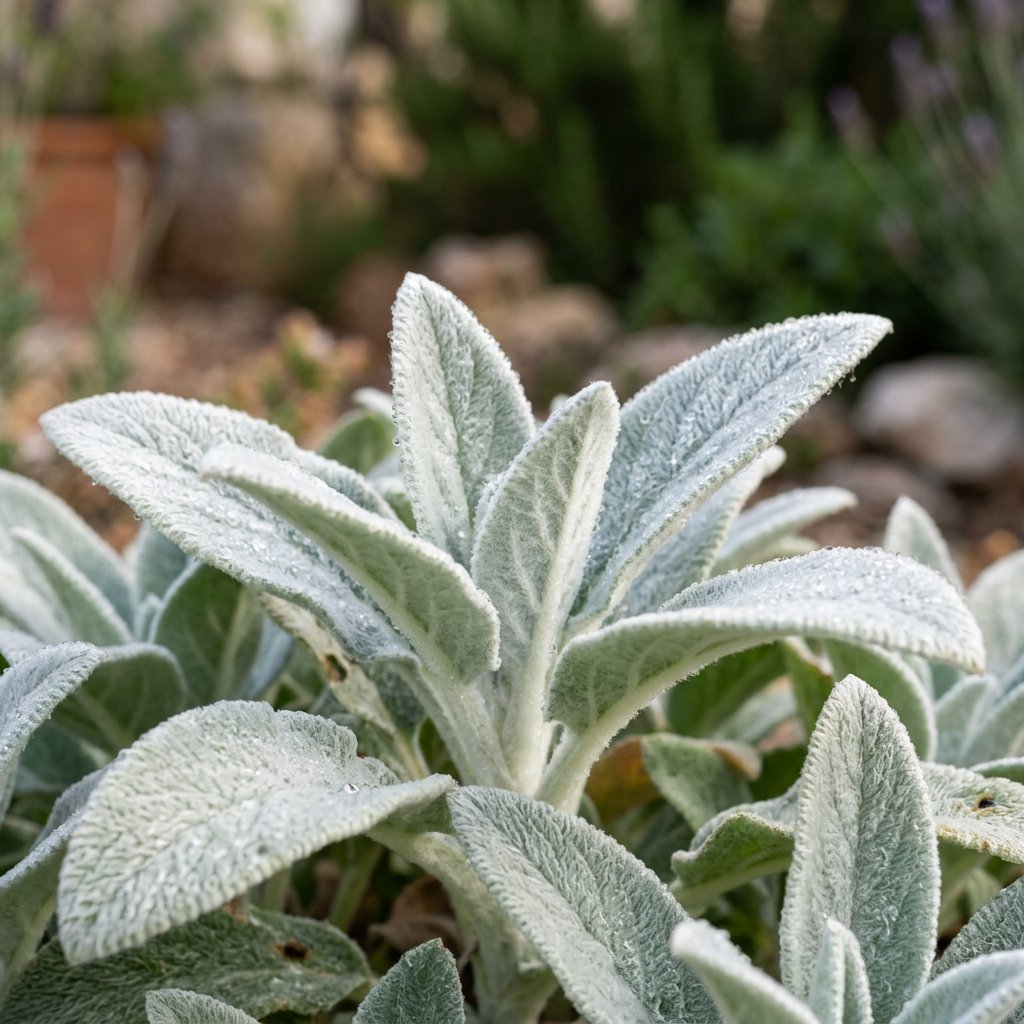
Plant Overview
Often called the "Lamb’s Ear" or "Woolly Hedgenettle," this plant is a sensory favorite that feels more like a plush toy than a garden inhabitant. Originating from the rocky landscapes of Turkey and Iran, it is a rugged perennial that brings a shimmering, silver-blue moonscape to any flowerbed. It is a staple in "sensory gardens" specifically designed to be touched and enjoyed by children and adults alike.
🔍 How to Identify
- ☁️ The Foliage: The most striking feature is its thick, tongue-shaped leaves covered in a dense coating of soft, white-to-silver hairs.
- 🥈 The Color: Unlike most garden greens, this plant maintains a metallic, silvery-gray hue that stands out brilliantly against darker mulch or stones.
- 🗼 The Blooms: In summer, it sends up tall, fuzzy spikes that produce tiny, inconspicuous purple or pink flowers, though many gardeners prune these to keep the foliage dense.
🏡 In Your Garden
- 💧 The "Wet Feet" Rule: Lamb's Ear is extremely drought-tolerant, but it absolutely hates sitting in soggy soil. High humidity can cause the woolly leaves to rot, so ensure it has excellent drainage and plenty of airflow.
- 🛡️ Natural Mulch: Because it spreads via "runners" (creeping stems), it forms a dense, weed-suppressing mat. It’s the perfect "living mulch" for sunny borders or rock gardens where other plants might struggle with the heat.
- ✂️ Low Maintenance: It is a very forgiving plant, but it can look a bit "melted" after a heavy rain. Simply trim away the browned lower leaves to keep the carpet looking fresh and silver.
⚠️ Safety & Toxicity
- ✅ Status: Non-toxic and generally safe.
- 🐾 Pets & Kids: Lamb's Ear is considered safe for cats, dogs, and horses. It is a popular choice for school gardens because it is non-poisonous and invites tactile exploration.
- 🌿 Skin Sensitivity: While not toxic, the tiny hairs can occasionally trap dust or pollen, which might irritate those with extreme skin sensitivities or allergies.
✨ Fun Fact
Long before modern medicine, Lamb's Ear was known as "Nature's Bandage." Due to its high absorbency and mild antiseptic properties, soldiers and travelers would use the soft, fuzzy leaves to dress wounds in the field!

Detailed Care Instructions
| Color | Light Purple |
| Soil Ph | 6 To 6.5 |
| Humidity | Dry |
| Lighting | Full Sun |
| Soil Type | Well-Draining, Evenly Moist To Dry Soil |
| Bloom Time | Summer |
| Difficulty | Easy |
| Plant Type | Herbaceous Perennial |
| Mature Size | 12 To 18 Inches Tall And 12 Inches Wide |
| Native Area | Middle East Region |
| Temperature | 10°C - 24°C |
| Sun Exposure | Full Sun To Part Shade |
| Hardiness Zones | 4 To 7 |
To grow Stachys Byzantina, also known as lamb's ear plant, you can follow these steps:
- Purchase a Stachys Byzantina plant or obtain a cutting from a mature plant. You can find them at plant nurseries or online.
- Choose a suitable location for planting. Stachys Byzantina prefers full sun but can tolerate partial shade. Ensure the soil is well-draining.
- Prepare the soil by removing any weeds or rocks and loosen it to improve drainage. Amend the soil with compost or organic matter to enhance fertility.
- Dig a hole that is wide and deep enough to accommodate the plant's roots. Place the plant into the hole, making sure the crown sits level with the soil surface.
- Backfill the hole with soil, gently pressing it down to eliminate any air pockets. Water the plant thoroughly after planting to settle the soil around the roots.
- Water the plant regularly but avoid overwatering. Once established, the plant is relatively drought-tolerant but benefits from consistent moisture. Ensure the soil is evenly moist, but not soggy.
- Mulch around the plant to conserve moisture, suppress weeds, and provide insulation. Use organic mulch, such as straw or bark chips, but keep it away from the plant's base to prevent rotting.
- Prune the plant in early spring or late winter to remove any damaged or dead leaves. This will promote healthy growth and a neat appearance.
- Fertilize annually in early spring with a balanced, slow-release fertilizer or organic compost to enhance growth and overall health.
- Monitor for any pests or diseases, such as aphids or powdery mildew. Treat as necessary using appropriate organic or chemical controls.
By following these steps, your Stachys Byzantina plant should grow and thrive, providing you with its soft, silvery foliage and pink-purple flowers.

Place in a bright room that is sun drenched almost all day. Or directly in a south-facing window.

Stachys Byzantina is a perennial plant species that requires adequate watering to thrive. To water this plant, you should ensure that the soil around it is sufficiently moist. To achieve this, you can use a watering can or hose to apply water slowly and evenly at the base of the plant. You should aim to water the plant at least once a week during the growing season, and more frequently during periods of hot weather or low rainfall.
It is important to water this plant in the early morning or late afternoon when the sun is less intense, as watering during the hottest parts of the day can cause the leaves to scorch. Over-watering the plant can also be detrimental, as it can lead to root rot. To avoid this, you should ensure that the soil is well-drained and not overly saturated.
In addition to regular watering, you can also help to maintain the moisture levels around the plant by adding a layer of mulch around its base. This will help to retain moisture in the soil and prevent evaporation. Finally, it is important to monitor the plant regularly for signs of moisture stress, such as drooping leaves or wilted stems, and to adjust your watering schedule as needed to ensure its health and vitality.
To fertilize this plant, apply a balanced fertilizer with equal parts nitrogen, phosphorus, and potassium in the spring. Repeat this application in late summer. Be sure to follow the fertilizer manufacturer's instructions for proper dosage and application. Avoid over-fertilizing, as this can lead to excessive foliage growth and weaker stems.
Stachys Byzantina is a hardy perennial plant that prefers to grow in well-drained soil. It requires rich soil with a neutral to alkaline pH level and moderate moisture. The soil should be loose and fertile with a good amount of organic matter that helps retain moisture. It is recommended to use loamy soil that is well-draining as Stachys Byzantina does not tolerate waterlogged soil, particularly during the winter months. The plant also benefits from the addition of mulch to help maintain moisture levels in the soil and protect the roots from excessive heat during the summer. It is important to avoid using heavy clay soil as it can restrict root growth and lead to root rot. Additionally, the plant does not thrive in acidic soil, so it is essential to check the pH level regularly and adjust as needed.
To propagate this plant, select a healthy mature plant and look for a stem that is long and has no leaves on the lower third. Cut this stem and remove any leaves from the bottom half. Dip the cut end of the stem into rooting hormone and then plant it in a pot filled with well-draining soil. Water the cutting and place it in a warm, bright location but out of direct sunlight. Ensure that the soil is kept moist but not wet. After four to six weeks, the cutting should begin to develop roots. Once the roots are established, transplant the cutting to a larger pot or into the ground.








