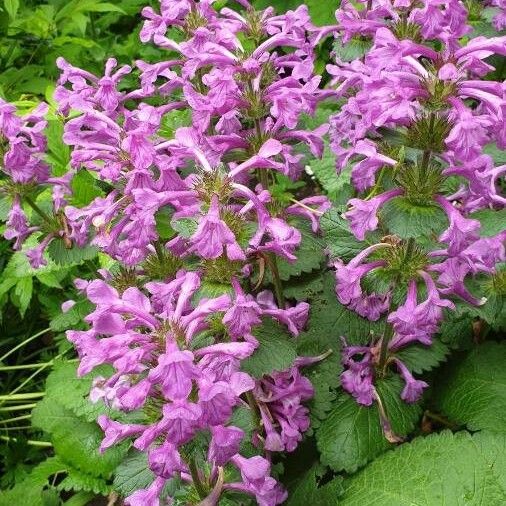
Plant Overview
Known for its oversized, velvety leaves and striking purple spires, Stachys grandifolia is the "gentle giant" of the mint family. Often called the Bigleaf Betony, this plant is a favorite for gardeners looking to add a touch of "cottage-core" drama to their landscapes. It creates a lush, textured carpet that feels as though it belongs in a woodland fairytale.
🔍 How to Identify
- 🍃 Lush Foliage: The leaves are impressively large, heart-shaped, and deeply wrinkled (rugose) with beautifully scalloped edges.
- 🌸 Towering Blooms: In early summer, it sends up sturdy, upright stalks topped with dense whorls of hooded, tubular flowers in shades of magenta or deep violet.
- 🧤 Velvety Texture: The entire plant is covered in fine, soft hairs, giving the dark green leaves a slightly silvery, matte finish that is soft to the touch.
🏡 In Your Garden
- 🌱 Groundcover Mastery: Unlike its cousin, the common Lamb’s Ear, the Bigleaf Betony provides significant height and volume. It spreads steadily via rhizomes, making it perfect for filling gaps under tall trees where other plants might struggle with root competition.
- 🌤️ Adaptable Nature: While it thrives in full sun, this species is particularly valued for its ability to maintain vibrant color in partial shade. It is less prone to the "melting" or rotting that affects other fuzzy-leaved plants during humid summers.
⚠️ Safety & Toxicity
- 🛡️ Pet & Child Friendly: Stachys grandifolia is generally considered non-toxic to humans, dogs, and cats, making it a safe choice for family-friendly gardens.
- 🧤 Mild Irritation: The fine hairs on the leaves are not stinging, but for individuals with highly sensitive skin, prolonged contact during pruning may cause a very mild, itchy sensation.
✨ Fun Fact
In medieval Europe, the Betony family was considered a "cure-all" herb. It was so highly prized for its supposed mystical and medicinal properties that an old Italian proverb suggested you should "Sell your coat and buy Betony!"

Detailed Care Instructions
To grow Stachys grandifolia, also known as woodland betony, follow these steps:
- Choose a suitable location: Select a spot in your garden that receives partial shade to full shade. This plant prefers moist, well-draining soil, so ensure the area has good drainage.
- Prepare the soil: Loosen the soil in the planting area and amend it with organic matter like compost or aged manure to improve its fertility and drainage.
- Planting: Dig a hole that is slightly larger than the root ball of the plant. Place the Stachys grandifolia plant in the hole, making sure it sits at the same level as it was in its nursery container. Fill the hole with soil, gently firming it around the plant.
- Watering: Water the newly planted Stachys grandifolia thoroughly to settle the soil and encourage root establishment. Keep the soil consistently moist, but not waterlogged, during the growing season. Monitor the soil moisture regularly and adjust watering as needed.
- Mulching: Apply a layer of organic mulch, such as shredded bark or leaf compost, around the plant to help conserve soil moisture and suppress weed growth. Make sure the mulch does not touch the stems to avoid rot.
- Maintenance: Trim off any dead or yellowing leaves as needed throughout the growing season. Cut the plant back by one-third after it finishes flowering to promote bushier growth.
- Fertilization: Stachys grandifolia generally doesn't require excessive fertilization. However, you can apply a balanced, slow-release fertilizer according to the package instructions in early spring.
- Propagation: You can propagate Stachys grandifolia by division or by taking stem cuttings in the spring or early summer. Division involves separating the plant into smaller sections and replanting them. Cuttings should be placed in well-draining soil and kept in a warm, humid environment until they root.
- Pests and diseases: Stachys grandifolia is generally resistant to pests and diseases. However, regular monitoring is necessary to prevent and address any issues that may arise, such as aphid infestations.
By following these steps, you should be able to successfully grow and maintain Stachys grandifolia in your garden.
To ensure the proper watering of this plant, it is important to understand its specific needs. This plant prefers to be kept moderately moist, but not soggy, and requires well-draining soil. To water the plant, one should first check the soil moisture level by inserting a finger into the soil. If the top inch feels dry, it is time to water.
Using a watering can or hose with a spray nozzle, water the plant evenly and slowly, making sure to avoid getting water on the foliage as much as possible to prevent disease and rot. Allow the water to soak into the soil deeply, making sure it reaches the root system.
It is important not to overwater the Stachys Grandifolia plant as it can lead to root rot and other issues. It is best to water the plant deeply once a week or whenever the top inch of soil feels dry. In the winter months, the plant will require less water, so it is important to adjust the watering frequency accordingly.
Overall, proper watering is crucial for the health and success of the Stachys Grandifolia plant. Regularly checking the soil moisture level and providing the plant with the right amount of water will ensure its continued growth and beauty.
For best results, fertilize the Stachys Grandifolia plant in the early spring before new growth appears. Use a balanced, water-soluble fertilizer that is high in nitrogen. Apply the fertilizer according to the manufacturer's instructions, being careful not to over-fertilize as this can lead to leaf burn and other issues. Water the plant after fertilizing to ensure that the nutrients are absorbed into the soil. Repeat this process every four to six weeks throughout the growing season to promote healthy growth and beautiful blooms. Additionally, make sure to remove any dead or damaged foliage as needed to keep the plant healthy and thriving.
The soil for Stachys Grandifolia plant should be well-draining, with a pH range of 6.0-7.5. The soil should be enriched with organic matter, such as compost or peat moss. It should also be kept moist, but not waterlogged. Avoid using heavy clay soils, as they can lead to root rot. Adding sand or perlite to the soil can improve drainage. The plant can tolerate some drought conditions, but it prefers consistently moist soil. Fertilization is not necessary, but a balanced fertilizer can be applied in the spring to promote growth.
To propagate this plant, select healthy stems that have not flowered yet. Cut them off with a sharp, clean pair of scissors or garden shears. Next, remove any leaves from the lower half of the stem to expose nodes where new roots will form.
Mix together a well-draining soil mix with good organic matter and perlite. Moisten the soil mix thoroughly, making sure it is not too wet or too dry.
Dip the cut end of each stem in rooting hormone powder to encourage root growth, then use a chopstick or pencil to create a hole in the soil mix for the stem. Insert the stem into the hole and press the soil around it firmly.
Place the pot in a location where it will receive bright, indirect light and maintain a warm, humid environment. Covering the pot with a plastic bag or placing it in a propagation tray with a lid will help to maintain the humidity.
Check the soil every few days to make sure it stays moist, but not waterlogged. After about 4-6 weeks, you will start to see new growth which means roots have developed. At this point, you can transplant the new plants into their own individual containers.








