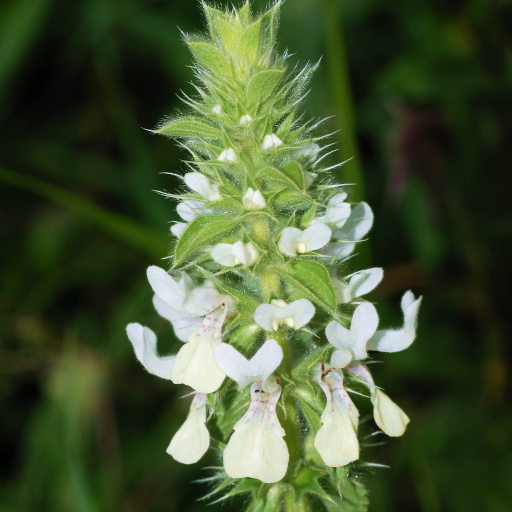
Plant Overview
Known affectionately as the Basil-leaved Woundwort, Stachys ocymastrum is a Mediterranean native that carries a rustic, wild charm. While its name suggests a culinary connection to basil due to its leaf shape, it is actually a resilient member of the Mint family (Lamiaceae). This annual herb is often found dancing in the coastal breezes of Southern Europe, bringing a soft, woolly texture to rocky hillsides and meadows.
🔍 How to Identify
- 🌿 Leaf Shape: The leaves are broad, oval, and slightly heart-shaped at the base with "crenate" (rounded-toothed) edges, closely mimicking the look of large basil leaves.
- ☁️ Hairy Texture: The entire plant is covered in fine, soft hairs, giving the stems and leaves a silvery-green, velvety appearance that protects it from the hot sun.
- 🌸 Spotted Blooms: It produces spikes of creamy white or pale yellow flowers. If you look closely, the lower "lip" of each flower is intricately decorated with purple or brownish-red spots and veins.
- 📐 Square Stems: Like most members of the mint family, if you roll the stem between your fingers, you will feel its distinct four-sided, square structure.
🏡 In Your Garden
- ☀️ Sun Seeker: This plant thrives in full sun and is highly drought-tolerant once established. It is perfect for "wilder" parts of the garden where other plants might struggle with heat.
- 🪨 Drainage is Key: In the wild, it grows in abandoned fields and rocky outcrops. If planting at home, ensure the soil is gritty and well-draining; it dislikes having "wet feet," which can cause the roots to rot quickly.
- 🦋 Pollinator Magnet: The unique shape of the hooded flowers is perfectly designed for bees, making it an excellent choice for a nectar-rich habitat garden.
⚠️ Safety & Toxicity
- ✅ Status: Generally considered non-toxic and safe for handling.
- 🐾 Pets & Kids: There are no documented toxic effects for cats, dogs, or horses. However, as it is not a culinary herb, it should not be ingested. Sensitive individuals might experience mild skin irritation from the fuzzy hairs on the stems.
✨ Fun Fact
The genus name Stachys comes from the Ancient Greek word for "ear of grain." This refers to the way the flowers grow in a tight, vertical spike, resembling a head of wheat or barley.

Detailed Care Instructions

Place in a bright room that is sun drenched almost all day. Or directly in a south-facing window.

Some plants require more regular watering than others, which should be done every few days. It's critical to maintain the soil moist all of the time. The water requirements of the same plant placed in pots with varying sizes will differ. Because the water in the smaller pot evaporates faster than the water in the larger pot, it will require more watering. Regardless of pot size, the surface should constantly be maintained moist.








