Plant Overview
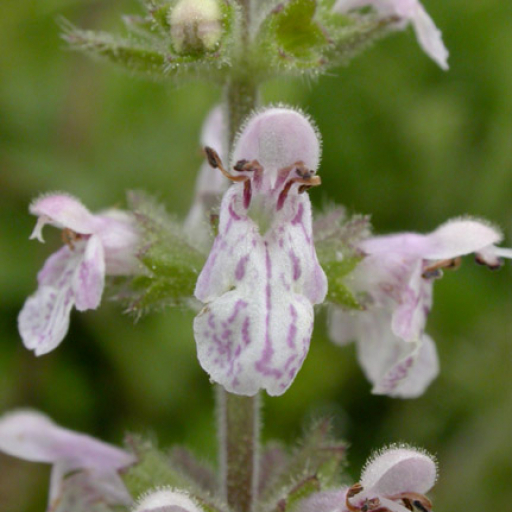
Known as the Rigid Hedge-nettle, this sturdy perennial is a secret weapon for those trying to bring a touch of the Western wilderness into their backyard. Despite the "nettle" in its name, it doesn’t have a single sting to its name; instead, it is a proud member of the Mint family. It is often found near forest edges and stream banks, standing tall with its characteristic square stems and delicate, spotted blooms.
🔍 How to Identify
- 🌿 Stiff Stems: True to its name, Stachys rigida features upright, square-shaped stems that are remarkably sturdy and covered in fine, bristly hairs.
- 🍃 Textured foliage: The leaves grow in opposite pairs and are heart-to-oval shaped with scalloped edges. They feel slightly rough or velvety, a trait that helps the plant conserve moisture in shifting temperatures.
- 🌸 Mottled Blooms: Small, tubular flowers appear in "whorls" (circles) around the top of the stem. They are typically shades of rose-pink to light purple, often decorated with intricate white "landing pad" patterns designed to guide bees.
🏡 In Your Garden
- 🦋 Pollinator Magnet: If you want a garden buzzing with life, this is the plant for you. It is an absolute favorite for bumblebees and hummingbirds, who are perfectly built to reach the nectar inside its deep floral tubes.
- 🌱 The Spreading Habit: This plant grows via underground rhizomes. While it isn't "invasive" in the way some weeds are, it is an enthusiastic spreader. It’s best used in "wild" corners or native gardens where it has room to fill in gaps and create a lush, green carpet.
- 💧 Moisture Context: In the wild, it seeks out "seeps" and damp meadows. In a home garden, it can handle dry shade once established, but it will look much happier and bloom longer if the soil stays consistently moist but well-drained.
⚠️ Safety & Toxicity
- ✅ Non-Toxic Status: Stachys rigida is generally considered non-toxic to humans, cats, and dogs. It does not possess the stinging hairs found in true nettles.
- 🍵 Historical Caution: While various Stachys species were used in traditional herbalism for teas and poultices, modern hobbyists should avoid ingestion. Some individuals may experience mild stomach sensitivity or skin irritation if they have specific allergies to members of the Mint family.
✨ Fun Fact
The genus name Stachys comes from the Greek word for "an ear of grain," referring to the way the flowers are tightly packed in a spike. In old English folklore, plants in this family were often called "Woundworts" because they were frequently used by healers to help dress wounds and stop bleeding.

Detailed Care Instructions

Place in a bright room that is sun drenched almost all day. Or directly in a south-facing window.

Some plants require more regular watering than others, which should be done every few days. It's critical to maintain the soil moist all of the time. The water requirements of the same plant placed in pots with varying sizes will differ. Because the water in the smaller pot evaporates faster than the water in the larger pot, it will require more watering. Regardless of pot size, the surface should constantly be maintained moist.








