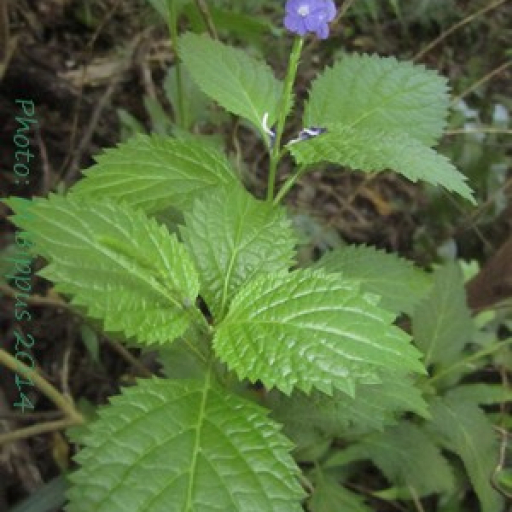
Plant Overview
Often called the Nettle-leaf Velvetberry or Blue Snakeweed, this vibrant perennial is a literal magnet for wings and stings. Native to tropical Asia and the Pacific, it has earned a reputation as a "must-have" for butterfly enthusiasts. Its common names often refer to the long, slender flower spikes that arch like snakes or the crinkled leaves that mimic the look of stinging nettles—though, luckily for gardeners, they lack the sting!
🔍 How to Identify
- 🌿 Nettle-like Foliage: The leaves are deep green, oval, and heavily textured with prominent veins and serrated "toothed" edges, bearing a striking resemblance to a stinging nettle.
- 🪄 Snakelike Spikes: The plant produces long, wiry, green flower spikes that emerge from the branch tips, often reaching several inches in length.
- 💎 Ephemeral Blooms: Tiny, trumpet-shaped flowers in brilliant shades of violet, cobalt, or deep purple appear a few at a time along the spike, blooming progressively from the bottom to the top.
🏡 In Your Garden
- 🦋 The Pollinator Pub: This plant is legendary among "butterfly ranchers." Its nectar is highly accessible, making it a favorite stop for rare butterfly species and hummingbirds throughout the day.
- ✂️ Growth Habit: Left to its own devices, it can become quite "leggy" or sprawling. To keep it looking like a lush garden shrub rather than a wild weed, regular tip-pruning is essential to encourage branching.
- 🌏 Hardiness Note: While it loves tropical heat, it can be quite sensitive to frost. In cooler climates, it is often grown as a fast-growing annual or kept in large pots that can be moved indoors.
⚠️ Safety & Toxicity
- ✅ Generally Safe: Stachytarpheta urticifolia is considered non-toxic to humans and common household pets like cats and dogs.
- 🌱 Non-Stinging: Despite the "Nettle-leaf" name, the plant does not possess stinging hairs and is safe to handle with bare hands.
- 🚫 Invasive Potential: In certain tropical regions (like parts of Australia or Florida), it is so hardy that it can escape gardens and outcompete local flora; always check local status before planting in the ground.
✨ Fun Fact
The name "Porterweed" is derived from a historical myth that the plant’s fermented leaves could be used to brew a beverage similar to "Porter" ale, or that a tea made from the leaves would produce a foam resembling the head of a dark beer.

Detailed Care Instructions
To grow Stachytarpheta Urticifolia, also known as nettleleaf velvetberry or blue porterweed, you can follow these steps:
- Obtain seeds or young plants: Obtain seeds or young plants from a local nursery, garden center, or online seed supplier.
- Choose a suitable location: Stachytarpheta Urticifolia prefers full sun to partial shade, so choose a location in your garden that receives at least 6 hours of direct sunlight per day.
- Prepare the soil: The soil should be well-draining and fertile. Add organic matter such as compost or well-rotted manure to improve soil fertility and drainage.
- Plant seeds or seedlings: If you have seeds, sow them directly into the prepared soil according to the package instructions or lightly press them into the soil surface and cover with a thin layer of soil. If you have young plants, dig a hole slightly larger than the plant's root ball and place the plant in the hole, backfilling with soil. Ensure proper spacing between plants.
- Water regularly: Keep the soil consistently moist, especially during the first few weeks after planting. Water the plants thoroughly once or twice a week, depending on the weather and soil moisture levels. Avoid overwatering, as it can lead to root rot.
- Apply mulch: Apply a layer of organic mulch around the plants to help retain moisture, suppress weed growth, and regulate soil temperature. Avoid placing mulch directly against the plant stem to prevent rot and diseases.
- Fertilize occasionally: Stachytarpheta Urticifolia doesn't require heavy feeding but can benefit from occasional balanced fertilization. Apply a slow-release fertilizer or use a liquid fertilizer diluted according to the package instructions during the growing season. Avoid excessive fertilizer application, as it may lead to excessive foliage growth at the expense of flowering.
- Prune as needed: Prune the plant regularly to maintain its shape and remove any dead, damaged, or weak branches. Pruning can also stimulate new growth and enhance flower production.
- Watch for pests and diseases: Keep an eye out for common pests such as aphids or spider mites. Use natural pest control methods like insecticidal soap or neem oil as needed. Monitor the plants for any signs of diseases like powdery mildew and treat accordingly.
- Enjoy the blooms: Stachytarpheta Urticifolia typically blooms from late spring to fall, producing vibrant blue or purple flowers. Enjoy the beauty of the flowers and the visits from pollinators like butterflies and bees that it will attract to your garden.

Place in a window with dappled sun or a spot in the middle of a room. Or directly in a window facing west or east.

Stachytarpheta urticifolia is a type of flowering plant that requires regular watering to maintain its healthy growth and appearance. To water this plant, you should use a watering can or a hose with a gentle spray nozzle to prevent damaging the delicate foliage or flowers.
The frequency of watering depends on several factors, including the climate, the moisture level in the soil, and the size of the container or planting area. In general, you should aim to keep the soil moist but not waterlogged, as too much water can lead to root rot and other problems.
To determine when to water your Stachytarpheta urticifolia plant, you can conduct a simple soil moisture test by inserting your finger into the soil up to the first knuckle. If the soil feels dry at this depth, it's time to water. Alternatively, you can use a moisture meter or observe the plant for signs of dehydration, such as drooping leaves or wilting.
When watering, it's important to thoroughly saturate the soil so that the water reaches the roots, which are located several inches below the surface. Avoid watering the leaves or flowers, as this can lead to fungal diseases and other issues.
In areas with hot, dry weather, you may need to water your Stachytarpheta urticifolia plant more frequently, such as every other day. In cooler, more humid climates, you may be able to water less often, such as once a week. Always observe the plant and soil conditions to adjust your watering schedule as needed.
For optimal growth, it is recommended to fertilize this plant with a balanced, all-purpose fertilizer every three months. Make sure to follow the instructions on the label and dilute the fertilizer to half strength before applying it to the soil around the base of the plant. Avoid over-fertilizing as it may cause damage to the roots. Additionally, it is recommended to mix in organic matter, such as compost or aged manure, into the soil before planting to provide additional nutrients to the plant.
The recommended soil for Stachytarpheta Urticifolia plants does best in well-draining, loamy soil that is rich in organic matter. It should have a slightly acidic to neutral pH, with a range of 6.0 to 7.0. This species prefers a soil that is consistently moist but not waterlogged. A soil that retains too much moisture can cause root rot and other fungal diseases that may harm the plant. It is also important to ensure that the soil is not too compacted, as this can inhibit root growth and limit the plant's ability to absorb nutrients and water. Regular fertilization is recommended to stimulate healthy growth and development. A balanced, slow-release fertilizer with a higher ratio of nitrogen is optimal for promoting leaf and stem growth. In general, the soil should be kept moist but not saturated, and it should be allowed to dry out somewhat between watering sessions.
To propagate this plant, you can take stem cuttings in the spring or summer. Cut a piece of stem about 4-6 inches long, making sure to take a cutting from a healthy, mature plant.
Remove the lower leaves on the stem, leaving only a few leaves at the top. Dip the cut end of the stem in rooting hormone powder, and then plant it in moist potting soil.
Cover the cutting with a plastic bag to create a humid environment and place it in a warm, bright location, but not in direct sunlight.
Keep the soil moist, but not too wet, and wait for roots to develop, which may take several weeks. Once the roots have developed, you can transplant the new plant into a larger container or into your garden.








