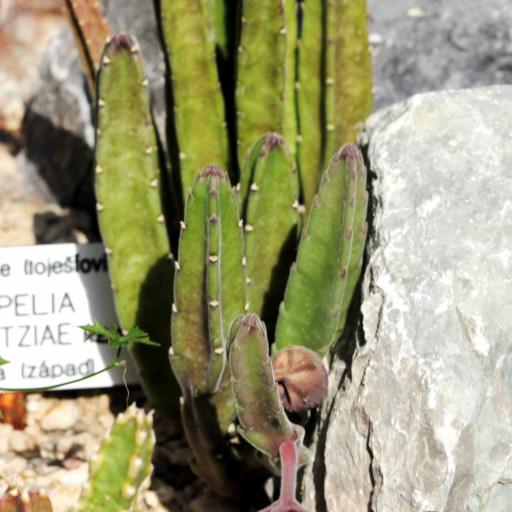
Plant Overview
Known as the "Carrion Flower" or the "Starfish Cactus," the Stapelia is a succulent that dares to be different. Native to Southern Africa, this plant doesn't rely on sweet perfumes to attract bees or butterflies. Instead, it produces spectacular, alien-looking blooms that mimic the scent and appearance of decaying meat to attract its primary pollinators: flies. It is a favorite for collectors who appreciate the weird and wonderful side of the botanical world.
🔍 How to Identify
- 🌵 Succulent Stems: The plant grows in clumps of leafless, four-angled green stems. They are soft to the touch and velvety, lacking the sharp spines found on true cacti.
- ⭐ Star-Shaped Blooms: The flowers are massive, five-pointed stars. They are often leathery, textured with fine hairs, and feature intricate patterns of maroon, yellow, or deep purple.
- 🪰 The "Scent": When the flower opens, it emits a pungent odor reminiscent of rotting organic matter. This is a deliberate tactic to trick "carrion flies" into visiting the bloom.
🏡 In Your Garden
- ☀️ Light Nuance: While it loves bright light, the fleshy stems can "sunburn" or turn a stressed reddish-purple if the afternoon heat is too intense. A spot with bright, indirect morning sun is ideal.
- 🪴 Breathable Roots: This plant is highly susceptible to "wet feet." Using a terracotta pot is a game-changer because the porous material allows moisture to evaporate, preventing the dreaded stem rot that can collapse a healthy clump overnight.
- 🌬️ Air Circulation: Because of its unique fragrance, many growers keep Stapelia on a porch or near a well-ventilated window during the blooming season to enjoy the visual beauty without the olfactory "surprise."
⚠️ Safety & Toxicity
- 🐾 Pet Friendly: Stapelia is generally considered non-toxic to cats and dogs. It is a much safer alternative to other "scary" succulents like Euphorbia, which has toxic sap.
- 👶 Child Safe: Unlike many desert plants, Stapelia has no sharp thorns or prickles. It is safe to touch, though the fuzzy texture of the stems can be surprisingly soft to the curious hand.
✨ Fun Fact
The plant is so good at its "deception" that flies are often completely fooled. They will frequently lay their eggs in the center of the flower, believing they have found a feast for their larvae. While the maggots won't survive, the plant successfully hitches its pollen onto the fly’s back!

Detailed Care Instructions
Here are some tips to help you grow Stapelia plants:
- Obtain the plant: Purchase a young Stapelia plant from a reputable nursery or consider propagating it from stem cuttings.
- Choose a suitable container: Select a well-draining pot with drainage holes to prevent overwatering. A small terracotta or clay pot usually works well.
- Soil mixture: Stapelia plants require a well-draining soil mix. You can prepare a mixture of equal parts of regular potting soil, perlite, and sand to create an ideal growing medium.
- Lighting: Stapelia plants prefer bright, indirect sunlight. Place them near a sunny window or provide them with artificial grow lights if natural light is limited.
- Temperature and humidity: Stapelias thrive in temperatures between 60-80°F (15-27°C). They can tolerate slightly cooler temperatures during the winter but need to be protected from frost. Stapelias also prefer low to moderate humidity levels.
- Watering: Allow the soil to dry out between waterings. During the active growing season, typically spring and summer, water the plant thoroughly whenever the top inch of soil feels dry. Reduce watering in fall and winter, allowing the soil to dry out more between waterings.
- Fertilizing: During the growing season, provide a balanced, water-soluble fertilizer diluted to half strength every two to three weeks. Avoid excessive fertilization as it can lead to leggy growth.
- Pruning: Trim or pinch off the tips of the stems to encourage bushier growth and prevent the plant from becoming too leggy.
- Propagation: Stapelias are easy to propagate from stem cuttings. Simply take a cutting from a healthy stem and allow it to dry for a few days until a calloused surface forms. Plant the cutting in a well-draining soil mix, mist it occasionally, and keep it in a warm, bright location. It should root within a few weeks.
- Pests and diseases: Stapelia plants are generally resistant to pests and diseases. However, they may occasionally be prone to mealybugs and scale insects. Regularly inspect the plant for any signs of infestation and treat with insecticidal soap or neem oil if necessary.
Remember to research the specific requirements of the particular Stapelia species you have, as there are various types with slightly different care needs.

Place in a window with dappled sun or a spot in the middle of a room. Or directly in a window facing west or east.

Stapelia plant requires watering once in every 10-14 days during the growing season, which is typically from spring through autumn. The growing medium must be allowed to dry out before watering. Ensure that the water is poured directly into the container instead of over the leaves or flowers to prevent rot. It is also essential to avoid getting water into any crevices or pockets of the plant's stems, as this can lead to rot and possible death. During the dormant period in winter, the watering frequency must be reduced to once a month or less, as the plant is not actively growing during this period.
To fertilize this plant, use a balanced, water-soluble fertilizer that contains equal parts of nitrogen, phosphorus, and potassium. Dilute the fertilizer to half strength and apply it once every month during the growing season. Water the plant thoroughly before and after fertilizing to prevent fertilizer burn. Avoid fertilizing during the dormant season, and always follow the manufacturer's instructions for use.
Stapelia plant prefers well-draining and nutrient-rich soil that is slightly acidic to neutral pH. It is recommended to use a sandy or gritty soil mix that contains perlite, vermiculite, or coarse sand to ensure adequate drainage. Organic matter such as peat moss, compost, or leaf mold can also be added to improve soil quality and provide nutrients. Avoid using heavy and compacted soils or those that retain moisture for too long, as they can lead to root rot and other problems. It is important to use a pot with drainage holes to prevent water from accumulating at the bottom and to allow excess water to escape.
There are several ways to propagate this plant, but one common method is through stem cuttings. To begin, select a healthy stem with at least two leaves and make a clean cut just below a leaf node. Remove the lower leaves from the stem, leaving only the top two or three. Allow the cuttings to dry for a few days to prevent rotting.
Once the cuttings have dried, place them in a well-draining soil mix. Some growers recommend adding sand or perlite to the soil to improve drainage. Water the cuttings sparingly and avoid getting water on the leaves, as this can cause rot.
Keep the cuttings in a warm and bright location, but out of direct sunlight. In a few weeks, you should start to see roots appearing at the base of the stem. Once the roots have formed, you can gradually increase watering and move the plant into brighter light.
Another method of propagation is by seed. This takes a bit more patience, as the seeds can take several weeks to germinate. Sow the seeds in a well-draining soil mix and keep the soil moist, but not waterlogged. Cover the pot with plastic wrap or a greenhouse dome to keep in humidity. Once the seeds have germinated, remove the cover and gradually increase light and water.
In general, Stapelia plants are easy to propagate and can produce a large number of offspring. However, keep in mind that some species can have a strong odor, so it may be best to avoid propagating in enclosed spaces.
Common pests of the starfish flowers include Scale insect, mealybugs, spider mites, thrips. Make a habit of checking your starfish flowers frequently for pests so that any infestations can be caught and managed early.







