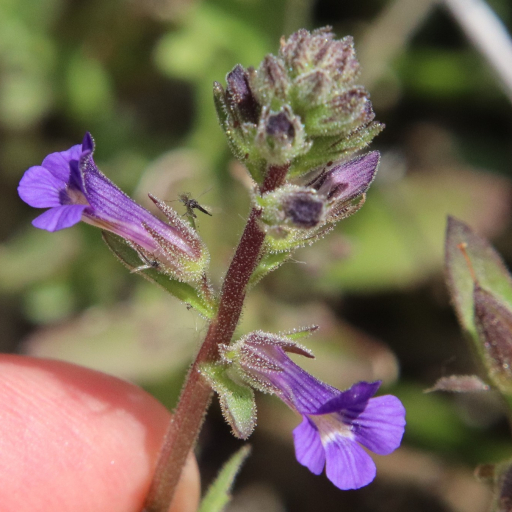
Plant Overview
Known as the Blue-stemodia or White-headed Stemodia, this resilient wildflower is a master of the wetlands. It creates a subtle but stunning carpet of violet hues across damp riverbanks and marshy meadows throughout the Americas, from the Southern United States down to Argentina. While it might look like a simple weed to the untrained eye, it is a vital part of riparian ecosystems, acting as a tiny anchor for shifting, muddy soils.
🔍 How to Identify
- 🟪 Axillary Flowers: The tiny flowers are typically vibrant purple, blue, or lavender with white throats. They don't grow at the very tip but emerge from the "axils" (the joints where the leaves meet the stem).
- 🍃 Toothed Leaves: The leaves are lance-shaped with sharp, serrated edges. They grow in opposite pairs or whorls of three, often clasping the stem closely at the base.
- 🧊 Square Stems: If you roll the stem between your fingers, you’ll feel its distinct four-angled, square shape. The stems are usually covered in fine, sticky glandular hairs that feel slightly tacky to the touch.
🏡 In Your Garden
- 💧 Moisture Lover: This plant is not for the "forgetful waterer." It thrives in consistently wet or even boggy soil. It is an excellent candidate for the edges of backyard ponds or "rain gardens" where water naturally collects.
- ☀️ Sun Seeker: While it loves having wet "feet," it prefers to keep its "head" in the sun. It can tolerate partial shade, but you will see much denser foliage and more frequent flowering when it receives full light.
- 🌱 Aggressive Spreader: Because it loves damp, disturbed soil, it can spread quickly via seeds. It’s best used as a naturalized groundcover in wilder areas of the yard rather than in a highly manicured flower bed.
⚠️ Safety & Toxicity
- 🟢 Low Risk: Stemodia durantifolia is generally considered non-toxic to humans and common livestock.
- 🐾 Pet Watch: While not specifically listed as a poisonous plant for cats or dogs, the "sticky" glandular hairs on the stems can sometimes cause mild mouth irritation or digestive upset if a curious pet decides to chew on a large amount.
✨ Fun Fact
The genus name Stemodia comes from the Greek words for "stamen" and "double." This refers to the plant's unique anatomy: its stamens are divided into two distinct parts, a clever evolutionary trait that helps ensure successful pollination by visiting insects!

Detailed Care Instructions
To grow Stemodia durantifolia (also known as Brazilian false loosestrife), follow these steps:
- Choose the right location: This plant prefers full sun to partial shade. Ensure that the location receives at least 4-6 hours of direct sunlight each day.
- Prepare the soil: Stemodia durantifolia thrives in fertile, well-draining soil. Amend the soil with organic matter like compost or aged manure to improve its texture and fertility. Ensure that the soil pH is between 6.0 and 7.5.
- Propagation: Stemodia durantifolia can be propagated through seeds or stem cuttings. If using seeds, sow them in a tray filled with moist seed-starting mix. Maintain a temperature of around 70-75°F (21-24°C) for optimal germination. Transplant the seedlings into individual pots once they are large enough to handle.
- Planting: Dig a hole that is slightly wider and deeper than the root ball of the plant. Place the plant in the hole and backfill with soil, gently firming it around the roots. Water thoroughly after planting.
- Watering: Initially, keep the soil consistently moist, but not waterlogged, to help the plant establish its root system. Once established, Stemodia durantifolia is relatively drought tolerant and requires watering only during dry spells.
- Fertilization: Apply a balanced slow-release fertilizer during the growing season to promote healthy growth. Follow the manufacturer's instructions for application rates.
- Pruning: Regular pruning helps to maintain the shape and encourage bushier growth. Prune off any dead or damaged stems, and cut back overgrown branches to maintain a compact form. Pruning can be done in late winter or early spring before new growth starts.
- Mulching: Apply a layer of organic mulch around the base of the plant to help retain moisture, suppress weeds, and improve soil fertility. Ensure that the mulch is not in direct contact with the stems to prevent rot.
- Pest and disease control: Stemodia durantifolia is generally pest and disease resistant. However, keep an eye out for common garden pests like aphids or spider mites. If any pest infestation occurs, treat accordingly with organic or chemical insecticides.
- Winter care: In colder climates, Stemodia durantifolia may not be winter hardy. In such cases, you can grow it as an annual or bring potted plants indoors during the winter months.
Remember to regularly monitor the plant for any signs of distress, adjust the care accordingly, and enjoy the beautiful blooms of Stemodia durantifolia in your garden.

Place in a bright room that is sun drenched almost all day. Or directly in a south-facing window.

The best way to water this plant is to keep the soil consistently moist, but not waterlogged. Allow the top inch of soil to dry out slightly before watering again. Use room temperature water and water the soil directly, avoiding wetting the foliage as this can promote fungal growth. During the winter months, reduce watering and allow the soil to dry out slightly more between waterings. Always check the soil before watering to ensure the plant is not being over or under-watered.
To fertilize this plant, choose a balanced fertilizer with equal amounts of nitrogen, potassium, and phosphorus. Use about 1 tablespoon of the fertilizer per gallon of water and apply it every 2 to 4 weeks during the growing season. Avoid over-fertilizing as it can cause leaf burn and other damage to the plant. Always water the plant before applying fertilizer and avoid getting fertilizer on the leaves to prevent burning.
Stemodia Durantifolia plant requires a well-draining soil that is rich in nutrients. The soil should have a slightly acidic to neutral pH level. Avoid using heavy or compacted soils that retain water, as this can lead to root rot. A mixture of soil, sand, and perlite can be used to create a well-draining growing medium. The plant prefers soil that is slightly moist but not waterlogged. It is also important to ensure that the soil is aerated to allow for proper root development. A regular fertilization regime can help provide the plant with the essential nutrients it needs to thrive. Overall, it is important to provide the Stemodia Durantifolia plant with a healthy growing environment to ensure its long-term vitality.
To propagate this plant, first gather stem cuttings from healthy parent plants. Cuttings should be about 4-6 inches long and taken from the tips of the stems. Remove the lower leaves from the cutting, leaving only a few at the top. Dip the cut end in rooting hormone powder and plant it in a pot filled with moist potting soil. Cover the pot with a plastic bag to create a humid environment and place it in a bright, indirect sunlight location. Keep the soil moist and within a few weeks, the cutting should root and begin to grow new leaves. Once the plant has established roots and grown a few inches tall, it can be transplanted into a larger pot or outside into the garden.








