Plant Overview
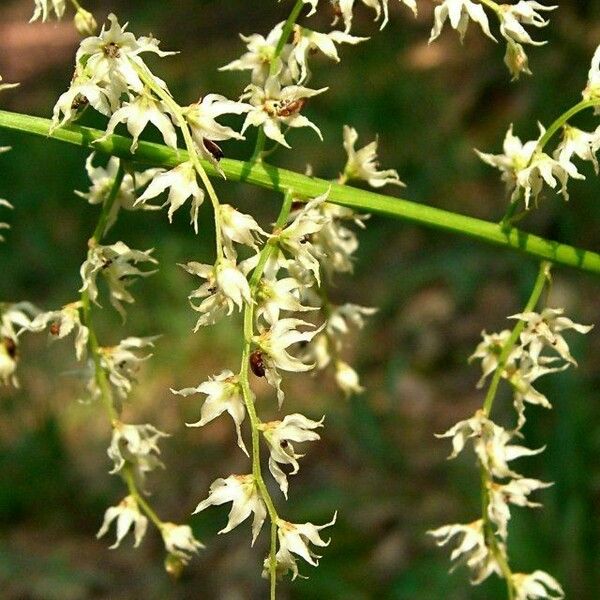
Known as the Eastern Featherbells, this native North American wildflower is a hidden gem of the woodland landscape. For most of the year, it masquerades as a simple clump of ornamental grass, but in mid-summer, it transforms into an architectural masterpiece. It sends up towering, airy plumes of tiny white stars that seem to float like mist against the forest floor.
🔍 How to Identify
- 🍃 Grass-like Foliage: The plant features long, narrow, arching leaves that can reach up to 12 inches in length, directly inspiring its Latin name gramineum (meaning "grass-like").
- ❄️ Starry Panicles: It produces large, branching clusters (panicles) of dozens of tiny, six-petaled flowers that range from creamy white to a soft, lime green.
- 📏 Stately Height: While the leaves stay low, the flowering stalks are surprisingly tall and slender, often reaching between 3 to 5 feet in height.
🏡 In Your Garden
- 💧 Moisture Seekers: Eastern Featherbells are perfect for "difficult" wet spots. They thrive in consistently moist, rich soil and are often found naturally near stream banks or in damp meadows.
- ⏳ The Virtue of Patience: This species is slow to establish and can be quite finicky about being moved. Because it grows from a bulbous rhizome, it’s best to choose a permanent "forever home" in partial shade to avoid transplant shock.
⚠️ Safety & Toxicity
- 🚫 Toxic Status: High. Like many of its relatives in the Melanthiaceae family, the Eastern Featherbells contains various alkaloids that are poisonous if ingested.
- 🐾 Risk to Pets and Kids: All parts of the plant are considered toxic to humans, cats, dogs, and livestock. It should be handled with care, and planting is discouraged in areas where curious pets or toddlers might graze on the foliage.
✨ Fun Fact
Despite its delicate and "fancy" appearance, the Eastern Featherbells is incredibly tough once established; it is one of the few native tall-grass-style plants that can bloom successfully in the deep, shifting shadows of a woodland canopy.

Detailed Care Instructions
To grow Stenanthium gramineum, also known as Featherbells or Featherbog, follow these steps:
- Choose a suitable location: Stenanthium gramineum prefers moist to wet soil conditions, so select a spot in your garden that is naturally damp or near a water source.
- Prepare the soil: This plant thrives in acidic to slightly alkaline soil, so amend the soil with organic matter, such as compost, to improve drainage and fertility.
- Sow seeds or plant rhizomes: Stenanthium gramineum can be propagated from seeds or rhizomes. If starting from seeds, plant them in early spring in a prepared seedbed, lightly covering them with soil and keeping them moist. You can also plant rhizomes in early spring by burying them a few inches deep in the soil.
- Water consistently: Keep the soil consistently moist but not waterlogged. Featherbells prefer damp conditions, so regular watering may be necessary, especially during dry periods.
- Provide partial shade: Stenanthium gramineum grows best in partial shade. If your chosen location receives more sunlight, consider providing some shade, such as using a shade cloth, or planting taller plants nearby to create natural shade.
- Mulch: Apply a layer of organic mulch around the base of the plant to help retain soil moisture and suppress weed growth. Avoid piling the mulch against the stem, as it can lead to rot.
- Watch for pests and diseases: Stenanthium gramineum is generally not prone to significant pest or disease problems. However, it's always a good idea to monitor for any signs of issues and take appropriate action if necessary.
- Allow self-seeding: Stenanthium gramineum is a self-seeding plant. Leave the flower stalks after they bloom to allow the plant to disperse its seeds naturally and propagate new plants.
- Divide plants: Over time, Stenanthium gramineum may form clumps. To maintain healthy growth, divide the plants every few years, preferably in early spring or fall, and replant the divided sections in suitable locations.
By following these steps, you can successfully grow Stenanthium gramineum in your garden or landscape.

Place in a window with dappled sun or a spot in the middle of a room. Or directly in a window facing west or east.

Watering this particular plant is important and should be done carefully. Ensure that the soil is slightly moist but not overly saturated. It is advised that you water the plant regularly during the growing season and cut back on watering during winter. Keep in mind that the plant should not be left to dry out completely, as it may cause damage to it. A good technique to follow is to check the soil's moisture level by inserting your fingers into it before watering. If it feels dry, then water the plant. Additionally, it is advisable to water the plant early in the morning or late in the evening to minimize evaporation and prevent water loss. Avoid watering the foliage and instead direct the water towards the roots to ensure proper absorption.
For optimal growth of this plant, it is recommended to use a balanced fertilizer with a ratio of 10-10-10. Apply the fertilizer in the early spring when the plant is actively growing. Use a slow-release fertilizer to prevent over-fertilization. Apply according to the instructions on the package, taking care not to apply too much as this can burn the roots of the plant. Water the plant thoroughly after fertilizing to help the nutrients to penetrate the soil. Repeat the application of fertilizer once or twice during the growing season to maintain healthy growth.
Stenanthium Gramineum prefers to grow in a soil mixture that is well-draining and high in organic matter. A soil pH in the slightly acidic to neutral range (6-7) is optimal, although the plant can tolerate slightly alkaline soil. The soil should also be rich in nutrients, particularly nitrogen and potassium. A mixture of loam, peat moss, and sand is ideal for this plant, as it provides good drainage while also retaining moisture and nutrients. Additionally, this plant is best grown in a location that receives partial to full sun, and in an area with good air circulation.
Stenanthium gramineum can be propagated through its bulbous rhizomes. These rhizomes can be separated from the parent plant during the dormant season and planted in nutrient-rich soil. It is important to ensure that the rhizome has some healthy roots attached to it, as this will help it to establish itself in its new pot.
Once planted, the rhizome should be kept moist but not too wet, as excess moisture can cause root rot. The plant should be kept in a bright, cool location and should receive at least six hours of sunlight per day.
As the plant begins to grow, it can be fed with a diluted fertilizer to help it along. Once it has outgrown its pot, it can be transplanted into a larger container or outside into the garden.
Overall, propagating Stenanthium gramineum is a relatively easy process, and with a little bit of patience and care, it can be a rewarding way to expand your collection of plants.








