Plant Overview
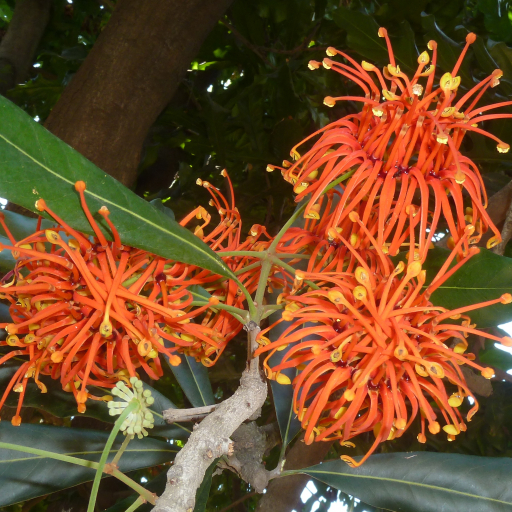
Known as the Firewheel Tree, Stenocarpus sinuatus is one of Australia’s most spectacular rainforest exports. Its name comes from its incredible circular flower clusters that look exactly like the glowing spokes of a burning wagon wheel. While it is a towering canopy tree in its native habitat, in home gardens it remains a manageable, glossy showstopper that acts as a magnet for colorful nectar-feeding birds.
🔍 How to Identify
- 🎡 The "Wheel" Bloom: The most distinct feature is the bright red or orange flower head, which consists of 12 to 20 individual flowers radiating from a central point like a pinwheel.
- 🌿 Variable Foliage: The leaves are thick, leathery, and dark green with a high-gloss finish. Interestingly, young leaves are often deeply lobed (like an oak), while mature leaves become simpler and more oval-shaped.
- 📏 Growth Habit: It typically grows with a straight, central trunk and a narrow, symmetrical crown, making it look very "tidy" even before it blooms.
🏡 In Your Garden
- 💧 Drainage is Vital: While it loves the humidity of its rainforest roots, it cannot tolerate "wet feet." Plant it in well-draining, slightly acidic soil to prevent root rot.
- ⏳ The Patience Factor: Be prepared to wait! If grown from seed, this tree can take 7 to 10 years to produce its first firewheel. To see blooms sooner, look for grafted specimens at your local nursery.
- 🦜 Wildlife Hub: Because of its high nectar production, it is a premier choice for "bird-scaping." It will attract honeyeaters, parrots, and bees to your yard throughout the summer and autumn.
⚠️ Safety & Toxicity
- ✅ Safe Status: The Firewheel Tree is generally considered non-toxic to humans and common household pets like dogs and cats.
- 🧤 Skin Sensitivity: Like many members of the Proteaceae family, the sap can occasionally cause mild skin irritation in sensitive individuals. It’s always a good idea to wear gloves when pruning.
✨ Fun Fact
The "Firewheel" design isn't just for show—it is a masterpiece of evolution. The flowers are arranged so that when a bird lands on the "wheel" to drink nectar, it perfectly aligns its head and chest to be dusted with pollen, ensuring the tree can reproduce as the bird moves to the next wheel!

Detailed Care Instructions
To grow Stenocarpus sinuatus, also known as the Firewheel Tree or Wheel of Fire, you can follow these steps:
- Climate: This plant thrives in warm temperate and subtropical climates, especially in areas with cool winters. It is native to eastern Australia.
- Soil: Stenocarpus sinuatus prefers well-draining soil with a slightly acidic to neutral pH. You can amend the soil with organic matter like compost to improve drainage and nutrient content.
- Propagation: You can grow Stenocarpus sinuatus from seeds or cuttings.
- Seeds: Soak the seeds in warm water for 24 hours to increase germination rate. Plant the seeds in a seed tray or individual pots filled with moist seed-raising mix. Keep the soil moist but not waterlogged. The seeds can take several weeks to germinate, so be patient.
- Cuttings: Take stem cuttings from a healthy, mature Firewheel Tree. Ensure the cuttings are about 6 inches long with multiple nodes. Remove the lower leaves and dip the cut end in rooting hormone powder. Plant the cuttings in a well-draining potting mix, keeping the soil moist. Place a plastic bag or cover over the pot to create a humid environment. It can take several weeks for the cuttings to root.
- Light: Stenocarpus sinuatus requires full sun to partial shade. Place the plant in a location that receives at least 6 hours of direct sunlight each day.
- Watering: Keep the soil consistently moist, especially during the warmer months. Avoid overwatering, as waterlogged soil can lead to root rot. Adjust the watering frequency based on the temperature and rainfall.
- Fertilizer: Apply a balanced slow-release fertilizer in spring and autumn. Follow the manufacturer's instructions for dosage. Additionally, you can use a liquid fertilizer monthly during the growing season to provide extra nutrients.
- Pruning: Prune the tree to maintain its shape and size. Remove any dead or diseased branches and promote airflow within the canopy. Pruning can be done after flowering.
- Mulching: Apply a layer of organic mulch around the base of the plant to help retain moisture, suppress weed growth, and provide nutrients.
By following these guidelines, you can successfully grow Stenocarpus sinuatus and enjoy its beautiful flowers.

Place in a bright room that is sun drenched almost all day. Or directly in a south-facing window.

Stenocarpus Sinuatus is a plant that requires a consistent and moderate amount of water to thrive. It is important to avoid over-watering the plant as it is susceptible to root rot.
To water this plant, one should first ensure that the soil is dry to the touch. This is an indication that the plant is in need of water. The soil should be watered until it is moist, but not soaked.
It is recommended to water the plant once a week during the growing season and reduce the frequency during the dormant season. Additionally, water should be applied directly to the soil and not on the foliage to prevent fungal diseases.
One can also consider using a moisture meter to monitor the soil moisture level. This will help to avoid over or under-watering the plant.
In summary, Stenocarpus Sinuatus should be watered moderately and consistently while avoiding over-watering and watering the foliage. Monitoring soil moisture level and adjusting watering frequency accordingly can help ensure optimal growth and health of the plant.
To fertilize this plant, use a balanced fertilizer with equal amounts of nitrogen, phosphorus, and potassium. Apply the fertilizer once a month during the growing season, which is typically in the spring and summer months. Be sure to follow the instructions on the fertilizer packaging as over-fertilization can harm the plant. During the dormant season in the fall and winter, you can reduce or stop fertilizing altogether. Water the plant thoroughly before and after fertilizing to ensure the nutrients are properly absorbed.
Stenocarpus Sinuatus plant prefers a well-draining soil that is rich in nutrients. The soil should be slightly acidic with a pH range between 6.0 to 6.5. It is recommended to use a mix of peat moss, perlite, and sand to create an ideal growing medium for this plant. This mix should be free from any heavy clay content and should have good aeration to allow for healthy root growth. Use a quality potting mix specifically formulated for tropical plants or prepare the soil mix at home by mixing equal parts of peat moss and perlite or sand. Adding compost or organic fertilizer to the soil can also contribute to the plant's healthy growth. It is advised to plant the Stenocarpus Sinuatus plant in a pot with drainage holes at the bottom to prevent waterlogging and root rot.
There are a few different methods for propagating Stenocarpus Sinuatus plants. One common method is through stem cuttings. To do this, select a healthy stem with several leaves and use a clean, sharp knife to make a diagonal cut just below a node (where a leaf emerges from the stem). Remove any leaves from the bottom 1/3 to 1/2 of the stem and dip the cut end in rooting hormone powder. Plant the cutting in a pot with well-draining soil and keep it moist but not too wet. Place it in a warm, bright location but out of direct sunlight. Roots should begin to develop in several weeks, at which point the new plant can be potted on or planted in the ground.
Another method for propagating Stenocarpus Sinuatus plants is through seed. Collect mature seeds from a healthy plant and soak them in warm water for 24 hours. Plant the seeds in well-draining soil and keep them moist and warm, ideally between 70-80 degrees Fahrenheit. Germination can take several weeks to several months, so be patient. Once the seedlings have developed a few leaves, they can be repotted into larger containers or planted in the ground.








