Plant Overview
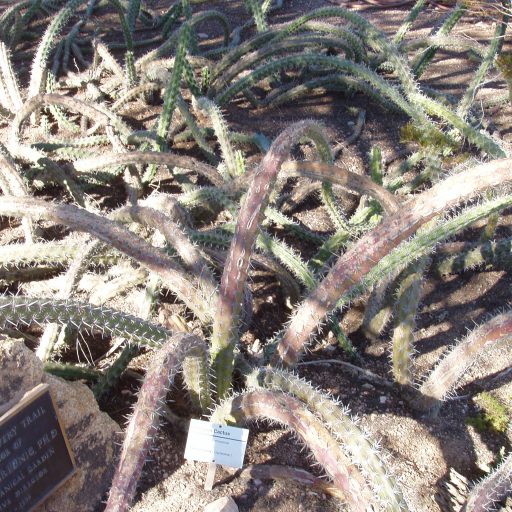
The Stenocereus alamosensis, famously known as the Octopus Cactus or Cina, is a wild-looking wanderer from the dry forests of Mexico. Unlike many upright, stately cacti, this species behaves more like a sprawling vine, sending out long, arching stems that give it a tangled, cephalopod-like appearance. In its native Sonora, it forms dense, impenetrable thickets that provide vital shelter for desert wildlife.
🔍 How to Identify
- 🐙 Growth Habit: It features slender, cylindrical stems that grow upright at first but soon arch over and trail along the ground. When the tips touch the soil, they often take root, allowing the plant to "walk" across the landscape.
- 🌵 Spine Structure: Each stem is equipped with 5 to 8 prominent ribs covered in clusters of stiff, greyish-white spines. The central spines are particularly long and can be quite intimidating.
- 🌺 The Bloom: During the warmer months, it produces stunning, tubular flowers that are a vibrant scarlet or coral red. These flowers are narrow and star-shaped at the tip, specifically designed to fit the beak of a hummingbird.
🏡 In Your Garden
- 🏜️ Space Requirements: Because of its "Octopus" nature, this cactus is not a fan of cramped quarters. It is best used as a dramatic groundcover in large xeriscapes or as a "living fence" to deter intruders.
- ☀️ Sun & Soil: It thrives in intense heat and full sun. While it is incredibly drought-tolerant, its biggest enemy is "wet feet." Ensure your soil is extremely gritty and well-draining to prevent the sprawling stems from rotting where they touch the earth.
- ✂️ Maintenance: While it is low-maintenance, you may need to prune it to keep it within its boundaries, as it can be an aggressive grower once established in a Mediterranean or desert climate.
⚠️ Safety & Toxicity
- 🌵 Physical Hazard: While not chemically toxic to humans or pets, the Octopus Cactus is "mechanically" dangerous. The spines are long, sharp, and capable of causing deep puncture wounds or skin irritation.
- 🐾 Placement: Keep this plant away from high-traffic walkways or areas where curious pets and children play. If you must move or prune it, heavy-duty leather gloves and tongs are essential tools.
✨ Fun Fact
The Octopus Cactus is a master of "vegetative reproduction." In the wild, if a piece of a stem is broken off by a passing animal or a storm, it can easily sprout new roots wherever it lands, starting a whole new colony!

Detailed Care Instructions
To grow Stenocereus Alamosensis, also known as Alamosa cactus or Pitaya de Alamos, follow these steps:
- Obtaining a plant: Purchase a healthy Stenocereus Alamosensis plant from a reputable nursery or cactus supplier. Alternatively, you can propagate it from seeds or stem cuttings.
- Pot selection: Choose a well-draining pot with drainage holes at the bottom. This will prevent water from accumulating and causing root rot.
- Soil: Use a cactus or succulent-specific potting mix or create your own by combining equal parts of regular potting soil, sand, and perlite. This mixture will provide adequate drainage and aeration for the plant's roots.
- Planting: Gently place the Stenocereus Alamosensis plant in the prepared pot, ensuring that the roots are covered with soil. Avoid burying the stem too deep, as it may lead to rotting.
- Light requirements: Place the plant in bright, indirect sunlight. Stenocereus Alamosensis thrives in full sun but can tolerate partial shade as well. If growing indoors, choose a location near a south-facing window that receives ample sunlight throughout the day.
- Watering: Allow the soil to dry out completely between waterings. Stenocereus Alamosensis is drought-tolerant and prefers slightly dry conditions, as overwatering can cause root rot. Water deeply but infrequently, ensuring that excess water drains out of the pot.
- Temperature and humidity: Stenocereus Alamosensis prefers warm temperatures between 70-85°F (21-29°C). It can tolerate brief periods of temperature drops down to 50°F (10°C) but should be protected from frost. Maintain moderate humidity levels, as excessive humidity can lead to rot.
- Fertilization: Apply a balanced cactus fertilizer during the growing season (spring and summer) at half the recommended strength. Avoid fertilizing during the winter months when the plant is dormant.
- Pruning: Stenocereus Alamosensis may require minimal pruning to remove dead or damaged parts. Use clean, sharp pruning shears to avoid spreading any diseases.
- Propagation: If you want to propagate the plant, it can be done through stem cuttings or seeds. Stem cuttings should be taken in the spring or summer, allowed to callus for a few days, and then planted in a well-draining soil mix. Seeds can be sown in a similar mixture and kept consistently moist until germination occurs.
With proper care and attention, your Stenocereus Alamosensis plant should grow and thrive, producing beautiful white flowers and tasty fruit.

Place in a bright room that is sun drenched almost all day. Or directly in a south-facing window.

To water this particular plant, it is important to take into consideration the climate and the soil condition of its natural habitat. In general, this type of plant prefers well-draining soil and dry conditions. It is best to water it sparingly, only when the soil is completely dry, and with a gradual and gentle approach. Overwatering can cause rotting of the roots, which can be fatal to the plant. The key is to allow the plant to dry out between watering and avoid watering during periods of high humidity or when there is a chance of rain. Additionally, watering should be avoided during periods of low light or when the plant is dormant to prevent the possibility of waterlogging. A good rule of thumb is to lightly mist the plant every few weeks and provide it with minimal water during the growing season.
To fertilize this plant, use a balanced fertilizer with equal amounts of nitrogen, phosphorus, and potassium. Apply the fertilizer sparingly once a month during the growing season (spring and summer), and do not fertilize during the dormant season (fall and winter). Dilute the fertilizer to half strength to avoid damaging the plant's roots. Ensure that the soil is moist before applying fertilizer, and avoid fertilizing if the plant is stressed or in extreme temperatures.
The Stenocereus Alamosensis plant requires well-draining soil that has a pH between 6.0 and 7.5. The soil should be rich in organic matter and contain sand or perlite to improve drainage. It is important to avoid soils that retain too much moisture, as this can lead to root rot and other issues. A mixture of peat moss, perlite, and coarse sand is often recommended for this type of plant. It is also important to ensure the soil is adequately fertilized, as Stenocereus Alamosensis plants require a balanced mixture of nutrients to thrive.
Propagation of this species of plant can be achieved through various methods such as stem cuttings, seeds, and offsets. For stem cuttings, it is best to cut a healthy stem from the parent plant and allow it to dry for a few days. Once the end has dried and calloused, dip it in rooting hormone and plant it in well-draining soil. Water the cutting thoroughly and keep it in a warm and humid environment. The cutting should start to root within a few weeks.
Seeds can also be used to propagate the plant. Collect ripe fruit and remove the seeds. Sow the seeds in well-draining soil and keep them warm and moist. The seeds should germinate within a few weeks.
Offsets can also be taken from mature plants. Carefully remove the offsets from the parent plant and plant them in well-draining soil. Keep them in a warm and humid environment and water them regularly until they establish roots and start to grow.
It is important to note that this plant requires proper care and attention to thrive and propagate successfully.








