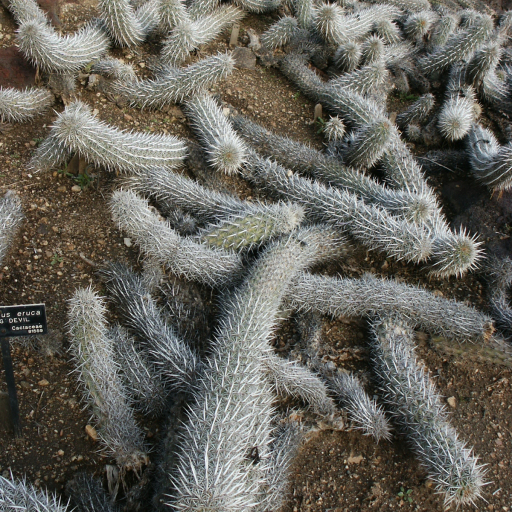
Plant Overview
Known as the "Creeping Devil" or Chirinola, this is perhaps the world’s most unusual cactus. Native to the sandy plains of Baja California Sur, Mexico, it doesn't stand tall like its relatives. Instead, it lies flat and "walks" across the desert floor over decades, leaving a trail of its own dead remains behind as it migrates in search of nutrients.
🔍 How to Identify
- 🌵 Prostrate Stems: Unlike upright cacti, these heavy, cylindrical stems lay horizontally on the ground, resembling giant, thorny caterpillars.
- 🗡️ Dagger Spines: The stems are heavily armored with large, flattened, gray-to-white spines that look like overlapping scales or shards of glass.
- 🌸 Nocturnal Blooms: On rare occasions, it produces stunning, funnel-shaped white or pinkish flowers that open only at night to attract specialized pollinators.
🏡 In Your Garden
- 🚶 The Wandering Habit: Because this plant "travels" by growing at the front and dying at the back, it requires a long, narrow space rather than a standard round pot. It is a slow-motion escape artist!
- 🏜️ Sand & Drainage: In its natural habitat, it lives on coastal shifting sands. In a home collection, it demands a very gritty, sandy mineral mix and hates sitting in damp soil, which can quickly rot its traveling "foot."
- ☀️ Sun Requirements: It craves intense, direct sunlight to maintain its thick spine density; without enough light, the new growth will look thin and weak.
⚠️ Safety & Toxicity
- 🚫 Physical Hazard: While not chemically toxic, the Creeping Devil is extremely dangerous to handle. The spines are incredibly sharp, stiff, and capable of causing deep puncture wounds.
- 🐾 Pet & Child Safety: This is strictly a "look but don't touch" plant. It should be kept well away from walkways, curious pets, or children, as even a light brush against the spines can lead to injury.
✨ Fun Fact
The Creeping Devil is a master of cloning! Because it travels across the desert and its older parts die off, it effectively detaches from its original root system, making it a "self-cloning" immortal wanderer that can live for centuries.

Detailed Care Instructions
| Humidity | Dry |
| Lighting | Full Sun |
| Difficulty | Easy |
| Temperature | 18°C - 32°C |
| Hardiness Zones | 9B - 11 |
To grow Stenocereus Eruca (also known as the Pitaya Roja or the Strawberry Pitaya), follow these steps:
- Climate and Location: Stenocereus Eruca thrives in warm and dry climates, similar to its native habitats in Central America. Look for a spot in your garden or yard that receives full sun exposure throughout the day.
- Soil Preparation: Prepare the soil by adding organic matter or compost to improve its drainage and fertility. The ideal soil for Stenocereus Eruca is well-drained and slightly acidic.
- Planting: Plant the Stenocereus Eruca seed or cutting directly into the soil. Dig a hole that is slightly larger than the root ball, place the plant in the hole, and then cover it with soil. Ensure the soil is firmly packed around the base of the plant.
- Watering: When newly planted, water the Stenocereus Eruca regularly to establish its root system. However, once established, it is drought-tolerant and tends to thrive with less frequent and more sparing watering. Water deeply but allow the soil to dry out between waterings.
- Fertilizing: Apply a balanced and slow-release fertilizer during the growing season to provide necessary nutrients. Follow the instructions on the fertilizer packaging for appropriate application rates.
- Supporting the Plant: Stenocereus Eruca is a climbing cactus, so provide it with some support as it grows. Install a trellis, fence, or other vertical structure nearby to help the plant attach itself and climb.
- Pruning: As the plant grows, you may need to trim back excessive growth or unruly branches to maintain its shape and size. Use clean and sterilized pruning shears to avoid the spread of disease.
- Pollination: Stenocereus Eruca typically requires cross-pollination to fruit. If you have multiple plants, you can rely on natural pollinators like bees for this process. However, if there are no compatible plants nearby, you may need to hand-pollinate the flowers using a small brush or cotton swab. Transfer pollen from one flower to another by gently brushing it on the stigmas.
- Harvesting: Stenocereus Eruca produces vibrant red, oval-shaped fruits that resemble strawberries. Harvest the fruits once they are fully ripe, usually indicated by a vibrant color, a slight softness, and a pleasant fragrance.
Follow these guidelines, and with proper care and patience, you should be able to successfully grow Stenocereus Eruca.

Place in a bright room that is sun drenched almost all day. Or directly in a south-facing window.

To water this type of plant, it is important to check the soil moisture level first before adding more water. The frequency and amount of watering will depend on the environment and soil conditions. Generally, it is recommended to water deeply once a week during hot and dry seasons, and decrease the frequency during cooler and humid months. It is also important to avoid wetting the foliage and to water at the base of the plant to prevent any fungal infections. Additionally, it is best to use rainwater or distilled water as opposed to hard water or tap water with high levels of minerals and chemicals.
To fertilize the plant, use a balanced fertilizer with equal parts of nitrogen, phosphorus, and potassium. You can also use a cactus fertilizer that has a lower nitrogen content to prevent burning the roots. Apply the fertilizer during the growing season, from early spring to late summer, once every 2-4 weeks. Water the plant thoroughly before and after fertilizing to avoid root damage. Be careful not to fertilize too much, as it can cause excessive growth and weaken the plant's structure.
The ideal soil for the Stenocereus Eruca plant should be well-draining and have good aeration to prevent water-logging and root rot. It should also have a pH range of 5.5 to 7.5. A mix of sandy soil, coarse perlite, and peat moss can be used to create the perfect soil blend. Additionally, incorporating some organic matter, such as compost or aged manure, can enhance the soil's nutrient content and improve plant growth. It is important to avoid using heavy, clay soils, which can retain too much moisture and lead to fungal issues.
To propagate this plant, you will need to take a cutting from the parent plant. Choose a healthy stem that is mature enough to produce its own roots. Cut the stem with a sharp, sterilized cutting tool, making sure to include at least two nodes (the points where leaves emerge from the stem). Allow the cutting to dry and callus over for a few days.
Prepare a well-draining soil mix and moisten it before planting the cutting. Plant the cutting in the soil mix, burying the bottom node. Water the soil thoroughly and place the pot in a warm, bright spot that receives indirect light.
Provide the cutting with regular moisture, but be sure not to overwater it. In a few weeks, new growth should appear, indicating successful root development. At this point, you can treat the new plant as you would a mature plant, providing it with regular watering and gradually increasing its exposure to direct sunlight.
It's important to note that this plant may not grow from cuttings as easily as some other types of plants, so be patient and don't get discouraged if it takes some time for the cutting to root and establish itself.








