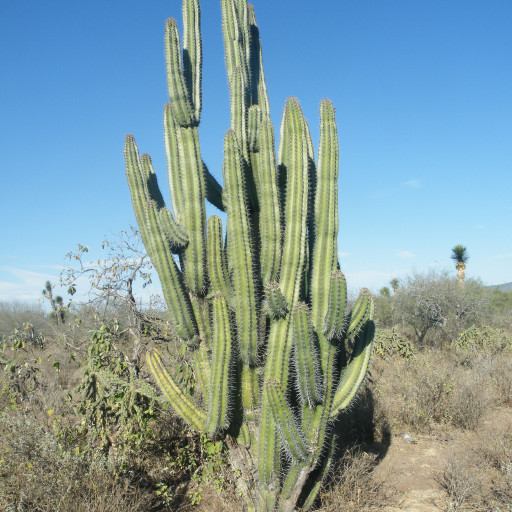
Plant Overview
Often called the "Gray Ghost" because of its hauntingly beautiful waxy coating, Stenocereus pruinosus is a majestic columnar cactus native to the sun-drenched landscapes of south-central Mexico. In its natural habitat, it stands like a silent sentinel, eventually branching out to resemble a massive, living pipe organ. It is a favorite for "desert-chic" aesthetics thanks to its clean, geometric lines and unique matte finish.
🔍 How to Identify
- 🌵 The "Pruinose" Bloom: The stems are covered in a distinct dusty, gray-blue waxy coating (pruina) that looks like a layer of fine frost or powder.
- 📏 Structured Ribs: This cactus typically features 5 to 8 deep, vertical ribs that give it a sharp, architectural silhouette.
- 🦴 Short Spines: Small, dark areoles are spaced evenly along the ribs, each housing a cluster of short, stiff, grayish-black spines that contrast beautifully against the pale skin.
🏡 In Your Garden
- ☀️ Natural Sunscreen: That signature "ghostly" wax isn't just for looks; it is a biological adaptation that reflects UV rays. To maintain this vibrant color, the plant needs a very bright, sunny spot.
- 🏜️ The "Dry Feet" Rule: Because it evolved on rocky Mexican hillsides, it has a sensitive root system. It is highly susceptible to root rot if the soil stays damp for even a day too long, so a grit-heavy, fast-draining cactus mix is essential.
- 🏺 Slow & Steady Growth: While it can reach towering heights of 20 feet in the wild, it is a slow grower when kept in a pot, making it a manageable and sophisticated indoor focal point for years.
⚠️ Safety & Toxicity
- 🌵 Mechanical Hazard: This plant is not chemically toxic to humans or pets if touched, but the spines are very sharp and can cause painful punctures.
- 🐾 Pet Safety: Place the Gray Ghost in a sturdy pot or a low-traffic area where curious dogs or cats won't accidentally bump into it, as the spines do not "give" easily.
✨ Fun Fact
In its native Mexico, this cactus is highly valued for its fruit, known as "Pitaya de Mayo." The fruit is bright red, incredibly sweet, and so popular that the plant is often commercially cultivated in specialized cactus orchards!

Detailed Care Instructions
To grow Stenocereus Pruinosus, also known as the gray ghost cactus, you can follow these steps:
- Obtain a healthy Stenocereus Pruinosus plant or obtain seeds from a trusted source.
- Select a suitable container or pot for planting. Ensure it has good drainage holes to prevent waterlogging.
- Prepare a well-draining cactus potting mix by mixing equal parts of perlite, coarse sand, and cactus soil.
- Fill the pot with the prepared potting mix, leaving some space at the top for watering.
- Place the Stenocereus Pruinosus plant or plant the seeds in the potting mix. Gently pat down the soil around the plant to ensure stability.
- Place the pot in a location that receives bright, indirect sunlight. Stenocereus Pruinosus prefers warm temperatures, ideally between 70-80°F (21-27°C).
- Water the plant only when the top inch of soil feels dry. Overwatering can lead to root rot, so make sure the soil dries out between waterings.
- During the growing season (spring and summer), you can fertilize the plant with a diluted cactus fertilizer once a month. Follow the package instructions for proper dilution.
- Stenocereus Pruinosus is drought-tolerant and can withstand periods of dryness. However, it can benefit from occasional misting to increase humidity, especially in dry climates.
- Prune the plant sparingly if necessary, removing any dead or diseased parts. Wear gloves to protect yourself from the cactus spines.
- Stenocereus Pruinosus can be susceptible to pests like mealybugs or scales. Inspect your plant regularly, and if you notice any pests, treat them with appropriate pest control methods.
- As the plant grows, you may need to repot it into a larger container to provide enough space for the roots. Repotting is best done in the spring.
- Stenocereus Pruinosus typically blooms at night with fragrant flowers. If conditions are suitable, you may see beautiful white flowers on the plant.
- Enjoy your growing Stenocereus Pruinosus plant and continue to provide proper care and maintenance for its well-being.

Place in a bright room that is sun drenched almost all day. Or directly in a south-facing window.

Stenocereus Pruinosus is a type of plant that requires a regular watering schedule to keep it healthy and thriving. To water this plant, you should begin by ensuring that the soil is not completely dry before watering. This can be done by sticking a finger an inch into the soil to feel the moisture level.
Once you determine that the soil is dry, you should water the plant thoroughly, making sure that the water reaches down to the roots. It is recommended to water this plant deeply every one to two weeks in the spring and summer, and reduce watering to every three to four weeks in the winter. Remember that overwatering can lead to root rot, so it's important to avoid leaving the plant sitting in water.
In addition to watering, Stenocereus Pruinosus will benefit from regular fertilization every four to six weeks during the growing season to provide essential nutrients. Finally, be sure to monitor the plant closely for any signs of stress or drooping leaves, as this may indicate that it needs more water.
To fertilize your plant, begin by selecting a balanced fertilizer with a equal amounts of nitrogen, phosphorus, and potassium. During the growing season, mix the fertilizer with water according to the manufacturer's instructions. Be careful not to over-fertilize, as this can lead to burning and damage to the plant. Apply the fertilizer every two weeks or so, ensuring that you cover the entire root zone of the plant. Finally, be sure to water the plant thoroughly after fertilizing to prevent salt build-up in the soil.
For Stenocereus Pruinosus plants, it is best to use a well-draining soil mixture that is high in organic matter, but also provides good aeration. The soil should be slightly acidic to neutral in pH, with a range of around 5.5 to 7.0. Some suitable components for the soil mixture may include coco coir, perlite, pumice, sand, and a small amount of peat moss. It is important to avoid using heavy soils that retain too much water, as this can lead to root rot and other issues. In addition, Stenocereus Pruinosus plants prefer a slightly sandy or gritty texture in the soil, so incorporating materials such as coarse sand or gravel can help with drainage and airflow. Lastly, it is recommended to use a slow-release fertilizer with a balanced nutrient profile, applied sparingly throughout the growing season, to help support healthy plant growth.
To propagate this plant, you will need a cutting that is approximately 6 inches long. This cutting should be taken from a healthy plant that is at least a few years old. Once you have the cutting, let it dry out for a few days so that it can form a callous.
Next, prepare a well-draining soil mix using sand, perlite, and peat moss. Plant the cutting in the soil with about one-third of it buried below the surface. Water the soil lightly and then cover the cutting with a plastic bag to create a humid environment.
Place the cutting in bright, indirect light and keep it warm. Check the soil moisture regularly and water the plant when it feels dry to the touch. After a few weeks, you should see new growth emerging from the top of the cutting. At this point, you can remove the plastic bag and care for the new plant in the same way as the parent plant.
Propagation can also be done through seeds. To do this, plant mature seeds in a well-draining soil mix and keep them warm and moist until they germinate. It may take several weeks for the seeds to sprout. Once they do, treat the seedlings as you would a rooted cutting.
Common pests of the gray ghost organ pipe include Scale insect, mealybugs, spider mites. Make a habit of checking your gray ghost organ pipe frequently for pests so that any infestations can be caught and managed early.








