Plant Overview
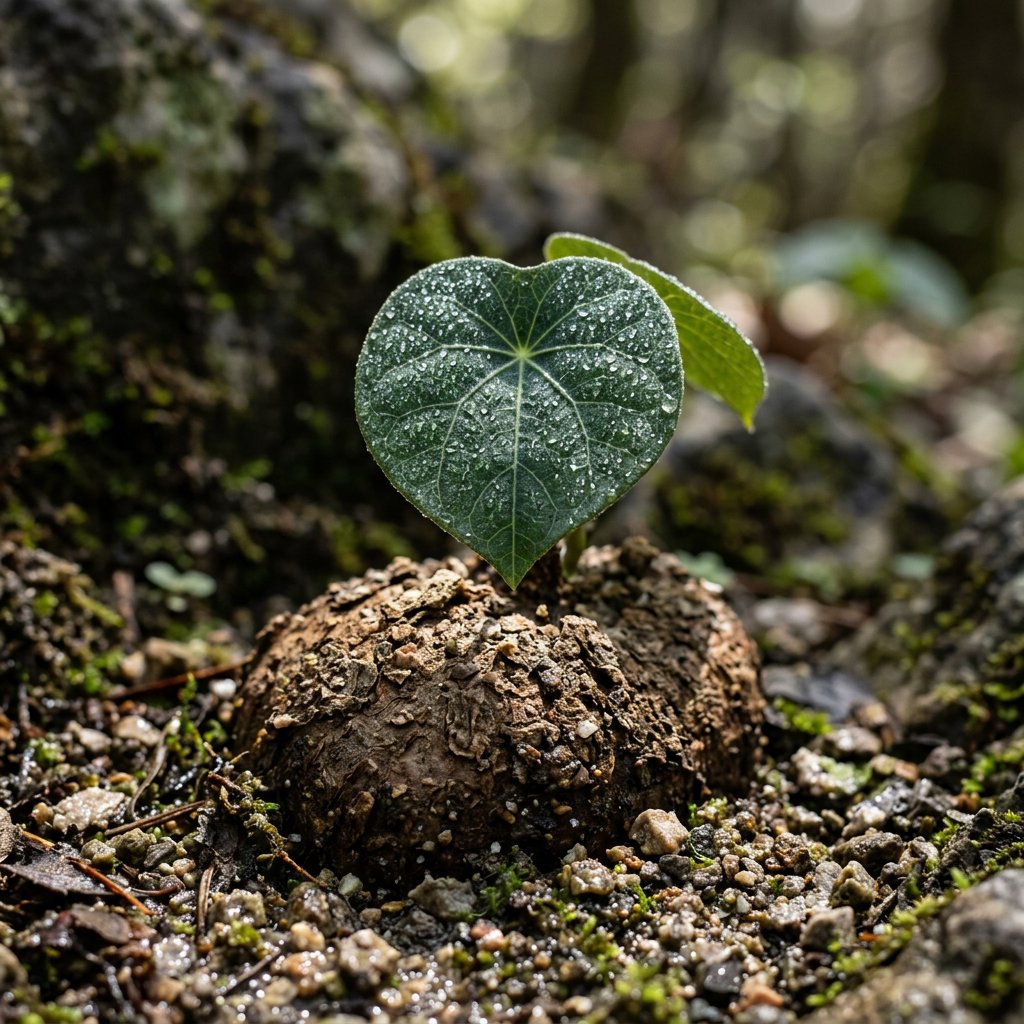
Known as a crown jewel for collectors of "caudiciforms," Stephania cepharantha looks like a weathered, ancient stone that has decided to sprout delicate green parasols. Native to the mountains of East Asia, this plant has been prized for centuries in traditional medicine before becoming a star of the minimalist "rare plant" interior design world. Its charm lies in the striking contrast between its rugged, woody base and its incredibly thin, graceful vines.
🔍 How to Identify
- 🥔 The Caudex: A large, woody, and often cork-like tuber that sits partially above the soil. It resembles a round potato or a lumpy rock and serves as the plant's water reservoir.
- 🍃 Peltate Leaves: The matte-green leaves are "peltate," meaning the stem attaches to the center of the leaf rather than the edge, making them look like tiny, floating shields or umbrellas.
- 🧶 Wiry Vines: Long, slender, purple-tinted or green vines emerge from the top of the bulb, seeking out nearby structures to climb or elegantly trailing downward.
🏡 In Your Garden
- 🏜️ The Rot Risk: Because the caudex stores so much water, this plant is highly susceptible to "wet feet." It requires a very gritty, cactus-like soil mix and a pot with excellent drainage; think of it more like a succulent than a tropical vine.
- 💤 The Big Sleep: Do not panic if your Stephania suddenly drops all its leaves! It undergoes a natural winter dormancy. When it goes bald, stop watering almost entirely until you see the first "eye" of a new vine peeking out in the spring.
⚠️ Safety & Toxicity
- 🐾 Toxic to Pets: Like many members of the Menispermaceae family, this plant contains various alkaloids that can be harmful if ingested by cats, dogs, or curious children.
- 🚫 Human Ingestion: While it has a history in specialized medicinal extraction, the raw plant is toxic. Keep it on a high shelf away from little hands and mouths to avoid stomach upset or more serious neurological symptoms.
✨ Fun Fact
The primary alkaloid found in this plant, cepharanthine, has been a subject of intense modern medical research. Scientists have studied its potential in treating everything from alopecia to various viral infections due to its unique anti-inflammatory properties!

Detailed Care Instructions
Stephania Cepharantha is a tropical plant that requires regular watering to thrive. To water this plant, start by checking the soil moisture level. Stick your finger about an inch deep into the soil. If it feels dry, it's time to water. Use room temperature water and slowly pour it onto the soil, being careful not to get water on the leaves or stem. Allow the water to soak into the soil completely. Avoid overwatering as it can lead to root rot. Water the plant once a week during the growing season and reduce watering during the dormant season. As the plant grows, adjust the watering frequency accordingly.
Stephania Cepharantha plants prefer a well-draining, slightly acidic soil. It is important to use a soil that has good drainage properties, as the plant can be susceptible to root rot if it sits in water. A mixture of peat moss and coarse sand or perlite can work well for this plant. Additionally, adding some organic matter to the soil can help to provide nutrients and improve overall soil structure. Before planting, it is a good idea to amend the soil by mixing in some compost or other organic materials to provide a healthy growing environment for the plant.







