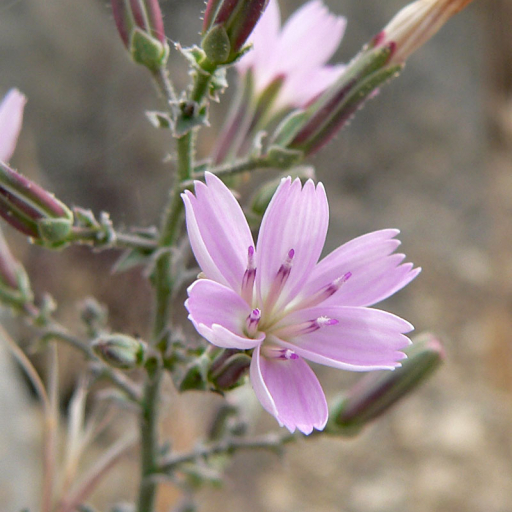
Plant Overview
Known affectionately as the Small Wirelettuce, this plant is the ultimate minimalist of the North American desert and scrublands. Often appearing as a delicate, zig-zagging skeleton of stems, it bursts into life with tiny, star-shaped blossoms that look like they are floating in mid-air. It is a master of survival, thriving in harsh, sandy soils where more pampered plants would quickly wither.
🔍 How to Identify
- 🌿 The "Wire" Stems: The plant consists of slender, stiff, grayish-green stems that branch out extensively, giving it a spindly, wire-like structure.
- 🌸 Starry Flowers: Small flower heads (usually white, pale pink, or light lavender) feature square-tipped petals with distinct "teeth" at the ends.
- 💧 Milky Sap: If a stem is broken, the plant exudes a sticky, milky white latex, a common trait among members of the chicory tribe.
🏡 In Your Garden
- 🏜️ Drought Specialist: Because it possesses a deep taproot, this plant is incredibly difficult to transplant once established. It prefers to stay exactly where it germinated, soaking up the heat.
- 🐝 Pollinator Magnet: While it looks sparse to the human eye, its high-protein pollen is a vital food source for small native bees and desert butterflies during the dryer months.
⚠️ Safety & Toxicity
- ✅ Low Risk: Stephanomeria exigua is not considered highly toxic to humans or common household pets.
- 🧪 Sap Irritation: The milky latex sap can be a mild skin irritant for some people. It is best to wear gloves if you are pruning or clearing large amounts of it to avoid a sticky, itchy residue.
✨ Fun Fact
The species name exigua comes from the Latin word for "scanty" or "small," referring to its thin, almost leafless appearance that allows the plant to reduce water loss in blistering sun.

Detailed Care Instructions
To grow Stephanomeria Exigua, also known as annual wirelettuce or slender wreath plant, follow these steps:
- Seeds: Obtain Stephanomeria Exigua seeds either from a local nursery or online seed suppliers.
- Germination: Start the germination process indoors 6-8 weeks before the last expected frost. Fill seed trays or pots with a well-draining potting mix and sow the seeds on the surface. Lightly press the seeds into the soil and cover them with a thin layer of soil or vermiculite. Mist the soil to moisten it.
- Temperature and light: Maintain a temperature of around 70°F (21°C) for optimum germination. Place the trays or pots in a location that receives bright indirect light.
- Watering: Keep the soil consistently moist but not waterlogged. Mist the soil daily or as needed to prevent it from drying out. Avoid overwatering, as excessive moisture can lead to fungal diseases.
- Transplanting: Once the danger of frost has passed and the seedlings have grown a few sets of true leaves, transplant them into individual pots or directly into the garden. Choose a sunny location with well-draining soil.
- Soil conditions: Stephanomeria Exigua prefers sandy or loamy soil that is slightly alkaline to neutral in pH. Amend heavy clay soils with organic matter or sand to improve drainage.
- Watering and maintenance: Water the plant regularly, keeping the soil moderately moist. However, once established, Stephanomeria Exigua is quite drought-tolerant and does not require excessive watering. Monitor the soil moisture and adjust watering accordingly.
- Fertilization: Apply a balanced, slow-release fertilizer or compost to enrich the soil before planting. As the plant grows, you can fertilize once or twice during its growing season.
- Protection: Protect the plants from wind and heavy rains, especially when they are young. Provide support or stakes if needed to prevent them from falling over in windy conditions.
- Harvesting: Stephanomeria Exigua produces small flowers that turn into fluffy white seed heads. Allow the flowers to mature and dry on the plant if you wish to collect seeds for future planting.
By following these guidelines, you can successfully grow Stephanomeria Exigua and enjoy its delicate foliage and flowers.

Place in a bright room that is sun drenched almost all day. Or directly in a south-facing window.

The plant in question should be watered regularly, but care should be taken to avoid overwatering as this can lead to root rot. The soil should be allowed to dry out slightly between watering, and the plant should be watered deeply at the base rather than on the foliage. This can be done by watering slowly and allowing the water to soak into the soil rather than running off. In hotter or drier weather, the plant may require more frequent watering.
Stephanomeria Exigua plant requires fertilization during its growing season. Use a balanced fertilizer with a ratio of 10-10-10, applied at a rate of 1 tablespoon per square foot. Apply the fertilizer evenly around the base of the plant, being careful not to get any on the leaves or stem. Water the plant thoroughly after fertilization to help the nutrients penetrate the soil. Repeat fertilization every 4-6 weeks throughout the growing season. Avoid fertilizing when the plant is in its dormant phase.
Stephanomeria Exigua is a plant that requires well-drained soil that is sandy or loamy in texture. The soil should be amended with organic matter to improve its fertility and water-holding capacity. The pH level of the soil should be slightly acidic to neutral, ranging between 6.0 to 7.5. The plant prefers full sun exposure and requires moderate watering. It is important to avoid overwatering the plant as it can lead to root rot. The use of a fertilizer low in nitrogen but high in phosphorus and potassium is recommended. The plant is tolerant to dry conditions and can tolerate mild frost.
Stephanomeria Exigua can be propagated through both seeds and cuttings. For seed propagation, collect mature seeds from the flower head and sow them in a well-drained potting mix. Keep the soil consistently moist and place the container in a warm, bright location with indirect sunlight. Germination should occur within a few weeks. Cuttings can also be taken from the plant in the spring or summer. Choose a healthy stem and cut it just below a leaf node. Remove all but the top few leaves from the stem and insert it into a potting mix. Keep the soil moist and the cutting in a cool, shaded location until it begins to root. Once established, the new plant can be gradually acclimated to more light.








