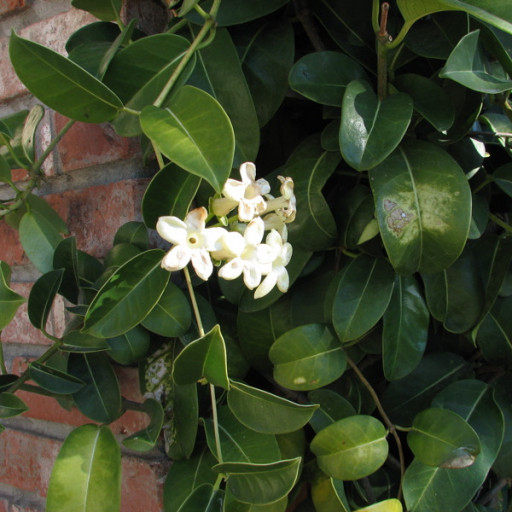
Plant Overview
Often called the "Madagascar Jasmine" or "Bridal Veil," this elegant climber is world-renowned for its intoxicating, sweet perfume and waxy, star-shaped blooms. While it isn't a true jasmine, its scent is so similar that it has been a staple in royal wedding bouquets for centuries. Originating from the rocky thickets of Madagascar, it brings a touch of tropical luxury to any sun-drenched windowsill or conservatory.
🔍 How to Identify
- 🌿 Waxy Foliage: The leaves are thick, leathery, and deep emerald green. They grow in opposite pairs along a woody, twining vine that can reach lengths of 10 feet or more.
- 🌸 Star-Shaped Blooms: The flowers are brilliant white, tubular at the base, and open into a five-pointed star. They usually grow in clusters called "umbels."
- 🍐 The "False Fruit": Occasionally, the plant produces large, green, pear-shaped seed pods. These are not edible but contain silky, dandelion-like seeds meant for wind dispersal.
🏡 In Your Garden
- 🧗 Support is Essential: As a vigorous twining vine, the Stephanotis needs a sturdy trellis, hoop, or moss pole. It climbs by wrapping its stems around structures rather than using aerial roots, so it won’t damage your walls.
- 🚫 The "No-Move" Rule: This plant is famously sensitive to environmental changes. Once flower buds appear, avoid moving or even rotating the pot. A sudden shift in light or a draft can cause the plant to drop its buds prematurely in a "temper tantrum."
- 💧 Humidity and Rest: It thrives in high-humidity environments (like a bright bathroom). During the winter, it appreciates a "rest period" with cooler temperatures and significantly less water to encourage a massive bloom the following spring.
⚠️ Safety & Toxicity
- ✅ Pet Friendly: Good news for animal lovers! Stephanotis floribunda is generally considered non-toxic to dogs, cats, and horses.
- 💧 Sap Sensitivity: While not poisonous, the milky white sap found in the stems can cause mild skin irritation for people with sensitive skin. It is best to wear gloves when pruning.
✨ Fun Fact
The name Stephanotis comes from the Greek words "stephanos" (crown) and "otos" (ear), referring to the way the flower's reproductive parts are shaped like tiny ears inside a crown. It has long been a symbol of marital happiness, which is why it remains the most popular flower for traditional Hawaiian wedding leis.

Detailed Care Instructions
| Lighting | Full Sun |
| Hardiness Zones | Min 9B |
Stephanotis floribunda, also known as Madagascar jasmine, is a popular vining plant with glossy, dark green leaves and fragrant, white, waxy flowers. Here are some tips to help you grow and care for Stephanotis floribunda:
- Light: Place your Stephanotis plant in a location that receives bright, indirect sunlight. Avoid direct sunlight, especially during the hottest hours of the day. Too much light can scorch the leaves, while too little light will result in weak growth and fewer flowers.
- Temperature: Stephanotis plants thrive in warm temperatures between 60-80°F (15-27°C). Keep the plant away from drafty areas and cold temperatures, as it is sensitive to cold and frost.
- Soil: Use a well-draining potting mix for your Stephanotis plant. A mix of peat moss, perlite, and sand works well. The soil should retain some moisture but not become waterlogged.
- Watering: Water your plant thoroughly when the top inch of soil feels dry to the touch. Ensure the excess water drains out from the bottom of the pot to prevent waterlogging, as this can cause root rot. Avoid overwatering, as it can lead to yellowing leaves and other problems.
- Humidity: Stephanotis plants enjoy high humidity levels. You can increase humidity by placing a tray of water near the plant or by using a humidifier. Misting the foliage with water occasionally can also help.
- Fertilizer: Feed your Stephanotis plant with a balanced, water-soluble fertilizer once every two weeks during the growing season (spring and summer). Reduce the frequency to once a month during the dormant period (fall and winter).
- Pruning: Prune your Stephanotis plant regularly to maintain its shape and encourage bushier growth. Pinch off the tips to promote branching and remove any dead or yellow leaves. You can also train the vine by gently attaching it to a support structure or trellis.
- Repotting: Stephanotis plants generally prefer slightly crowded conditions, so you don't need to repot them frequently. However, if the roots become too congested or if the plant outgrows its pot, you can repot it into a slightly larger container using fresh potting soil.
- Propagation: Stephanotis can be propagated from stem cuttings. Take 4-6 inch long cuttings from mature, healthy vines. Remove the lower leaves and dip the cut end of the stem in a rooting hormone. Plant the cutting in a well-draining soil mix and keep it in a warm, humid environment until roots develop.
Remember to be patient, as Stephanotis floribunda can take some time to establish and start blooming. With proper care and attention, you can enjoy the beautiful flowers and fragrance of this lovely plant.

Place in a bright room that is sun drenched almost all day. Or directly in a south-facing window.

To properly water this plant, you should first make sure the soil is slightly damp before adding more water. It's important not to overwater, as this can lead to root rot. A good rule of thumb is to water the plant deeply but infrequently, allowing the soil to dry out between waterings. When watering, pour water gently and slowly into the soil until it starts to drain out the bottom. You should avoid getting water on the leaves, as this can lead to fungal diseases. Additionally, this plant prefers slightly acidic soil with good drainage, so make sure to use a well-draining potting mix.
To fertilize this type of plant, mix a balanced and water-soluble fertilizer according to the manufacturer's instructions. Apply the fertilizer to the soil once a month during the growing season, while flowering. Do not over-fertilize as it may cause damage to the plant. Water the plant thoroughly after applying the fertilizer.
Stephanotis Floribunda is a type of flowering plant that requires specific soil conditions to thrive. It prefers well-draining soil that is rich in nutrients and has a pH level between 6.0 and 7.0. The soil should be loose and loamy, with good moisture retention properties, but not too heavy or compacted. It is recommended to use a soil mixture that contains equal parts of peat moss, perlite, and vermiculite, which provides the ideal growing conditions for the plant. Additionally, adding organic matter, such as decomposed leaves or compost, can help improve soil fertility. It is important to avoid using soil that is too alkaline or acidic, as this can affect the plant's growth and flowering. Finally, it is essential to make sure the soil is free of any pests or diseases that can harm the plant, as Stephanotis Floribunda is susceptible to root rot and other fungal infections.
Stephanotis Floribunda is a plant species that can easily be propagated through stem cuttings. To begin the propagation process, select healthy, stout stem cuttings that are about six inches in length. Remove any leaves from the lower half of the cutting and dip the cut end into rooting hormone powder. Place the cutting into a pot containing a mix of 2 parts peat moss and 1 part sand, making sure the cutting is planted at least 2 inches deep into the mixture. Water the cutting well and place it in a well-lit spot with indirect sunlight. Cover the pot with a clear plastic bag or a cloche to create a humid environment that will promote rooting. Be sure to keep the soil moist but not waterlogged during this period. After about six weeks, the cutting should have developed a healthy root system and be ready for transplanting into a larger pot or into the garden.
Common pests of the madagascar jasmine include Mealybugs, spider mites, aphids, thrips. Make a habit of checking your madagascar jasmine frequently for pests so that any infestations can be caught and managed early.








