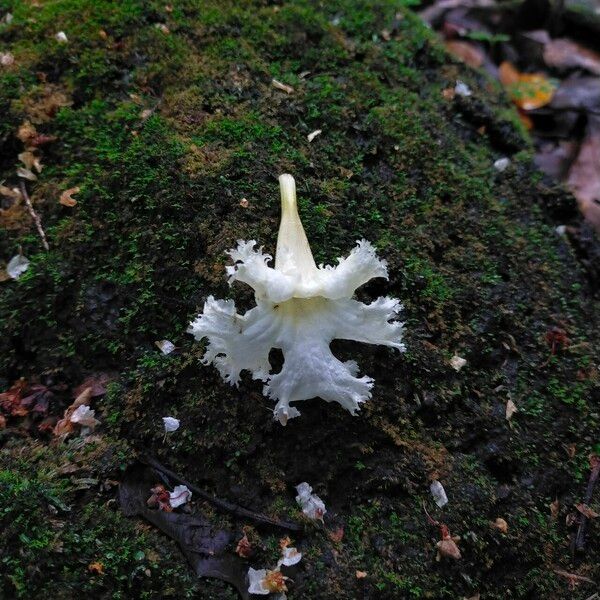
Plant Overview
Known as the Yellow Snake Tree for its long, twisting seed pods, Stereospermum colais is a majestic native of tropical Asia. In India, it is revered as the "Padri Tree" and is frequently planted near temples for its fragrant, bell-shaped blooms that carpet the ground in gold. This deciduous beauty adds a touch of architectural elegance to any landscape with its airy canopy and striking, trumpet-like flowers.
🔍 How to Identify
- 🌼 The Blooms: Fragrant, funnel-shaped flowers that are creamy yellow or lime-green, often featuring delicate reddish-purple veins or streaks deep within the throat.
- 🍃 The Foliage: Large, compound leaves arranged in opposite pairs. Each leaf is "pinnate" (feather-like), giving the tree a lush, ferny appearance.
- 🐍 The Seed Pods: Its most distinct feature; remarkably long, slender, and often curved capsules that hang from the branches like green snakes, eventually splitting to release winged seeds.
🏡 In Your Garden
- ☀️ Sun Seeker: This tree thrives in full sun and becomes exceptionally drought-tolerant once its root system is established. It’s a "plant and forget" favorite for those in tropical or subtropical climates.
- 🌳 Root Room: Because it develops a sturdy taproot, it dislikes being moved once planted. Choose a permanent spot with plenty of vertical space, as it can grow into a significant shade tree over time.
⚠️ Safety & Toxicity
- ✅ General Safety: Stereospermum colais is generally considered non-toxic to touch and is actually prized in traditional medicine for its various healing properties.
- 🐾 Pet Caution: While not known to be poisonous, the woody seed pods and bark are quite tough; it’s best to discourage curious pets from chewing on fallen debris to avoid any potential choking or digestive irritation.
✨ Fun Fact
In the ancient Indian healing system of Ayurveda, the root of this tree is a vital component of "Dashamoola"—a famous "ten-roots" formula used for centuries to treat a variety of inflammatory and respiratory conditions!

Detailed Care Instructions

Place in a bright room that is sun drenched almost all day. Or directly in a south-facing window.

When the top few inches of soil dry out, water your plants. If the top few inches of soil are still moist, do not water your plant. Wait a few days, then poke your finger into the soil to see if anything has changed. Overwatering poses a disease risk, such as the development of fungal diseases in the roots. These plants have adaptations in there leaves that allow them to survive in low water supply.








