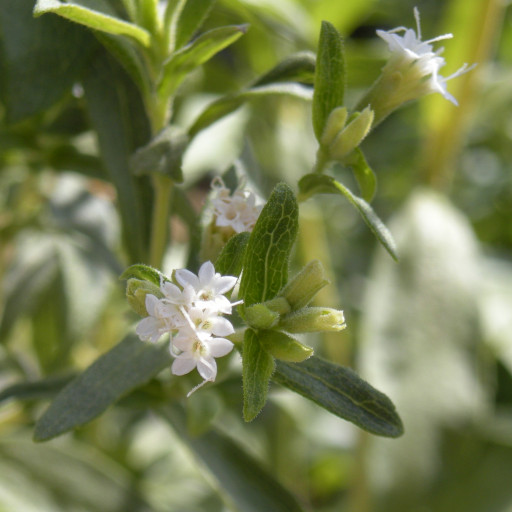
Plant Overview
Known as the "Sweet Leaf" or "Sugar Leaf," Stevia rebaudiana is a South American treasure that has been sweetening teas for centuries. Long before it hit supermarket shelves in powdered form, the Guarani people of Paraguay used these vibrant green leaves to take the edge off bitter medicinal brews. It is a petite, bushy herb that looks modest in a pot but packs a sugar-free punch that has revolutionized the modern health world.
🔍 How to Identify
- 🌿 Leaf Shape: Look for small, oval-shaped green leaves with noticeably serrated (saw-toothed) edges and a slightly velvety texture.
- 🌱 Growth Habit: This is a semi-woody perennial that grows in a compact, bushy mound, usually reaching about 1 to 2 feet in height.
- 🌼 Flowers: In late summer, it produces tiny, trumpet-shaped white flowers at the ends of the branches; however, most gardeners pinch these off to keep the plant's energy focused on leaf production.
🏡 In Your Garden
- ☀️ Warmth is Key: Stevia is a tropical native and is highly sensitive to cold. It thrives in full sun but prefers a bit of afternoon shade in scorching climates to prevent the leaves from wilting.
- 💧 Shallow Roots: Because its root system doesn't go very deep, Stevia prefers frequent, light watering rather than deep, infrequent soaking. It hates "wet feet," so ensure your soil or potting mix drains very quickly to avoid root rot.
- ✂️ Harvest Strategy: The sweetest leaves are found just before the plant blooms. Regular pruning not only gives you a harvest for your tea but also encourages the plant to become bushier and less "leggy."
⚠️ Safety & Toxicity
- ✅ Status: Generally Recognized as Safe (GRAS) for human consumption and consumption by common household pets.
- 🐱 Pets & Kids: It is non-toxic to cats, dogs, and horses. Since it does not affect blood sugar levels, it is a safe plant for children to interact with and taste-test directly from the garden.
- 🍯 Sensitivity: While safe, some people find the raw leaves have a slightly bitter or licorice-like aftertaste if consumed in large quantities.
✨ Fun Fact
🍬 Sweet Superpower: The compounds inside these leaves, called steviol glycosides, are roughly 200 to 300 times sweeter than white table sugar, yet they contain zero calories and have a glycemic index of zero!

Detailed Care Instructions
| Color | Bright Green With White Blooms |
| Soil Ph | 6.5 To 7.5 |
| Humidity | Normal |
| Lighting | Part Sun |
| Toxicity | Non-Toxic |
| Soil Type | Rich, Well-Draining, Loamy |
| Bloom Time | Early Autumn To Mid-Autumn |
| Difficulty | Medium |
| Plant Type | Tender Perennial Herb |
| Mature Size | Up To 3 Foot Tall With A Spread Of Up To 2 Feet |
| Native Area | Paraguay |
| Temperature | 15°C - 21°C |
| Sun Exposure | Full Sun |
| Hardiness Zones | 10-11 |
To grow Stevia Rebaudiana, follow these steps:
- Obtain Stevia Rebaudiana seeds or seedlings. You can purchase them online or at a local nursery.
- Choose a suitable location for planting. Stevia plants prefer full sun, so select an area with at least 6-8 hours of direct sunlight per day.
- Prepare the soil. Stevia plants thrive in well-drained, nutrient-rich soil. Amend the soil with organic matter such as compost or aged manure to improve its fertility and drainage.
- Sow the seeds or transplant the seedlings. If using seeds, start them indoors about 8 weeks before the last frost date in your area. Transplant the seedlings outdoors when all danger of frost has passed. If using seedlings, directly transplant them into the prepared soil.
- Space the plants properly. Stevia plants need about 18-24 inches of space between each plant to allow for good air circulation and growth.
- Water regularly. Stevia plants require regular watering to keep the soil evenly moist. Avoid overwatering or letting the soil become waterlogged.
- Fertilize appropriately. Use a balanced fertilizer or organic options like fish emulsion or liquid kelp at regular intervals to provide necessary nutrients. Be careful not to over-fertilize as it can cause leafy growth but reduce sweetness.
- Prune and harvest. To encourage bushier growth, pinch off the top of the plant when it reaches about 6 inches in height. Harvest the leaves once the plant is well-established, usually after about 4-6 months. Snip or pluck the leaves from the stems and use them fresh or dry them for later use as a sweetener.
- Protect from extreme temperatures. During colder months, provide some protection like a frost cloth or bring the plant indoors if temperatures drop below freezing.
By following these steps, you can successfully grow Stevia Rebaudiana and enjoy its sweet leaves as a natural sugar substitute.

Place in a window with dappled sun or a spot in the middle of a room. Or directly in a window facing west or east.

To water this plant, it is recommended to use a watering can or hose with a nozzle that can adjust water. Only water the plant when the soil feels dry to the touch, as overwatering can harm the roots. Be sure to water the soil around the plant rather than the leaves, as wet leaves can lead to disease. It is important to ensure that the soil is well-draining to prevent waterlogging. In addition, do not allow the soil to completely dry out as this can also harm the plant.
To fertilize the plant, apply a balanced fertilizer (NPK ratio of 10-10-10) once a month during the growing season. Be sure to follow the manufacturer's instructions for application rates and frequency. Avoid over-fertilizing as it can damage the plant. Additionally, amend the soil with compost and organic matter prior to planting to improve soil fertility.
The ideal soil for Stevia Rebaudiana plant should be well-drained, loamy, and free of any toxins or chemicals that can negatively impact the plant's growth. The soil pH should be slightly acidic, with a range of 6.5 to 7.5. It's essential to ensure that the soil is rich in organic matter and has a good nutrient balance to support the plant's growth.
To achieve the optimum soil mix, it's recommended to combine equal parts of compost, sand, and fertile soil. This combination will provide the plant with adequate drainage, aeration, and nutrients. Additionally, it's essential to ensure that the soil mix is free of weeds, insects, and pests that can harm the plant.
When planting Stevia Rebaudiana, it's recommended to use a well-amended soil mix. This can be achieved by adding slow-release fertilizers, such as bone meal or fish emulsion, to the soil mix. It's also important to ensure that the plant receives adequate sunlight, water, and nutrients to promote healthy growth and development. With the right soil mix and proper care, Stevia Rebaudiana can thrive and produce healthy, sweet foliage and leaves.
To propagate this plant, you will need to take a few cuttings from a mature plant. Select a healthy stem that is about 4-6 inches long and cut it at an angle just below a node (where the leaves meet the stem). Remove the bottom leaves from the cutting, leaving just a few leaves at the top. Dip the cut end in rooting hormone and plant it in a pot filled with well-draining soil. Water the cutting thoroughly and cover the pot with a plastic bag to create a humid environment. Keep the soil moist but not overly wet, and place the pot in a warm, bright location but out of direct sunlight. In a few weeks, the cutting should have rooted and new growth should appear, indicating that it is ready to be transplanted into a larger container or planted in the ground.
Common pests of the stevia include Aphids, thrips, whiteflies, snails. Make a habit of checking your stevia frequently for pests so that any infestations can be caught and managed early.








