Plant Overview
Often called the "Mountain Camellia," Stewartia ovata is a hidden gem of the Appalachian wilderness. It is a plant that rewards the patient gardener with a masterclass in seasonal beauty, from its silky summer blooms to its fiery autumn foliage. This North American native is widely considered by enthusiasts to be one of the most elegant small trees in existence.
🔍 How to Identify
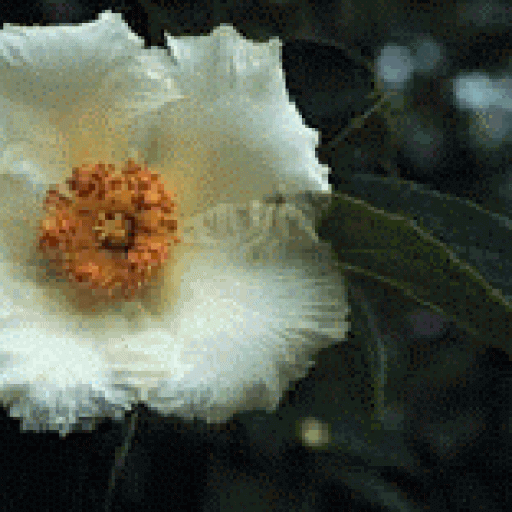
- 🌸 The Blooms: Large, creamy-white flowers (up to 4 inches wide) with delicately "crimped" edges that look like expensive silk.
- 🎨 The Center: A dense cluster of contrasting filaments in the center; some varieties feature stunning orange anthers, while the rare grandiflora type displays deep purple centers.
- 🍂 The Foliage: Dark green, oval leaves with finely serrated edges that transform into a brilliant scarlet or deep orange as the temperatures drop.
🏡 In Your Garden
- 🌱 Root Sensitivity: This plant is famous for its sensitive taproot. It is best to choose its "forever home" carefully, as it intensely dislikes being moved or transplanted once it has settled in.
- 💧 The "Goldilocks" Soil: It thrives in rich, acidic soil that stays consistently moist but never soggy. It mimics the cool, damp floor of an Appalachian forest, so a thick layer of mulch is its best friend.
⚠️ Safety & Toxicity
- ✅ Status: Non-toxic and generally safe.
- 🐾 Details: There are no known toxic effects for cats, dogs, or horses. Its smooth bark and soft leaves make it a very "friendly" ornamental for high-traffic areas in a family yard.
✨ Fun Fact
Although it looks like a tropical exotic, the Mountain Stewartia is actually a member of the Theaceae family—meaning it is a close cousin to the common Tea plant (Camellia sinensis) used to make your morning Earl Grey!

Detailed Care Instructions
To grow Stewartia ovata plant, follow these steps:
- Climate: Ensure that you live in USDA hardiness zones 6 to 9, as Stewartia ovata thrives in moderately warm climates.
- Sunlight: Provide the plant with partial shade to full sun. Choose a location with bright, filtered sunlight.
- Soil: Plant Stewartia ovata in well-draining, acidic soil. Amend the soil with organic matter, such as compost, to improve drainage and fertility.
- Watering: Stewartia ovata prefers moist soil but not waterlogged conditions. Water the plant regularly, especially during dry spells, to keep the soil consistently moist.
- Mulching: Apply a layer of mulch around the plant to conserve moisture, regulate soil temperature, and prevent weed growth.
- Pruning: Prune the plant in late winter or early spring to remove any dead or damaged branches. This helps maintain its shape and encourages new growth.
- Fertilizer: Apply a balanced, slow-release fertilizer in early spring to promote healthy growth. Follow the package instructions for application rates.
- Pests and diseases: Monitor the plant for pests like aphids, spider mites, or scale insects. Treat pests promptly with organic insecticides, if necessary. Stewartia ovata is generally not prone to diseases but may develop leaf spot or powdery mildew, which can be treated with fungicides.
- Propagation: Propagate Stewartia ovata through seeds or semi-hardwood cuttings in summer. Seeds may take some time to germinate, while cuttings usually have a higher success rate.
- Overwintering: Stewartia ovata is generally hardy, but younger plants may require extra protection in colder climates. Mulch around the base of the plant and cover it with burlap or frost cloth during freezing temperatures.
Remember to research and follow specific care instructions for the particular variety of Stewartia ovata you have, as some cultivars may have specific requirements.

Place in a bright room that is sun drenched almost all day. Or directly in a south-facing window.

Stewartia Ovata is a flowering plant that requires regular watering to maintain healthy growth. To water this plant, it is important to use a watering can or hose that will provide a gentle stream of water. Watering should be done slowly and evenly, so that the water can be absorbed by the soil without causing any damage to the plant's roots.
It is recommended to water Stewartia Ovata once or twice a week, depending on the weather conditions and the moisture level of the soil. The soil should be kept moist, but not waterlogged, as this can lead to root rot and other problems.
When watering this plant, it is important to avoid getting water on the leaves or flowers, as this can cause damage and attract pests. Instead, water directly at the base of the plant, aiming for the soil around the roots.
In addition to regular watering, Stewartia Ovata also benefits from a regular fertilization schedule. This can help to promote healthy growth and vibrant blooms. Be sure to follow the manufacturer's instructions when fertilizing this plant, as over-fertilization can also be harmful.
For optimal growth of this particular plant, provide it with a balanced fertilizer every two weeks during its active growing season. Be sure to choose a fertilizer that is specifically designed for acid-loving plants. Additionally, it is important to not over-fertilize, as this can cause leaf burn or damage to the roots. Water thoroughly after fertilizing to ensure that the plant is able to absorb the nutrients.
When planting Stewartia Ovata, it is important to use well-draining soil with a slightly acidic pH level between 5.5 and 6.5. The soil should be rich in organic matter, which can be achieved by adding compost or aged manure to the planting hole. It is also recommended to mix in some sand to improve drainage and prevent waterlogging, which can be harmful to the plant. Additionally, avoid using heavy clay soils or those with high alkaline pH levels, as they can cause nutrient deficiencies and inhibit root growth.
Stewartia Ovata can be propagated by taking hardwood cuttings in late fall or winter. First, select a healthy, disease-free plant and take cuttings that are approximately 6-8 inches long and about 1/4 inch in diameter. Remove all the leaves from the bottom half of the cutting, leaving only the top few leaves intact. Dip the bottom half of the cutting in rooting hormone and plant it in a well-draining potting mix. Water the cutting thoroughly and cover it with a plastic bag to create a humid environment. Place the pot in a warm, bright location that receives indirect sunlight. Water the cutting as needed to keep the soil evenly moist but not waterlogged. With proper care and patience, the cutting should develop roots within a few months and can be transplanted to a permanent location in the garden.








