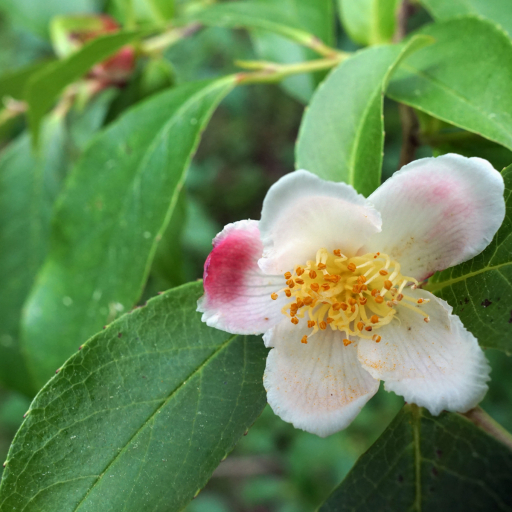
Plant Overview
Often referred to as the Beaked Stewartia, this elegant woody plant is a rare gem from the high-altitude forests of Eastern China. It is prized by collectors for its "four-season interest," offering delicate camellia-like blossoms in spring, lush summer greenery, fiery autumn foliage, and a graceful structural form in winter. Unlike its more common cousins, this species is celebrated for the striking contrast between its snowy white petals and its deep, wine-red sepals.
🔍 How to Identify
- 🌸 The "Bicolored" Bloom: The flowers are cup-shaped and white, but they sit nestled within distinctive purple-red sepals (the small leaves at the base of the flower), creating a stunning "eye" effect.
- 🍃 Elliptic Foliage: The leaves are dark green and finely serrated. In the fall, they undergo a dramatic transformation, turning brilliant shades of wine-red and deep orange.
- 🍐 The "Beaked" Fruit: True to its name (rostrata means "beaked"), the seed capsules are woody, five-angled, and terminate in a prominent, pointed beak that persists on the branches.
🏡 In Your Garden
- 🧱 Soil Sensitivity: This tree is a "calcifuge," meaning it absolutely loathes alkaline or lime-heavy soil. To keep it happy, ensure the soil is acidic, rich in organic matter, and consistently moist but well-drained.
- ☂️ The Goldilocks Light: While it loves the sun, it can be sensitive to intense heat. In hotter climates, plant it in a spot where it receives morning sun but is shielded from the scorching afternoon rays to prevent leaf scorch.
- 🌱 Slow and Steady: Stewartia is notoriously slow-growing and resents being moved. Because it has a sensitive root system, it’s best to choose its "forever home" carefully and avoid transplanting it once established.
⚠️ Safety & Toxicity
- 🟢 Status: Generally considered non-toxic.
- 🐾 Details: There are no recorded reports of Stewartia rostrata being poisonous to dogs, cats, or horses. However, as it is an ornamental landscape tree, it is not meant for consumption, and its woody seed pods could pose a mild choking hazard for curious pets.
✨ Fun Fact
The genus Stewartia was named in honor of John Stuart, the 3rd Earl of Bute, who was a tutor to King George III and a prominent figure in the development of the Royal Botanic Gardens, Kew!

Detailed Care Instructions
To grow Stewartia rostrata, or the beaked stewartia, you can follow these steps:
- Climate: Ensure that you live in a suitable climate for this plant. Stewartia rostrata is native to Korea and Japan and prefers a temperate climate.
- Sun and Soil: Choose a location that receives partial shade to full sun. The soil should be well-draining and rich in organic matter.
- Planting: Dig a hole in the prepared soil that is twice as wide and deep as the root ball of the plant. Place the plant in the hole, ensuring that the top of the root ball is level with or slightly above the soil surface. Fill the hole with soil and firm it gently around the plant.
- Watering: Water the plant thoroughly after planting and ensure that the soil remains consistently moist but not waterlogged. Regular watering, especially during dry periods, is essential for the plant's establishment.
- Mulching: Apply a layer of organic mulch around the base of the plant to help retain soil moisture and regulate temperature variations.
- Pruning: Minimal pruning is generally required for Stewartia rostrata. However, you can remove any dead, damaged, or diseased branches to maintain a healthy plant structure.
- Fertilizing: Fertilize the plant in early spring with a balanced slow-release fertilizer to provide necessary nutrients. Follow the instructions on the fertilizer packaging for appropriate dosage.
- Protection: Protect the plant from harsh winds and extreme temperatures, especially during winter. Mulching around the base of the plant can help insulate the roots.
- Monitoring: Regularly monitor the plant for signs of pests or diseases. In case of any issues, take appropriate measures such as applying insecticides or fungicides as recommended.
- Patience: Stewartia rostrata is a slow-growing plant, and it may take some time before you see significant growth. Be patient and provide consistent care to help it thrive.
Remember to always consult local gardening resources or expert advice specific to your region to ensure the best care practices for Stewartia rostrata.

Place in a window with dappled sun or a spot in the middle of a room. Or directly in a window facing west or east.

Stewartia Rostrata is a plant that requires moderate watering. Watering should be done when the top inch of soil becomes dry to the touch. The amount of water required will depend on the size of the plant and the size of its container.
When watering, it is important to use room temperature water as cold water can shock the roots. It is also important to avoid over watering as this can lead to root rot. To ensure proper drainage, the plant should be placed in a container with drainage holes and excess water should be allowed to drain away.
During the winter months, watering should be reduced as the plant goes into dormancy. It is important to monitor the soil moisture level throughout the year to ensure the plant is receiving the appropriate amount of water.
To fertilize your Stewartia Rostrata plant, follow these instructions:
- Choose a balanced, slow-release fertilizer that is specifically formulated for woody plants or acid-loving plants.
- Apply the fertilizer in early spring, just before the new growth starts to emerge.
- Measure the recommended amount of fertilizer according to the instructions on the package.
- Sprinkle the fertilizer evenly around the base of the plant, avoiding direct contact with the trunk or stems.
- Gently work the fertilizer into the top layer of soil using a gardening fork or a small hand rake.
- Water the plant thoroughly after fertilizing to help the nutrients penetrate the soil and reach the plant's roots.
- Repeat the fertilization process annually in early spring to provide consistent nutrition for healthy growth.
- Monitor the plant's response to the fertilizer over time. If you notice any signs of nutrient deficiency, such as yellowing leaves or poor growth, consider adjusting the fertilizer application or consulting with a horticulturist for further recommendations.
The ideal soil for the plant (Stewartia Rostrata) should be moist but well-drained, with a slightly acidic pH level between 5.0 and 6.5. The soil should also have good fertility, containing a variety of micronutrients and organic matter. Additionally, it is important to avoid using heavy clay soils, as these can be overly compact and inhibit root growth. Instead, a loamy or sandy soil that allows for good drainage while still retaining moisture is preferred. Finally, it is recommended to incorporate compost or other organic matter into the soil prior to planting, as this will help to improve soil structure and fertility.
To propagate Stewartia rostrata, follow these steps:
- Select a healthy parent plant: Choose a mature Stewartia rostrata plant with strong stems, lush foliage, and no signs of disease or pests.
- Timing: The best time to propagate Stewartia rostrata is during the late spring or early summer when the plant is actively growing.
- Prepare the cutting: Using a clean and sharp knife or pruners, take a semi-hardwood cutting from the parent plant. Semi-hardwood refers to the current season's growth that has started to mature but is not yet fully hardened. Ensure the cutting is about 4-6 inches long and has at least one set of leaves.
- Remove lower leaves: Gently remove the lower set of leaves from the cutting, leaving just a few leaves at the top.
- Optional rooting hormone: Although not necessary, you can dip the bottom end of the cutting in a rooting hormone powder or liquid to enhance the chances of successful rooting.
- Prepare the rooting medium: Fill a small pot or a seed tray with a well-draining rooting medium. A mix of equal parts perlite and peat moss or a commercial seed-starting mix can be suitable.
- Plant the cutting: Make a small hole in the rooting medium and insert the cutting into it. Ensure the bottom inch of the cutting is submerged in the medium.
- Provide ideal conditions: Place the pot or tray in a warm and brightly lit area, but avoid direct sunlight as it can scorch the cutting. Maintain a consistently moist but not waterlogged rooting medium by misting or watering lightly when needed.
- Encourage rooting: To create a favorable environment for rooting, cover the pot or tray with a clear plastic bag or use a propagator to maintain high humidity levels around the cutting. This will help prevent excessive moisture loss and encourage successful root formation.
- Monitor and care: Regularly check the cutting for signs of roots, which typically take several weeks to develop. Once roots are visible, you can gently tug on the cutting to ensure they are well-established.
- Transplanting: Once the cutting has developed a good root system, carefully transplant it into a well-draining potting mix suitable for young plants. Provide proper care, such as regular watering, partial shade, and protection from extreme temperatures, until it is ready for outdoor planting or further growth indoors.
Note: It's important to research the specific requirements and care instructions for Stewartia rostrata to ensure optimal results during propagation.








