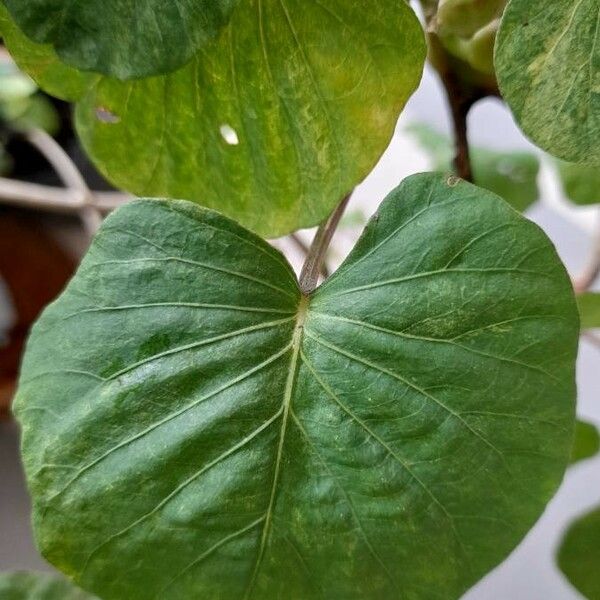
Plant Overview
Known as the Spotted Heart or Linden-leaf Morning Glory, this vigorous tropical vine is a masterpiece of the Convolvulaceae family. Originating from the sun-drenched coastal regions of the tropics, it is often admired for its lush, oversized leaves and velvet-textured flowers that look like they’ve been hand-painted. It’s a natural "mountaineer," quickly scaling fences and trellises to create a living wall of deep magenta.
🔍 How to Identify
- 🍃 The Heart-Shaped Foliage: The leaves are large, soft, and distinctly heart-shaped (cordate), closely resembling the leaves of a Linden tree. If you look at the underside, you might spot tiny, translucent glandular dots.
- 🌺 Velvet Trumpets: The flowers are spectacular funnel-shaped blooms, usually in shades of bright magenta or rose-purple with a darker, "bleeding" center.
- 🌀 Twining Stems: Unlike some vines that use tendrils, this plant climbs by physically wrapping its woody, brownish stems around any available support in a clockwise or counter-clockwise spiral.
🏡 In Your Garden
- 🧱 The Need for Support: Because this is a heavy-duty climber, it requires a sturdy trellis or a fence. It is not a "low-maintenance" spreader; without a vertical guide, it will quickly scramble over other plants and potentially smother them.
- ☀️ Sun and Hydration: While it loves the tropical sun, its large leaves lose moisture quickly. In the height of summer, it appreciates deep watering at the base to prevent the dramatic wilting that occurs when the soil dries out.
- ✂️ Growth Management: In warm climates, it can be quite aggressive. Pruning is best done after the flowering season to keep it from taking over your entire garden or escaping into local wild spaces.
⚠️ Safety & Toxicity
- 🐾 Potential Hazard: Like many members of the Morning Glory family, Stictocardia tiliifolia contains alkaloids that can be harmful if swallowed.
- 👶 Keep Away from Pets & Kids: Ingesting the seeds or foliage can lead to digestive upset, lethargy, or disorientation in dogs, cats, and small children. It is best planted in areas where curious mouths cannot reach the low-hanging vines.
✨ Fun Fact
The name Stictocardia literally translates to "Spotted Heart." This refers to the tiny, dark glandular pits found on the underside of its heart-shaped leaves—a secret detail you’ll only notice if you take a very close look!

Detailed Care Instructions
To grow a Stictocardia tiliifolia plant, also known as the Hawaiian sunset vine or lipstick vine, you can follow these steps:
- Choose the right location: Stictocardia plants require full sun and a warm climate. Find a spot in your garden or on a patio that receives at least 6-8 hours of direct sunlight each day.
- Prepare the soil: The soil should be well-draining and rich in organic matter. Add compost or well-rotted manure to improve the soil's fertility. Ensure there is good drainage to prevent waterlogging.
- Planting: If you have bought a Stictocardia plant, remove it from the nursery pot and gently tease out the roots. Dig a hole slightly larger than the root ball and place the plant in the hole. Backfill with soil, firming it gently around the plant. Space multiple plants about 2-3 feet apart.
- Watering: Water the plant thoroughly after planting and keep the soil consistently moist but not waterlogged. Provide regular watering especially during dry periods. Avoid overwatering as it can lead to root rot.
- Providing support: Stictocardia is a vine that loves to climb and spread. Provide a sturdy support structure like a trellis or a fence for the plant to grow up and spread its foliage. You can train the vines to climb with the help of ties or plant clips.
- Fertilizing: Apply a balanced, slow-release fertilizer once in early spring and once in mid-summer to promote healthy growth. Follow the instructions on the fertilizer package for appropriate dosage.
- Pruning: Prune the plant in early spring to remove any damaged or dead branches. You can also trim back excessive growth to maintain the desired size and shape.
- Pests and diseases: Stictocardia plants are generally resistant to pests and diseases. However, watch out for common garden pests such as aphids and spider mites. Treat any infestations promptly using insecticidal soap or horticultural oil.
- Cold protection: Stictocardia is sensitive to cold temperatures and frost. If you live in a colder climate, consider growing it as a container plant that can be brought indoors during winter or cover the plant with a protective cloth or blanket during cold spells.
By following these steps, you can successfully grow Stictocardia tiliifolia and enjoy its beautiful flowers in your garden or as a potted plant.

Place in a bright room that is sun drenched almost all day. Or directly in a south-facing window.

To properly water the Stictocardia Tiliifolia plant, follow these guidelines:
1. Observe the soil moisture: Before watering the plant, check the moisture level of the soil. Insert your finger about an inch deep into the soil to assess its dryness. If it feels dry, proceed with watering.
2. Time of watering: Water the plant early in the morning or late in the evening when the temperature is cooler. This helps prevent water evaporation and allows the plant to absorb moisture efficiently.
3. Watering technique: Use a watering can with a narrow spout or a hose with a gentle spray nozzle to water the plant. Aim the water directly at the base of the plant to avoid wetting the leaves excessively.
4. Gradual watering: Pour water slowly and evenly around the base of the plant. Avoid applying too much water at once, as it could result in waterlogging and root rot. Allow the water to be absorbed by the soil gradually, providing ample time for the roots to absorb moisture.
5. Soil drainage: Ensure that the plant is potted in a well-draining soil mix. This prevents water from sitting in the pot, which can cause root rot. If the soil doesn't drain well, consider incorporating materials such as perlite or vermiculite to improve its drainage capacity.
6. Frequency of watering: The specific watering frequency may vary depending on factors such as temperature, humidity, and the size of the pot. It is important to strike a balance between keeping the soil moist and avoiding overwatering. Let the top inch of soil dry out before watering again.
7. Environmental factors: Consider the prevailing weather conditions when determining the watering frequency. On hot, sunny days, the plant may require more frequent watering, while in cooler, rainy periods, watering may be less frequent.
Remember, these guidelines provide general care instructions, but it's always recommended to monitor the specific needs of your Stictocardia Tiliifolia plant and adjust your watering routine accordingly.
To properly fertilize the Stictocardia Tiliifolia plant, follow these instructions:
- Use a well-balanced fertilizer: Choose a fertilizer with an NPK ratio of around 10-10-10 or 20-20-20. This ensures a balanced supply of essential nutrients.
- Opt for a slow-release fertilizer: Slow-release or granular fertilizers work best for this plant. They release nutrients gradually over time, providing a steady supply of nourishment.
- Apply the fertilizer during the growing season: Fertilize the plant during the active growing period, from spring to early autumn. Avoid fertilizing during dormant periods or winter.
- Dilute the fertilizer: Mix the fertilizer with water according to the instructions mentioned on the packaging. Avoid applying concentrated fertilizer directly to the plant, as it may lead to nutrient burns.
- Apply evenly around the plant: Distribute the diluted fertilizer evenly around the base of the plant, ensuring it reaches the root zone. Avoid applying directly to the leaves or stems.
- Water thoroughly after fertilizing: After applying the fertilizer, water the plant well. This helps to dissolve the fertilizer and aids in nutrient absorption by the roots.
- Monitor the plant's response: Observe the plant for any signs of over or under-fertilization. Excessive yellowing, wilting, or burned foliage may indicate over-fertilization. Adjust the quantity and frequency of fertilization if needed.
- Follow a fertilization schedule: Plan a regular fertilization schedule, typically once every four to six weeks during the growing season. Adjust the frequency and quantity of fertilizer based on your observations of the plant's growth and health.
Remember, each plant's nutritional requirements may vary. It is essential to monitor the specific needs of your Stictocardia Tiliifolia plant and make necessary adjustments to the fertilization regime accordingly.
Stictocardia tiliifolia is a twining vine that belongs to the family Convolvulaceae. When it comes to choosing the right soil for this plant, there are a few considerations to keep in mind.
- Well-draining soil: Stictocardia tiliifolia prefers soil that drains well and does not hold excess water. This helps prevent root rot and other soil-borne diseases. It is important to choose a soil mix that allows water to drain freely.
- Neutral to slightly acidic pH: The ideal pH range for Stictocardia tiliifolia is between 6.0 and 7.0. This means that slightly acidic to neutral soils are suitable for this plant. Monitoring and adjusting the pH level if necessary can help ensure optimal growth conditions.
- Rich and fertile soil: Stictocardia tiliifolia benefits from a soil that is rich in organic matter, as it provides essential nutrients and improves soil structure. Adding compost or well-rotted manure to the soil can enhance its fertility and promote better growth and blooming.
- Loamy soil texture: Loam soil, which is a balanced combination of sand, silt, and clay, is suitable for Stictocardia tiliifolia. This type of soil retains adequate moisture while allowing for good drainage. It also provides a stable medium for the plant's roots to establish themselves.
- Outdoor soil considerations: If you are planning to grow Stictocardia tiliifolia outdoors, check the soil conditions of your garden or planting area. Avoid heavy clay soils that tend to retain water and become waterlogged. A sandy loam soil with good drainage characteristics is often preferred.
Remember, it is always a good practice to observe the plant's specific requirements and adjust the soil conditions accordingly. Additionally, other factors such as sunlight, temperature, and watering practices will also contribute to the overall health and well-being of Stictocardia tiliifolia.
To propagate Stictocardia tiliifolia, follow these steps:
- Select a healthy and mature plant: Choose a parent plant that is disease-free and shows no signs of stress. This will ensure that the propagated plant starts off strong.
- Prepare a rooting container: Fill a small container or pot with a well-draining and fertile potting mix. Ensure the container has drainage holes at the bottom to prevent waterlogging.
- Take stem cuttings: Select a stem that is at least 6 inches long and has several nodes (points where leaves emerge). Using a sharp and clean pair of garden shears or scissors, make a clean and diagonal cut just below a node.
- Remove lower leaves: Carefully strip off any leaves from the lower two-thirds of the stem. This will prevent them from rotting when placed in the rooting medium.
- Apply rooting hormone (optional): If desired, dip the base of the cutting in a powdered rooting hormone. This can enhance the chances of successful rooting.
- Plant the cutting: Make a small hole in the prepared potting mix using a pencil or your finger. Insert the cutting into the hole, ensuring that at least one or two nodes are buried in the soil. Gently press the soil around the cutting to provide support.
- Provide optimum conditions: Place the container in a warm and bright location, but avoid direct sunlight which may scorch the cutting. Maintain a temperature of around 70-75°F (21-24°C) for optimal growth.
- Mist the cutting and maintain humidity: Mist the cutting with water to keep it moist. To maintain humidity, place a clear plastic bag or a propagator dome over the cutting. This will create a mini greenhouse effect.
- Water regularly: Ensure the potting mix remains consistently moist but not waterlogged. Overwatering can cause rotting of the cutting, while underwatering may hinder root development.
- Wait for root development: After a few weeks, check for root development by gently tugging on the cutting. If you feel resistance, it means roots have formed. Alternatively, you can slightly lift the cutting to see if any white roots are visible.
- Transplant the rooted cutting: Once roots have formed and are about an inch long, the cutting is ready to be transplanted into a larger pot or directly into the ground. Ensure the new container or planting location is well-draining and provide adequate support for the growing plant.
By following these steps, you can successfully propagate Stictocardia tiliifolia and expand your collection of these beautiful plants.








