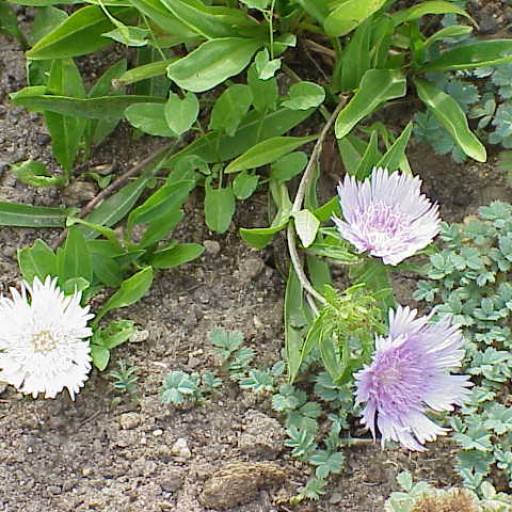
Plant Overview
Often called the "Stokes’ Aster," this charming perennial is like a shaggy, more sophisticated cousin of the common wildflower. Native to the damp meadows and coastal savannas of the Southeastern United States, it has earned a global reputation for its oversized, cornflower-like blooms and rugged personality. It is the perfect choice for gardeners who want a "tough-as-nails" plant that still looks delicate and ethereal in a vase.
🔍 How to Identify
- 🌸 The Bloom: Large, 3-4 inch flat-topped flowers featuring deeply fringed, "shaggy" petals that radiate out from a complex, pincushion-like center. Colors usually range from electric blue and lavender to creamy white.
- 🍃 The Foliage: Long, lance-shaped leaves that are smooth, leathery, and dark green. In warmer climates, the basal rosette of leaves often remains evergreen throughout the winter.
- 🌱 Growth Habit: It grows in neat, mounded clumps, typically reaching 1–2 feet in height, with sturdy stems that rarely require staking despite the heavy flower heads.
🏡 In Your Garden
- 💧 The Drainage Dilemma: While it naturally thrives in moist areas, it is surprisingly sensitive to "wet feet" during the winter. If the soil stays soggy while the plant is dormant, the crown may rot. Planting in slightly elevated beds or sandy soil is a great insurance policy.
- ⚓ Respect the Taproot: This plant develops a deep, thick taproot, which is the secret to its impressive drought tolerance. However, this means it strongly dislikes being moved once established. Pick its "forever home" carefully to avoid transplant shock.
- ✂️ Deadheading Benefits: To keep the lavender-blue show going all summer, snip off faded blooms. This prevents the plant from putting energy into seeds and encourages a second flush of flowers.
⚠️ Safety & Toxicity
- 🐾 Non-Toxic: Stokesia laevis is generally considered safe and non-toxic for cats, dogs, and horses. It is a "worry-free" choice for pet owners.
- 👶 Family Friendly: Because it lacks thorns, prickles, or irritating saps, it is an excellent plant for children’s sensory gardens where touching the soft, fringed petals is encouraged.
✨ Fun Fact
The plant was named in honor of Jonathan Stokes, an 18th-century English physician and botanist who was a close friend of Erasmus Darwin (Charles Darwin's grandfather). Stokes was a pioneer in using digitalis (foxglove) to treat heart conditions!

Detailed Care Instructions
| Humidity | High |
| Lighting | Full Sun |
| Difficulty | Medium |
| Hibernation | Cold Period |
| Temperature | 18°C - 21°C |
| Hardiness Zones | 8 - 9A |
To grow Stokesia Laevis plants, also known as Stokes' aster, follow these steps:
- Choose a suitable planting location: Stokesia Laevis prefers full sun but can tolerate light shade. It requires well-draining soil.
- Prepare the soil: Amend the soil with organic matter like compost or well-rotted manure to improve fertility and drainage.
- Planting: Dig a hole slightly larger than the plant's root ball. Place the plant in the hole and backfill with soil, firming it gently. Make sure the crown of the plant is level with or slightly above the soil surface.
- Watering: Water the plant thoroughly after planting to settle the soil. During the active growing season, provide regular watering to keep the soil consistently moist but not waterlogged. Reduce watering during cooler months.
- Mulching: Apply a layer of mulch around the plant to help retain moisture and suppress weed growth. Use organic mulch, such as wood chips or straw, and keep it a few inches away from the plant's stem to prevent rot.
- Fertilizing: Stokesia Laevis typically doesn't require much fertilization, especially if the soil was amended during planting. However, you can apply a balanced, slow-release fertilizer in early spring if desired.
- Pruning: After the flowering season, you can deadhead the spent flowers to encourage more blooms. Cut back the entire plant to about 4-6 inches in late winter or early spring to promote fresh growth.
- Pest and disease control: Stokesia Laevis is relatively resistant to pests and diseases. However, keep an eye out for aphids or caterpillars and use organic pest control methods if necessary.
- Division: After a few years, the plant may become overcrowded. To rejuvenate the plant and promote better growth, divide it in early spring or fall. Dig up the clump and carefully separate the sections with roots, then replant them.
- Winter care: Stokesia Laevis is hardy in zones 5-9 but may benefit from a layer of mulch to protect it during cold winters.
By following these guidelines, you should be able to successfully grow Stokesia Laevis plants and enjoy their beautiful blooms.

Place in a bright room that is sun drenched almost all day. Or directly in a south-facing window.

It is important to give this plant consistent moisture throughout the growing season, especially during hot and dry periods. Watering deeply and thoroughly once or twice per week is recommended, rather than frequent but shallow watering. Be sure to avoid getting water on the foliage, as this can encourage diseases. Additionally, water early in the day to ensure that foliage has time to dry before temperatures drop at night.
To fertilize this plant, apply a balanced fertilizer with equal amounts of nitrogen, phosphorus, and potassium in early spring, before new growth appears. Apply the fertilizer at the base of the plant according to the package instructions, and water thoroughly afterwards. Avoid over-fertilizing to prevent burn or damage to the plant.
Stokesia Laevis is a perennial flowering plant that requires well-draining soil to grow properly. It prefers slightly acidic to neutral soil with a pH level between 5.5 and 7.0. The soil should be rich in organic matter, with a loamy to sandy texture. Avoid using heavy clay soils or soils that are constantly waterlogged as these can lead to root rot and other issues. It is recommended to amend the soil with compost or well-rotted manure before planting to provide the necessary nutrients for the plant to thrive. It is also important to ensure that the soil is sufficiently hydrated but not overly wet. Regular watering is necessary to maintain optimal growth and flowering.
Stokesia Laevis is a perennial plant that can be propagated by division. To do this, first choose a healthy and mature plant from which to take cuttings. It is important that the plant is not in flower or actively growing since this can cause stress to the plant and reduce the chances of success.
Next, dig up the plant and carefully remove excess soil. Gently tease apart the roots to separate the individual plants, ensuring that each plant has enough roots to support itself. Cut the root ball into sections with a sharp tool, making sure each section has some leaves and roots.
Plant the divided sections in a well-draining and nutrient-rich soil mixture. Water the newly planted sections immediately and keep soil moist until they are established. Transplants may wilt initially, but will quickly recover, as long as they are kept well-watered and shaded for a few days.
Propagation can also be done with stem cuttings. Take 3-4 inch cuttings from new growth and remove the lower leaves. Dip the cut end into rooting hormone and plant in a soilless mixture of sand, perlite and peat. Keep the soil moist and cover with a plastic bag to maintain humidity. The cuttings should root within 6-8 weeks. After rooting, gradually acclimate plants to bright light and temperatures.








