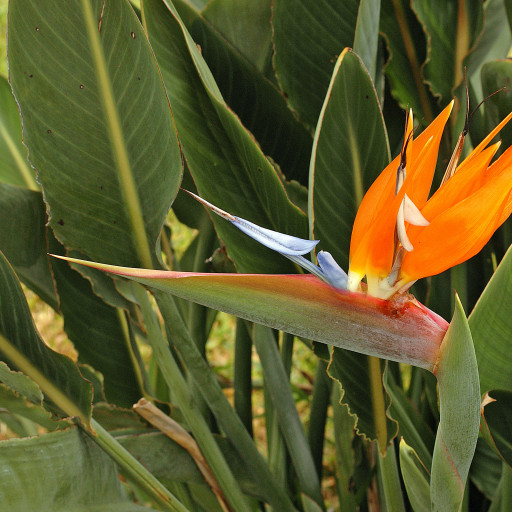
Plant Overview
Commonly known as the Bird of Paradise or the Crane Flower, Strelitzia reginae is the undisputed royalty of the tropical garden. Native to South Africa, its flowers famously resemble the head of a flamboyant crane or a bird-of-paradise in mid-flight. It has become a global symbol of tropical paradise and is even the official flower of the city of Los Angeles.
🔍 How to Identify
- 🐦 The "Beak" (Spathe): The flower emerges from a stiff, horizontal, green-to-purple bract that looks exactly like a bird’s beak.
- 🎨 Vibrant Plumage: When in bloom, bright orange sepals and deep midnight-blue petals erupt from the beak, creating a stunning contrast.
- 🌿 Evergreen Foliage: The leaves are large, thick, and paddle-shaped, resembling those of a banana plant but arranged in a neat, fan-like "clump."
- 📏 Growth Habit: It grows in dense clumps that can reach up to 5 or 6 feet in height, standing sturdy and upright without the need for support.
🏡 In Your Garden
- ☀️ The Sun-Flower Link: While it survives in partial shade, this plant is an "energy seeker." It requires high light levels to produce its iconic flowers; if it’s kept in too much shade, it will remain a lush green bush but will never bloom.
- 🌬️ Built for the Breeze: Unlike many tropical plants with thin leaves that tear in the wind, the Bird of Paradise has leathery, waxy leaves designed to handle coastal winds and occasional dry spells.
- ⏳ Patience is Key: This is a slow-growing plant that prefers to be "root-bound." Moving it to a larger pot too frequently or dividing the clump often stops it from flowering for a season or two as it focuses on its roots.
⚠️ Safety & Toxicity
- 🐾 Pet Alert: While beautiful, this plant is considered mildly to moderately toxic to dogs, cats, and horses.
- 🤢 The Risk: Ingesting the seeds or flowers can cause nausea, vomiting, and drowsiness. Keep it in a spot where curious pets or toddlers won't be tempted to "sample" the nectar or the colorful petals.
- 🧤 Skin Sensitivity: The sap can occasionally cause mild skin irritation for those with sensitive skin during pruning.
✨ Fun Fact
In its native South African habitat, the Strelitzia reginae is pollinated by Sunbirds. The blue petals are actually a specialized "perch." When the bird lands on the blue petal to reach the nectar, the weight of the bird triggers the flower to open, dusting the bird’s feet with pollen to be carried to the next flower!

Detailed Care Instructions
Strelitzia is easy-growing but has a few requirements—like regular feeding and watering. Of the tropical or subtropical species, it's one of the easier specimens to keep with relatively few pest problems.
How fast does bird of paradise grow?
Strelitzia is a slow-grower, sometimes taking up to five years to mature and flower.
What’s the difference between birds of paradise plants Strelitzia versus Caesalpinia?
Although both these plants are called birds of paradise, they are very different. Strelitzia thrives in warm, humid regions. Meanwhile, caesalpinia does not like humidity, preferring arid, hot locations.
To grow Strelitzia reginae, commonly known as the Bird of Paradise plant, follow these steps:
- Choose the right location: Strelitzia reginae prefers full sun, so select a bright spot in your garden or near a south-facing window if growing indoors.
- Optimal temperature: The plant thrives in temperatures between 65-85°F (18-29°C) during the day and above 50°F (10°C) at night.
- Provide a well-draining soil: Use a mixture of equal parts potting soil, perlite, and coarse sand to ensure good drainage and prevent waterlogging.
- Watering: Water the plant regularly to keep the soil consistently moist but not soaked. Watering once or twice a week should be sufficient, increasing the frequency during hot, dry weather.
- Fertilizer: Apply a balanced, slow-release fertilizer for flowering plants every two to three months during the growing season (spring and summer). Follow the manufacturer's instructions for dosage.
- Pruning: Trim yellow or brown leaves regularly, and cut back any out-of-control growth to maintain the desired shape.
- Propagation: Strelitzia reginae can be propagated through division. Carefully separate the plant during spring by cutting the rhizome with roots into smaller divisions, ensuring each division has roots attached. Plant the divisions in separate pots with suitable potting mix.
- Repotting: Repot young plants every two years, using well-draining soil and a slightly larger pot. For mature plants, repotting every four to five years is sufficient.
- Pest control: Keep an eye out for common pests like mealybugs and aphids. Treat any infestations promptly with insecticidal soap or a homemade solution of neem oil and water.
By providing the right conditions, regular care, and attention to any issues that arise, you can successfully grow Strelitzia reginae and enjoy its beautiful orange and blue flowers.

Place in a bright room that is sun drenched almost all day. Or directly in a south-facing window.

To properly water this plant, it is important to ensure that the soil is consistently moist but not waterlogged. It is best to allow the soil to dry out slightly between waterings. When watering, pour water slowly and evenly over the soil until the excess water begins to drain out of the bottom of the pot. Avoid getting water on the leaves and flowers as this can cause damage. During the winter months, reduce watering as the plant needs less water when it is not actively growing.
For optimal growth and blooming, it is recommended to fertilize this plant every 2-3 months with a balanced fertilizer. During the growing season, a fertilizer high in potassium can also be applied to encourage flower production. Be sure to follow the manufacturer's instructions for proper dilution and application. Avoid over-fertilizing as this can cause damage to the roots and foliage.
Strelitzia Reginae prefer soil that is well-draining and slightly acidic. A good soil mix would consist of fine-grained sand, peat moss, and perlite. This mixture helps with water retention while also ensuring good drainage. Adding a slow-release fertilizer to the soil before planting can also be beneficial. It is important to avoid using heavy soils, as these can suffocate the roots and prevent healthy growth. Additionally, the soil should not be allowed to become completely dry between waterings, as this can stress the plant and cause leaf curling or dropping.
One way to propagate this plant is through division of the rhizomes. Carefully remove the plant from its pot and separate the clumps of rhizomes using a sharp knife. Each clump should have several healthy shoots and some roots attached. Plant the separated clumps in individual pots with well-draining soil and water thoroughly.
Another method is to take stem cuttings from the plant. Cut a healthy stem just below a node, which is where a leaf is attached. Remove the lower leaves from the stem, leaving only two to three leaves at the top. Dip the cut end in rooting hormone and plant it in a pot with well-draining soil. Keep the soil moist and place the pot in a bright, but indirect light.
Propagation can also be done through seeds. Collect seeds from the plant when the pods have turned brown and cracked open. Soak the seeds in water for a few hours before planting them in potting mix. Cover the pot with plastic wrap to maintain moisture and warmth. The seeds should germinate within a few weeks.
Common pests of the bird of paradise include Scale insect, mealybugs, spider mites. Make a habit of checking your bird of paradise frequently for pests so that any infestations can be caught and managed early.








